
Key Points
Language Ability Is Relatively Resistant to Aging
When Language Ability Declines
There Are Different Types of Aphasia
When Non-Amnestic Single-Domain MCI Progresses to Progressive Nonfluent Aphasia
Language Ability Is Largely Built on Experience
How to Identify the Cause of Word-Finding Difficulties
What to Do When You Have Difficulty Finding Words
Notice from Tokyo Relife Clinic
Key Points
- There are different types of aphasia that can make it difficult to find or express words. We explain them clearly with illustrations.
- When you have trouble finding words, it is important to identify the cause and choose the right training or therapy.
- In some cases, language difficulties may be associated with MCI (mild cognitive impairment), making early detection important.
Language Ability Is Relatively Resistant to Aging
As we get older, many of us notice that it takes longer to remember a person's name or find the right word. In many cases, this does not mean that language ability itself has been lost. Instead, the difficulty may be related to memory—the word is still stored in the brain, but it takes longer to retrieve and express it.
There are different types of cognitive abilities involved in how we process information. Skills and knowledge built up over many years and used almost automatically tend to be less affected by aging.
For example, procedural memory allows us to perform familiar skills, such as riding a bicycle or playing the piano, with little conscious effort. Similarly, in healthy adults, basic language skills usually remain relatively stable. A person who has always spoken Japanese, for example, would not normally suddenly lose the ability to say, “I want to drink coffee” simply because of normal aging.
In contrast, cognitive abilities that require us to process new information in the moment are more likely to change with age. These include memory and attention.
This is one reason why dealing with new information may become more difficult as we age. From a cognitive perspective, the process of noticing new information, focusing attention on it, and remembering it can gradually become more challenging.
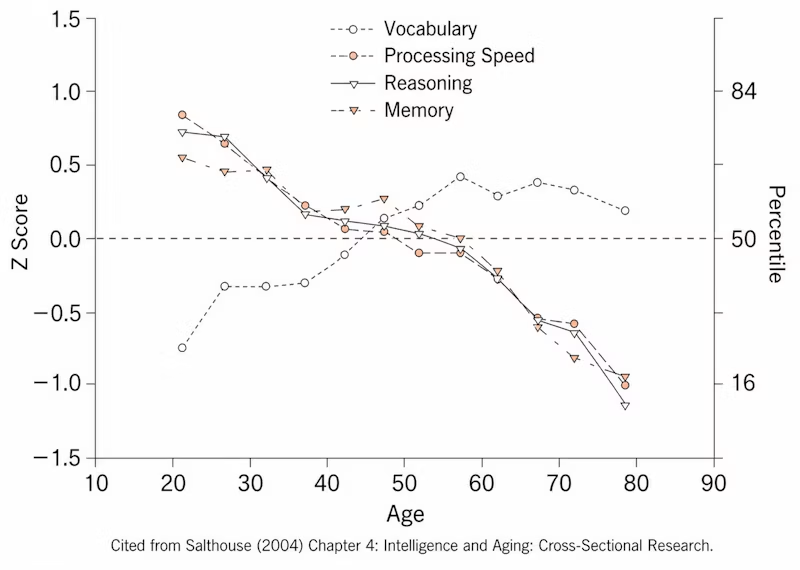
The graph above is cited from Age-Related Changes in Intelligence in Older Adults by the Healthy Longevity Network ※1.It shows that vocabulary remains relatively well preserved even after age 50, while abilities such as memory tend to decline from around this age.
In general, language ability is therefore considered relatively resistant to normal aging.
When Language Ability Declines
A typical condition involving a decline in language ability is aphasia.
Aphasia is a language disorder caused by damage to areas of the brain involved in language, often due to a stroke, head injury, or other brain damage. It can affect all four areas of language: listening, speaking, reading, and writing.
Aphasia affects the brain's ability to process language and is different from a problem with pronunciation or the physical ability to produce speech. When people with aphasia have difficulty finding words, they may know exactly what they want to express but be unable to recall the words they need.
A sudden decline in language ability usually has an identifiable cause, such as a stroke. In particular, sudden difficulty speaking or slurred speech can be a warning sign of stroke and requires immediate medical attention.
But what if language ability gradually declines with age without an obvious cause such as a stroke?
In this case, one possibility to consider is whether the symptoms may be associated with a certain type of MCI (mild cognitive impairment).
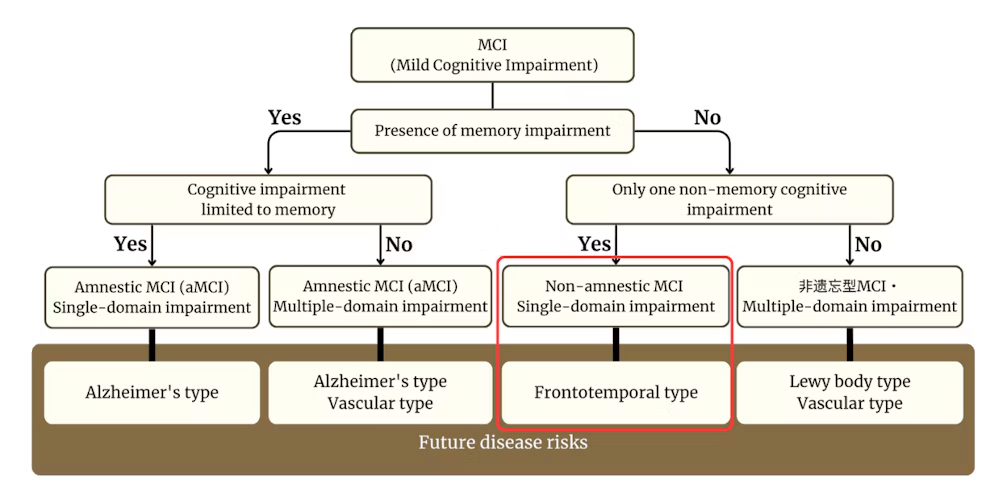
As explained in our article on MCI, some people with non-amnestic single-domain MCI may later progress to progressive nonfluent aphasia (PNFA). Like aphasia caused by a stroke, this condition affects areas of the brain involved in language, and some of the language difficulties can be similar.
Below, we will first explain the symptoms of aphasia caused by stroke, followed by an explanation of progressive nonfluent aphasia.
There Are Different Types of Aphasia
In most right-handed people, the main areas responsible for language are located in the left hemisphere of the brain. Damage to similar areas in the right hemisphere does not usually cause aphasia. In left-handed people, however, language areas may be located in the right hemisphere or distributed across both hemispheres.
Aphasia is generally defined as a language disorder that affects, to some degree, all four areas of language: listening, speaking, reading, and writing. Together, these functions allow us to understand and express both spoken and written language.
When only one of these four areas is affected, the condition may be given a different name, such as pure word deafness or pure alexia. Aphasia can be further classified according to the combination and severity of difficulties across the four language areas, and symptoms can look very different depending on the type of aphasia. (*2)
Broadly, aphasia can be divided into nonfluent aphasia and fluent aphasia, with several subtypes:
- Nonfluent aphasia: Broca’s aphasia, transcortical motor aphasia
- Fluent aphasia: Wernicke’s aphasia, anomic aphasia, conduction aphasia, transcortical sensory aphasia
- Other: global aphasia
Explaining every type in detail would become highly technical, so here we will focus on two well-known types: Broca’s aphasia and Wernicke’s aphasia.
Broca’s Aphasia: Speech Is Difficult, but Communication May Be Easier Than Expected
When talking with someone who has Broca’s aphasia, one of the most noticeable features is their slow, effortful, and interrupted speech.
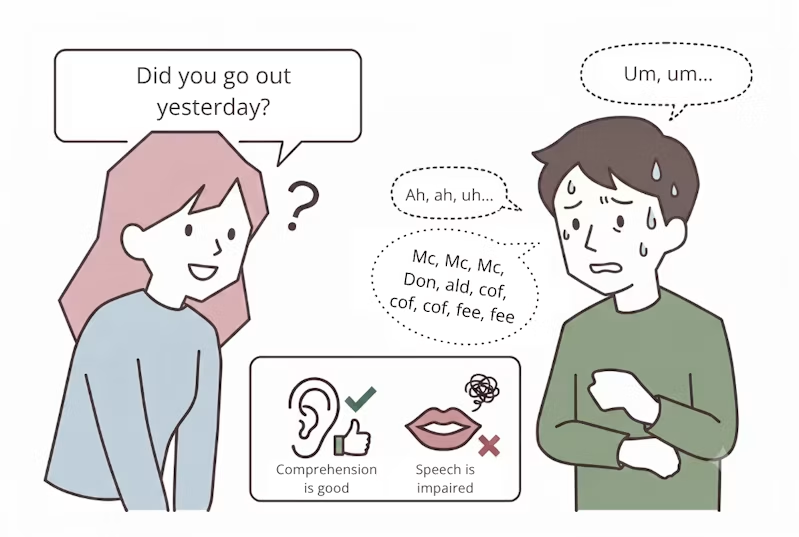
- When asked, “Did you go out yesterday?” the person may struggle to respond, with frequent pauses such as “um...” or “well...” and produce words slowly and with effort:
“Mc... Mc... McDonald’s... co... cof... coffee...”
- They can generally understand what the other person is saying relatively well.
At first, this may seem like a simple pronunciation problem. However, this difficulty can involve apraxia of speech, a disorder that affects the planning and coordination of the movements needed for speech rather than pronunciation alone. Because speaking can be slow and difficult, others may wonder whether the person understands what is being said. However, people with Broca’s aphasia often have relatively preserved language comprehension, while they have much more difficulty producing and expressing speech.
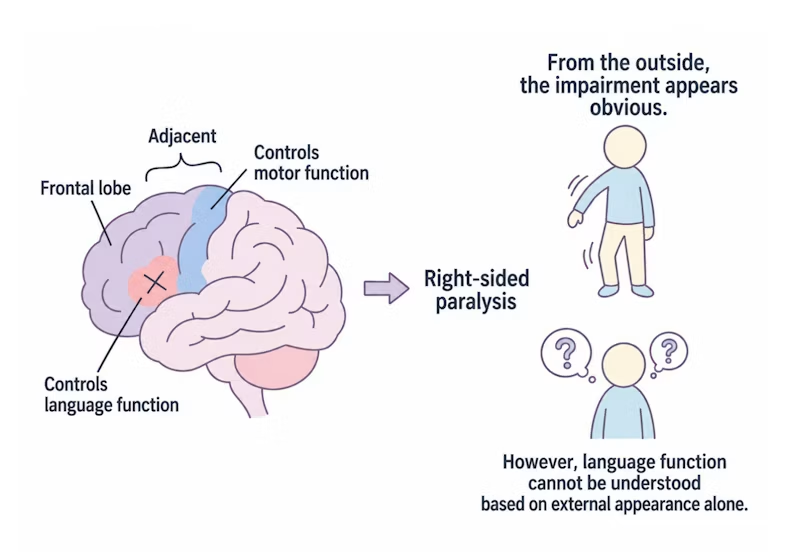
In Broca’s aphasia, the damaged language areas in the frontal lobe are located close to brain regions involved in movement. For this reason, aphasia may occur together with right-sided weakness or paralysis (right hemiparesis or hemiplegia).
Difficulty speaking combined with visible weakness or paralysis can make the condition appear very severe. However, outward appearance alone does not necessarily show how much a person’s overall language ability has been affected.
Wernicke’s Aphasia: Speech Is Fluent, but Communication Can Be Difficult
People with Wernicke’s aphasia often speak fluently and with little apparent effort. However, what they say may not match the question or intended meaning.
- When asked, “Did you go out yesterday?” the person may respond,
“Well, it’s been raining since this morning, hasn’t it?”
—an answer that does not match the question. - After being asked the same question several times, they may eventually respond,
“Oh, you mean yesterday? I went out with my family, and we went to that place near the station... WakDonald’s? You know the one. And then I had a beer.”
In this example, there are different types of language errors:- Sound error: “McDonald’s” → “WakDonald’s”
- Word error: “coffee” → “beer”
- Understanding what other people say may also be impaired, as shown in the example above.
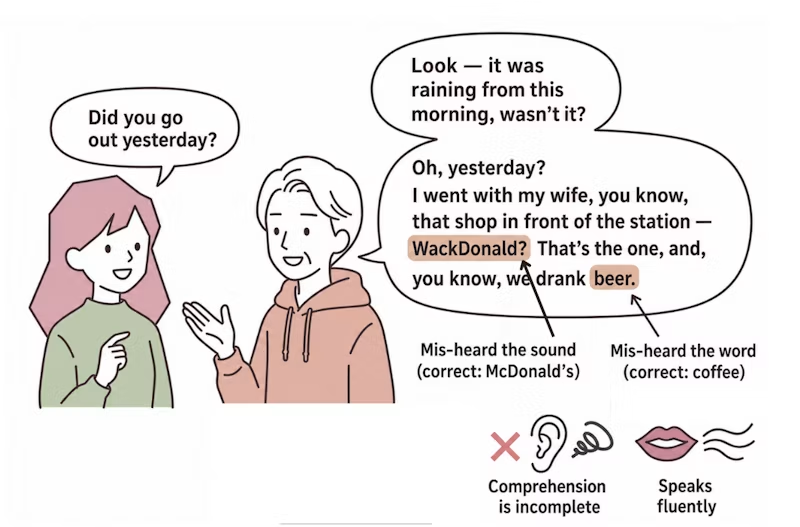
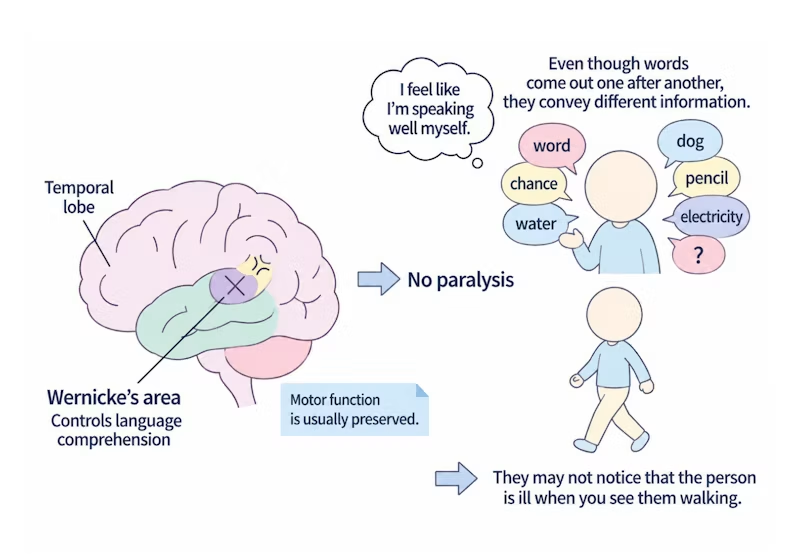
In this way, even though words may come out fluently, the person may communicate different information from what they intend. They often have difficulty noticing their own errors and may feel that they are speaking well. People with Wernicke’s aphasia may also misunderstand spoken information, which can make conversation difficult.
Unlike Broca’s aphasia, Wernicke’s aphasia mainly involves damage to the temporal lobe. Because there are no motor-related areas nearby, paralysis generally does not occur. When seeing the person walking, others may not realize that they have a neurological condition.
When Non-Amnestic Single-Domain MCI Progresses to Progressive Nonfluent Aphasia
One type of MCI, known as non-amnestic single-domain MCI, may in some cases progress to progressive nonfluent aphasia (PNFA). Characteristic language and speech symptoms may appear from the early stages.
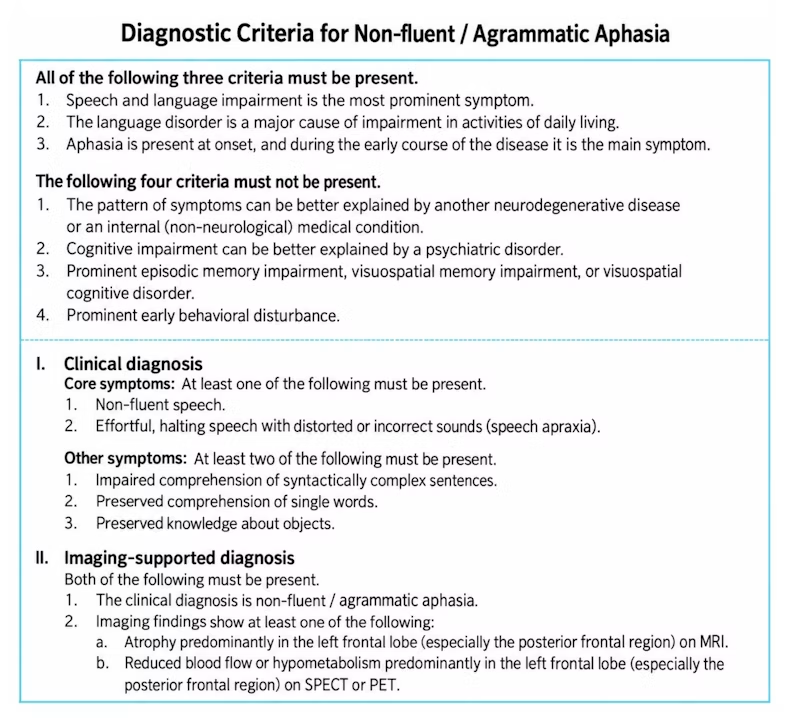
※3
In other words, language difficulties appear first, while other functions remain preserved. As noted in the diagnostic imaging criteria, “predominant atrophy of the left posterior frontal lobe and insula” is observed. These are the same areas of the brain that are affected in Broca’s aphasia caused by a stroke or other conditions. Therefore, similar symptoms to those of Broca’s aphasia may appear. Aphasia caused by stroke or similar conditions occurs suddenly at a certain point due to a vascular problem, such as a cerebral infarction or hemorrhage. After that, the symptoms generally improve or remain stable. In contrast, progressive nonfluent aphasia develops gradually due to brain atrophy, with symptoms appearing little by little and continuing to progress.
In the very early stages of non-amnestic single-domain MCI that progresses to progressive nonfluent aphasia, people may notice symptoms such as, “I feel like it’s harder to speak (sounds are harder to produce)” or “I have trouble remembering words.”
Language Ability Is Largely Built on Experience
As mentioned above, language ability tends to be less affected by aging than memory and attention. Let’s take a closer look. The following table summarizes age-related changes based on findings from multiple studies ※4. The arrows in the table indicate the stage at which each ability begins to decline. The table shows that the ability to recall words begins to decline in the 50s, while other aspects of language ability begin to decline at later stages.
Age | Vocabulary | Language Comprehension | Conversation | Word Recall | Reading & Writing |
|---|---|---|---|---|---|
Teens | Rapidly increases | Developing | Developing | Good | Improves through learning |
20s–30s | Very high | High | Most efficient | Very good | High |
40s–50s | Vocabulary continues to increase | High | Richer expression reflecting experience | Begins to gradually decline ⬇️ | Maintained |
60s | Vocabulary relatively maintained | Good | Fluent | Difficulty finding words increases | Slight decline ⬇️ |
70s and older | Vocabulary knowledge relatively preserved ⬇️ | Difficulty understanding complex sentences ⬇️ | Amount of speech maintained ⬇️ | Word-finding difficulties and naming difficulties become more noticeable | Large individual differences |
How to Identify the Cause of Word-Finding Difficulties
The ability to recall words can mean either “recalling the word itself” or “expressing the content of a memory in words.” The former is a type of language ability, while the latter is part of memory processing.
Therefore, when someone experiences difficulty finding words in everyday conversation, it is important to determine whether the problem is related to language or memory. These two functions work through different mechanisms in the brain and require different approaches.
What to Do When You Have Difficulty Finding Words
For people with aphasia who have difficulty recalling words themselves, rehabilitation may include language and speech therapy with a specialist. Training is tailored to each individual and may include using the first sound of a word as a cue or repeatedly practicing commonly used words to make them easier to recall.
For progressive nonfluent aphasia, similar training to that used for other types of aphasia may be considered, while taking the progressive nature of the condition into account when planning therapy. Unlike aphasia caused by a stroke, the effects of learning may be more difficult to maintain over time. However, the condition generally does not progress rapidly and usually develops over several years, so training can be adjusted according to the person’s current condition.
Even when someone feels that words are difficult to find, the underlying problem may involve memory rather than language itself. In such cases, the approach focuses more on the ability to learn and recall information than on practicing words. As discussed in our article, “What to Do If You Notice Increased Forgetfulness,” starting to address these changes while symptoms are still mild may provide more options. At the MCI (mild cognitive impairment) stage, one approach may be to increase overall engagement in daily life. Actively engaging with information can help make it more vivid and memorable. Information that we consciously pay attention to and remember is generally easier to recall than information that remains vague.
【Notice from Tokyo Relife Clinic】
A New Approach to MCI (Mild Cognitive Impairment)
If you are concerned about difficulty finding words, please feel free to consult Tokyo Relife Clinic. In addition to professional assessment by a speech-language-hearing therapist and guidance on lifestyle improvements, we also offer support aimed at optimizing the cellular environment using intranasal stem cell culture supernatant/exosomes and NAD+ IV therapy. Even if you are unsure whether you should seek medical care, you can start by assessing and understanding your current condition.
Written and Contributed by: Mie Koyama, Speech-Language-Hearing Therapist
<Professional Background>
Worked in psychological assessment at the Memory Clinic of Musashi Hospital, National Center of Neurology and Psychiatry (now the National Center of Neurology and Psychiatry). She later worked in speech-language-hearing therapy at the Department of Communication Sciences and Disorders, Prefectural University of Hiroshima; the Department of Rehabilitation, Yokohama Brain and Spine Center; and long-term care health facilities.
References
※1 Age-Related Changes in Intelligence in Older Adults
※2 Machiko Kezuka. Understanding Language Disorders Through Illustrations: From Language Mechanisms to Management. Gakken, 2002.
※3 Chapter 8, “Frontotemporal Lobar Degeneration,” Clinical Practice Guidelines for Dementia 2017. Supervised by the Japanese Society of Neurology, 2017.
※4 Harada H, Nakanishi M, Yoshida S, Hamanaka T. “Age-Related Changes in Naming Ability by Semantic Category in Healthy Individuals.” Higher Brain Function Research, 18(4):323–331, 1998.
※5 Nakagawa Y, Koyama T. “Grammatical Disorders in the Elderly: Effects of Aging and Intellectual Impairment on Verbal Abilities.” Higher Brain Function Research, 25(2):179–186, 2005.
※6 Discourse Production Across the Adult Lifespan: Microlinguistic Processes, Hana Kim, Stephen Kintz、Top Cogn Sci. 2024