Stem Cell Therapy for Menopause & Andropause
What Are Menopausal and Andropausal Symptoms?
For Those With the Following Symptoms
Causes of Menopause and Andropause
The Concept of Regenerative Medicine Treatment
Approved Stem Cell Treatments Provided by Tokyo Relife Clinic
How Stem Cell Therapy Differs from Conventional Care
Research Reports on Stem Cell Therapy
Risks & Safety Precautions
Price
FAQ
Stem Cell Therapy for Menopause & Andropause
Menopausal and andropausal symptoms are conditions in which age-related changes in hormone balance cause various physical and psychological symptoms. They can occur not only in women but also in men, and the symptoms and causes vary from person to person.
Alongside conventional treatments like hormone replacement therapy (HRT) and Kampo (traditional herbal medicine), Tokyo Relife Clinic offers personalized care plans that harness the potential of regenerative medicine.
What Are Menopausal and Andropausal Symptoms?
Menopause and andropause are conditions characterized by various physical and psychological issues, such as hot flashes, sweating, insomnia, fatigue, and low mood. In both men and women, these diverse symptoms are triggered by age-related changes in hormonal balance.
Symptoms in men that resemble menopausal symptoms in women may be managed as LOH syndrome, or late-onset hypogonadism. In women, these symptoms are related to a decline in ovarian function, while in men they are related to a decline in testosterone. ※1 ※2
Treatment options include hormone replacement therapy(HRT), Kampo medicine, and lifestyle modification. In recent years, research on regenerative medicine using stem cells has also been progressing in related fields such as decreased ovarian function and ovarian aging.
For Those With the Following Symptoms
The symptoms of menopausal and andropausal disorders vary widely and may include physical, psychological, and autonomic nervous system issue. Even when no clear abnormality is found through testing, these symptoms may interfere with daily life.
Symptoms Seen in Women"s Menopause and Men"s Andropause
In women, symptoms such as those shown in the figure may occur as estrogen fluctuates and declines around menopause. ※1
In men, andropausal symptoms are thought to be associated not only with age-related testosterone decline but also with stress, poor sleep, and lifestyle habits. ※2 Unlike women, men often experience symptoms that progress slowly, and these symptoms may be overlooked as signs of aging or fatigue.

Causes of Menopause and Andropause
Menopausal and andropausal symptoms are thought to develop through the complex involvement of various factors, including not only declining hormone levels but also autonomic nervous system function, brain function, psychological and social stress, inflammation, and lifestyle habits.

1. Hormonal Changes Due to Declining Ovarian or Testicular Function
In women, ovarian function declines from the late 40s to the 50s, and the secretion of estrogen, a female hormone, becomes unstable. ※1
In men, aging and lifestyle habits may contribute to a decline in testosterone, a male hormone. ※2
2. Autonomic Nervous System Imbalance
In Women: As ovarian function declines during menopause, estrogen levels drop and fluctuate significantly. This change may affect the autonomic nervous system and lead to symptoms such as hot flashes, sweating, palpitations, and insomnia. ※1
In Men: Similarly, declining testicular function leads to reduced testosterone secretion. This can impact multiple areas, including muscle strength, motivation, sexual function, and overall mental well-being.※2
3. Involvement of the Central Nervous System (Brain)and Inflammatory Responses
Hormonal changes also affect the hypothalamus and the immune system. Because the hypothalamus controls the autonomic nervous system, these shifts can destabilize the regulation of body temperature, sleep, sweating, and heart rate.
At the same time, disruption of the immune system may lead to chronic systemic inflammation, making symptoms such as fatigue, joint pain, and brain fog more likely to occur.
Although the hormones that decrease differ between men and women, the factors leading to menopausal and andropausal symptoms are essentially similar.
The Concept of Regenerative Medicine Treatment
Stem cell therapy is not a treatment that directly supplements hormones. It is intended to act on inflammation, immunity, and the cellular environment through substances secreted by stem cells. ※3
1. Effects on the Cellular Environment Through Paracrine Action
Stem cells are thought to secrete cytokines, growth factors, exosomes, and other substances that act on surrounding cells. This is called paracrine action. ※3
In studies related to decreased ovarian function, mesenchymal stem cells have been reported to have the potential to modulate pathways involved in blood flow, inflammation, oxidative stress, and cell death. ※3 ※4

2. Systemic Support Through Anti-Inflammatory Action
Another characteristic of stem cells is their strong anti-inflammatory action. Basic research and studies in related fields suggest that stem cell therapy may help moderate inflammatory and immune responses. ※4 ※5
However, the efficacy of stem cell therapy for menopausal and andropausal symptoms has not been established as a standard treatment, and it is a self-funded treatment not covered by public health insurance. Whether treatment is appropriate is ultimately determined by the physician through consultation.
Approved Stem Cell Treatments Provided by Tokyo Relife Clinic
Tokyo Relife Clinic provides stem cell therapy under a regenerative medicine provision plan that has been reviewed for treatment details, cell handling, and management systems in accordance with the Act on the Safety of Regenerative Medicine, submitted, and accepted by the Ministry of Health, Labour and Welfare.
Acceptance Number PB3240267: Regenerative medicine for symptoms associated with menopause and andropause using autologous adipose-derived stem cells.

Alternative Treatments Using Exosomes and Stem Cell Culture Supernatant
For those who are considering stem cell therapy at our clinic but would like to try a more accessible option first, we also provide the following treatments.
Stem cell culture supernatant infusion uses growth factors and exosomes secreted by stem cells during the culture process. It is often chosen as a more accessible way to try the possible effects of a stem-cell-related infusion.
We also offer exosome therapy, in which regenerative factors are further extracted from the stem cell culture supernatant and administered. Since this treatment also does not involve cell harvesting, it places less physical burden on the patient and is often chosen either in combination with stem cell therapy or as a stand-alone treatment.
How Stem Cell Therapy Differs from Conventional Care
Standard treatments for menopausal and andropausal symptoms include Hormone Replacement Therapy (HRT), Kampo, lifestyle changes, and psychological support. The right approach always depends on your specific symptoms and medical history.※4,6
Importantly, stem cell therapy is not a replacement for these standard treatments. Each plays a distinct role:
HRT: Directly replenishes depleted hormones.
Kampo: Restores the body"s natural balance to alleviate symptoms.
Stem Cell Therapy: Focuses on the cellular level, targeting underlying inflammation to support overall health.
Treatment | Features | Suitable For |
|---|---|---|
Hormone Replacement Therapy (HRT) | Requires ongoing use (symptoms may return if stopped). Not suitable for those with cancer or thrombosis risks. | Seeking rapid relief for specific symptoms. |
Testosterone Replacement (TRT) | Requires ongoing use. Requires regular prostate monitoring. | Confirmed low testosterone levels. |
Kampo medicine | Mild, natural action. Limited direct impact on cellular-level inflammation. | Unsuitable for HRT; experiencing multiple vague symptoms. |
Lifestyle & Psychological Support | Foundational care. Limited direct impact on deep cellular environments. | Symptoms heavily impacted by stress or daily habits. |
Stem Cell Therapy | Directly targets the cellular environment through strong anti-inflammatory & paracrine effects. | Seeking alternatives to medication; finding limited success with conventional care |
※ Stem cell therapy is a self-funded treatment, and effects vary from person to person.
Research Reports on Stem Cell Therapy for Menopause & Andropause
Stem cell therapy for menopausal and andropausal symptoms itself is still an area under research. Meanwhile, studies are being conducted on the actions of mesenchymal stem cells in premature ovarian insufficiency, decreased ovarian function, ovarian aging, and related fields. ※3 ※4
Study Focus | Patients | Key Results |
|---|---|---|
Premature Ovarian Insufficiency (POI) ※5 (Umbilical cord-derived MSCs) | 14 | 2 pregnancies achieved among patients with years of infertility. Increased female hormone levels. |
Sexual Dysfunction ※7 (Stem cell transplantation) | 31 | Significant improvement in male hormone levels. Trend toward improvement in female hormone levels. |
Refractory Poor Ovarian Response ※8 (Stem cell therapy) | 17 | Ovarian function improved in 13 patients. |
Premature Ovarian Insufficiency ※4 (Stem cell therapy) | 15 | Significant improvement at 3 months (effect diminished by 1 year). Menstruation resumed in 4 patients without extra medication. |
※ All of these studies are small-scale clinical studies. They do not guarantee treatment effects.
Risks & Safety Precautions
Treatment outcomes vary by individual. This is an unapproved, self-pay medical procedure using autologous cells prepared in our in-house Cell Processing Center.
Potential risks include:
- Fat collection: Bleeding, swelling, allergic reactions
- Infusion: Allergic reactions, pulmonary embolism, nausea
PRICE
IV DripStandard Stem Cell Therapy 1session
IV DripStem Cell Therapy (Premium Ver.)
IV DripRelife Stem Cell Therapy
Annual Storage Fee
References
※1 The Japan Society for Menopause and Women"s Health. Symptoms Observed in Menopausal Women.
※2 The Japanese Urological Association / Japanese Society for Men"s Health. Clinical Guide to LOH Syndrome. 2022.
※3 Igboeli P, et al. J Med Case Rep. 2020.
※4 Kim HK, Kim TJ. Biomolecules. 2024.
※5 Guo C, et al. Front Endocrinol. 2023.
※6 The Japan Society for Menopause and Women"s Health. For a Proper Understanding of Hormone Replacement Therapy.
※7 Nguyen TL, et al. Stem Cell Rev Rep. 2021;17(6):2153-2163.
※8 Herraiz S, et al. Fertil Steril. 2018;110(3):496-505.
※9 Japan Association of Obstetricians and Gynecologists. Kampo Therapy for Menopausal Disorders.
※10 Ding L, et al. Sci China Life Sci. 2018;61(12):1554-1565.
※11 Zafardoust S, et al. Arch Med Res. 2023;54(2):135-144.
FAQ
- Q:Can I self-diagnose menopause or andropause?A:
We strongly advise against self-diagnosis. Symptoms that mimic menopause and andropause can actually be caused by other underlying conditions, such as thyroid disease, anemia, diabetes, depression, or heart disease.
If symptoms persist, it is important to undergo testing at a medical institution. - Q:Can I receive menopause treatment while taking Kampo medicine?A:
Yes. Treatment may be considered even if you are taking Kampo medicine. If you are taking any medications or supplements, please inform us during your consultation.
For menopausal symptoms, Kampo medicine may be used according to constitution and symptoms. ※9 - Q:When does menopause start, and how long does it last?A:
For women, the menopausal period generally refers to the five years before and the five years after menopause, for a total of about 10 years. Since many Japanese women reach menopause around the age of 50, many experience symptoms around ages 45 to 55. ※1
Men do not have a clearly defined menopause, so symptoms may appear gradually after the age of 40. ※2 - Q:Can stem cell therapy be combined with hormone replacement therapy?A:
Yes, in many cases. Combination therapy may be considered depending on your specific condition. However, hormone replacement therapy has indications and contraindications, so a physician's judgment is required. ※6
- Q:What symptoms can occur with menopause and andropause?A:
In women, symptoms may include hot flashes, sweating, palpitations, insomnia, low mood, fatigue, joint pain, vaginal dryness, and frequent urination. ※1
In men, symptoms may include fatigue, decreased motivation, decreased muscle strength, low libido, erectile dysfunction, sleep disorders, and low mood. ※2
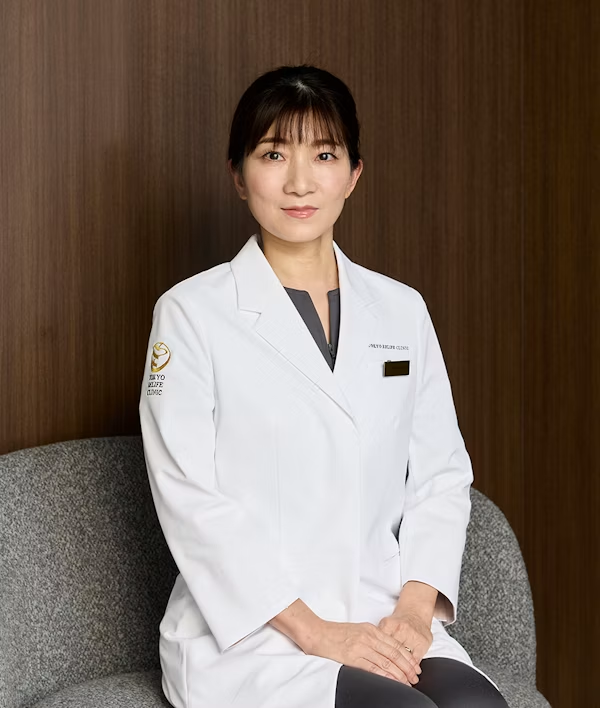
Medical Reviewer:Dr. Maki Nakao
Drawing on extensive clinical experience from over 30,000 cases, Dr. Nakao integrates regenerative medicine and anti-aging medicine into her clinical practice. She is committed to evidence-based advanced medical care, emphasizing meticulous patient communication and individualized treatment planning. Since 2026, she has served as Director of Tokyo Relife Clinic, providing optimized and personalized medical care to each patient.