What Is Stem Cell Therapy for Erectile Dysfunction (ED)?
Who May Consider This Treatment
Stem Cell Therapy at Tokyo Relife Clinic
Main Causes of Erectile Dysfunction
How Does Erectile Dysfunction Progress?
How ED Medication Such as Viagra Work and Their Limitations
How Regenerative Medicine May Work
Clinical Research on Stem Cell Therapy
For Those Who Are Not Ready for Stem Cell Therapy
Side Effects, Complications, and Important Considerations
Treatment Process
Price
FAQ
What Is Stem Cell Therapy for Erectile Dysfunction (ED)?
Stem cell therapy for ED is a regenerative treatment utilizing your own cultured adipose-derived stem cells. The cells are injected into the penis with the aim of improving the tissue environment associated with blood vessels, smooth muscle, and nerves involved in erectile function.
Standard treatment options for ED include lifestyle modification, management of underlying medical conditions, phosphodiesterase type PDE5 inhibitors (such as sildenafil and tadalafil), and other medical interventions like injections or devices.
Stem cell therapy is being investigated as a regenerative medicine approach that may help tissue repair and be considered for some patients whose symptoms have not improved sufficiently with conventional treatment.※1
Who May Consider This Treatment
Stem cell therapy for ED may be considered for patients who:
- Experience insufficient results from standard ED medications
- Have vascular ED linked to diabetes, high blood pressure, or high cholesterol
- Suffer from persistent ED following prostate surgery or nerve/vessel damage
- Cannot take ED medications due to side effects, health conditions, or drug interactions
- Notice an age-related decline in erectile function
- Develop ED as a side effect of AGA (hair loss) treatments but wish to continue them
※Even when symptoms are similar, the cause of Erectile Dysfunction and the appropriate treatment may differ depending on underlying medical conditions, current medications, history of cancer, and previous treatments. Eligibility for stem cell therapy is determined by a physician after a medical evaluation.
Stem Cell Therapy at Tokyo Relife Clinic
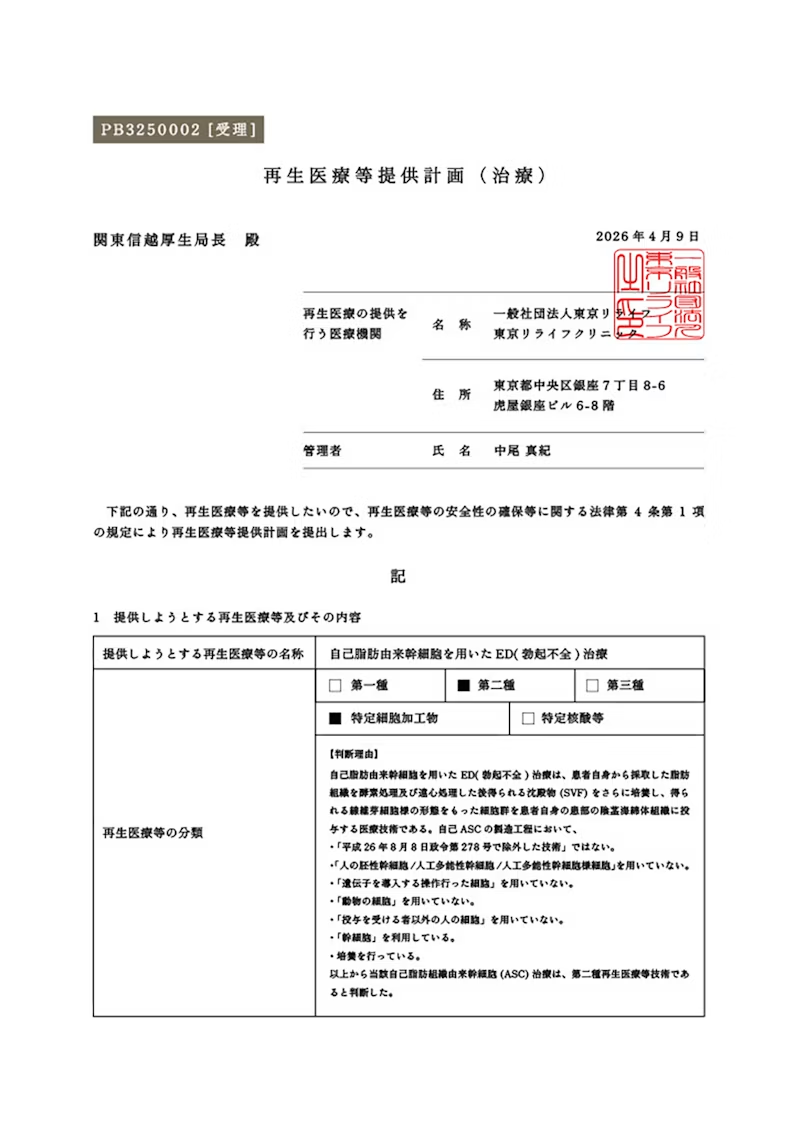
Stem cell therapy is provided under a Regenerative Medicine Provision Plan that has been reviewed in accordance with Japan's Act on the Safety of Regenerative Medicine. The treatment protocol, cell processing, and quality management are conducted under an accepted plan submitted to Japan's Ministry of Health, Labour and Welfare (MHLW).
Accepted Plan PB3250002: Treatment for Erectile Dysfunction (ED) Using Autologous Adipose-Derived Stem Cells
Main Causes of Erectile Dysfunction
The corpora cavernosa are sponge-like tissues in the penis that contain many blood vessels and smooth muscle cells. During sexual stimulation, the blood vessels and smooth muscle relax, allowing more blood to flow into the corpora cavernosa. This increases pressure within the penis and produces an erection.
When blood flow is reduced or the smooth muscle becomes fibrotic and less able to expand, it can become difficult to achieve or maintain sufficient erection firmness.※2
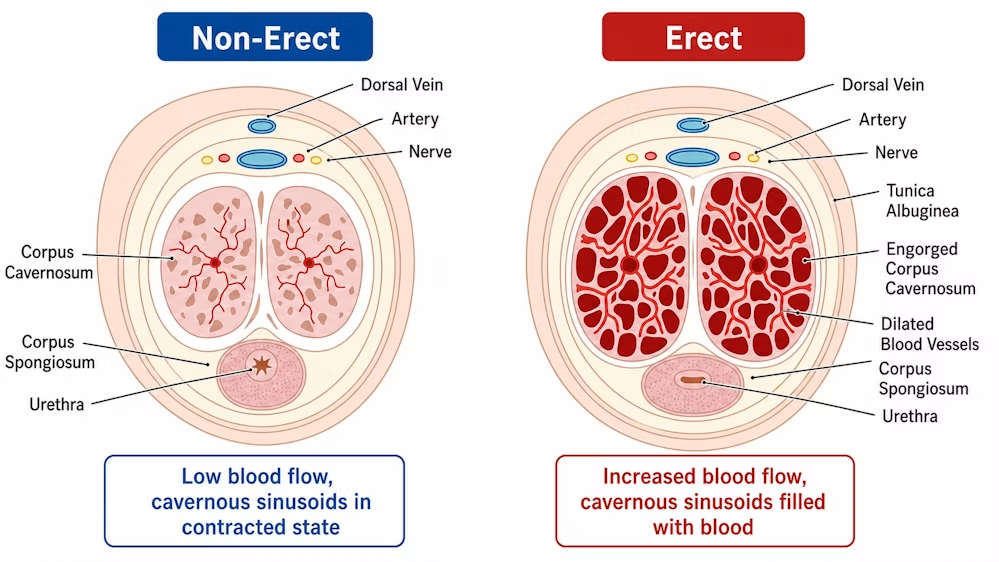
Here are some of the most common causes of Erectile Dysfunction.
Vascular ED (Atherosclerosis and Reduced Blood Flow)
Vasculogenic ED is one of the most common forms of erectile dysfunction ED. Aging, diabetes, high blood pressure, high cholesterol, and smoking can damage the vascular endothelium and contribute to atherosclerosis. Reduced blood flow to the corpora cavernosa may impair erectile function. Structural changes within the erectile tissue, including fibrosis, may also reduce tissue elasticity and the ability of the corpora cavernosa to expand adequately during sexual stimulation. These changes may contribute to difficulty achieving or maintaining an erection.
Neurogenic ED (Diabetic Neuropathy, Prostate Surgery, etc.)
Damage to the nerves that transmit sexual stimulation to the penis can prevent signals from properly reaching the blood vessels and smooth muscle of the corpora cavernosa. This may occur with diabetic neuropathy or after prostate surgery and can make it difficult to achieve or maintain an erection.
Hormonal ED (Low Testosterone)
Low testosterone and other hormonal disorders can reduce sexual desire and the body's response to sexual stimulation, affecting erectile function.
Psychogenic ED (Stress, Depression, and Performance Anxiety)
Psychological factors such as stress, depression, anxiety, previous negative sexual experiences, and relationship difficulties can interfere with the normal erectile response.
Mixed ED (Multiple Causes)
Erectile Dysfunction may result from a combination of vascular, neurological, hormonal, and psychological factors. In clinical practice, ED often cannot be attributed to a single cause.
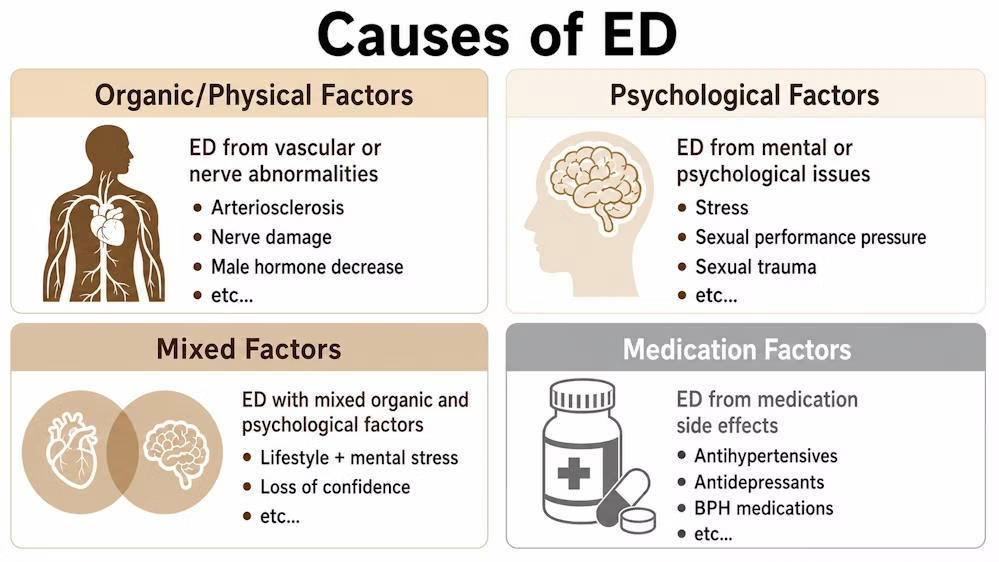
Vascular Erectile Dysfunction can sometimes appear before cardiovascular disease becomes clinically apparent. ED may also be associated with metabolic conditions such as diabetes and high cholesterol. Rather than assuming that ED is simply a result of aging, it is important to consider medical evaluation of factors such as blood sugar, cholesterol, blood pressure, and testosterone when appropriate. ※1
How Does Erectile Dysfunction Progress?
Chronic oxidative stress and inflammation associated with conditions such as diabetes, smoking, and obesity can impair nitric oxide (NO)-mediated relaxation of blood vessels. If this continues over time, smooth muscle in the corpora cavernosa may decrease while fibrous components such as collagen increase. This process is known as fibrosis.※2
As fibrosis progresses, the erectile tissue becomes less able to expand and fill with blood, which can reduce erection firmness and duration. In severe vascular or diabetes-related Erectile Dysfunction, the response to PDE5 inhibitors may also become limited.
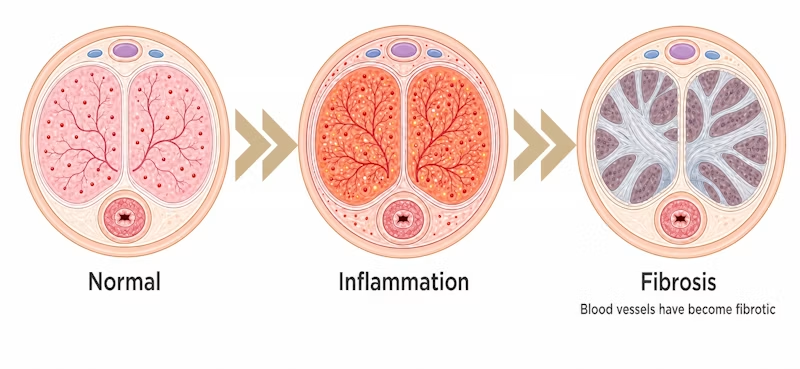
This illustration shows how inflammation in the penis may lead to fibrosis over time.
However, the progression of Erectile Dysfunction varies depending on its cause, how well underlying conditions are managed, lifestyle factors, and when treatment begins. Managing blood sugar, blood pressure, and cholesterol, along with regular exercise, weight management, and smoking cessation, are important measures that should be addressed alongside ED treatment.※1
※Not all cases of Erectile Dysfunction follow the same progression toward fibrosis, and ED Medication do not necessarily become ineffective. The course of ED varies considerably from person to person, and the condition of the erectile tissue cannot be determined from symptoms alone.
How ED Medication Such as Viagra Work — and Their Limitations
PDE5 inhibitors such as Viagra (sildenafil) help maintain the NO-cGMP pathway activated by sexual stimulation. This allows the blood vessels and smooth muscle in the penis to relax, increasing blood flow and helping support an erection. ※1
Tokyo Relife Clinic offers two PDE5 inhibitors for Erectile Dysfunction: Viagra (sildenafil) and Cialis (tadalafil).
Viagra | Cialis | |
|---|---|---|
Active Ingredient | Sildenafil | Tadalafil |
How It Works | Inhibits PDE5 and increases blood flow to the penis | Inhibits PDE5 and increases blood flow to the penis |
Key Features | Works relatively quickly and helps support a firm erection | Takes effect more gradually but lasts longer and is generally less likely to cause side effects |
Effect of Food | May be affected by food | Minimal effect |
How and When to Take | Oral medication About 1 hour before sexual activity | Oral medication About 1–3 hours before sexual activity |
Duration | About 4–5 hours | Up to about 36 hours |
Common Side Effects | Facial flushing, headache, palpitations, nasal congestion, visual disturbances, etc. | Headache, flushing, indigestion, back pain, muscle pain, etc. |
PDE5 inhibitors are well-established as a first-line treatment for Erectile Dysfunction. However, these ED Medication do not directly repair damaged blood vessels or nerves, nor do they reverse fibrosis that has already developed in the corpora cavernosa. For this reason, they may not provide sufficient improvement in cases of severe vascular ED, diabetes-related ED, or Erectile Dysfunction following prostate surgery.
When ED Medication do not work as expected, factors such as dosage, timing, the effect of food, and the presence of sexual stimulation should first be reviewed. Appropriate use should be confirmed under a physician's guidance. For patients seeking an approach that focuses more directly on the underlying tissue environment, regenerative medicine may also be considered as a treatment option.
How Regenerative Medicine May Work for Erectile Dysfunction
Rather than directly replacing damaged blood vessels or nerves, stem cells are thought to act mainly through paracrine effects. This means they release growth factors and cytokines that influence surrounding cells and the tissue environment. In Erectile Dysfunction, several potential mechanisms are being studied. ※3
1.Supporting Angiogenesis (VEGF and HGF)
Stem cells release factors such as VEGF (vascular endothelial growth factor) and HGF (hepatocyte growth factor). These factors are being studied for their potential to support vascular endothelial repair and the formation of new microvessels, which may help improve the vascular environment involved in erectile function.
2.Anti-Inflammatory and Anti-Fibrotic Effects (HGF and MMPs)
In addition to anti-inflammatory factors released by stem cells, HGF and MMPs (matrix metalloproteinases) have been reported to help regulate processes associated with smooth muscle loss and excessive collagen accumulation. These effects may help maintain the flexibility of the corpora cavernosa and limit fibrosis of erectile tissue. ※4
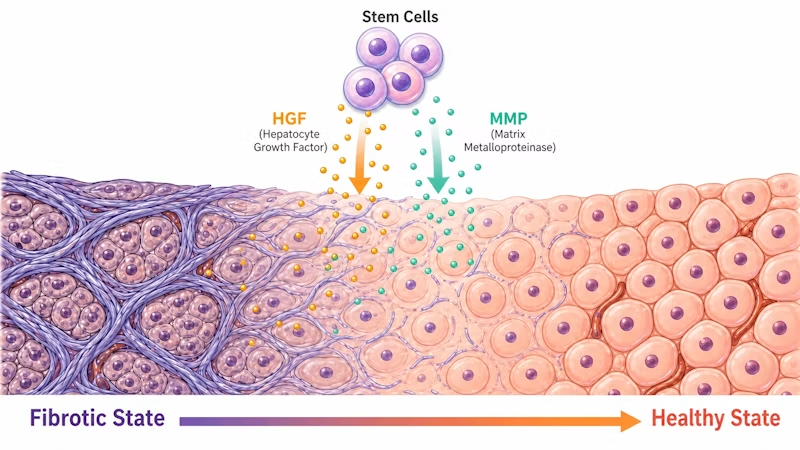
3.Nerve Regeneration and Protection (BDNF and NGF)
Stem cells release factors such as BDNF (brain-derived neurotrophic factor) and NGF (nerve growth factor), which are involved in nerve cell survival and repair. These factors have been studied for their potential role in supporting nerve regeneration and protecting nerve function.※3、※5
※The potential effects involving VEGF, HGF, MMPs, BDNF, and NGF are proposed mechanisms based mainly on basic research and small-scale studies.
Clinical Research on Stem Cell Therapy for Erectile Dysfunction
Human clinical studies of stem cell therapy for Erectile Dysfunction have been reported, including studies involving ED after radical prostatectomy and difficult-to-treat diabetes-related ED.
A 2025 systematic review and meta-analysis suggested improvements in measures of erectile function at six months, primarily based on comparisons before and after treatment. However, cell types, doses, number of injections, and patient populations varied across studies, and relatively few studies included a control group. These limitations should be considered when interpreting the current evidence.※6
Study | Participants | Main Findings |
|---|---|---|
Single intracavernosal injection of autologous adipose-derived regenerative cells for difficult-to-treat ED after radical prostatectomy, with 12-month follow-up ※7 | 21 | Among 15 participants who maintained urinary continence, 8 reportedly regained erections sufficient for sexual intercourse. |
Dose-escalation study of autologous bone marrow cells for ED after radical prostatectomy ※8 | 12 | Improvements in IIEF scores, erection firmness, and penile blood flow parameters were reported, particularly in the higher-dose groups. |
Two injections of allogeneic umbilical cord-derived mesenchymal stem cells for diabetes-related ED with poor response to PDE5 inhibitors ※9 | 22 | Improvements in IIEF-5 scores, erection firmness, and penile blood flow parameters were reported for up to 12 months. |
Two injections of autologous bone marrow-derived mesenchymal stem cells for diabetes-related ED, with 24-month follow-up ※10 | 8 | IIEF-5 scores and erection firmness showed the greatest improvement at 6 months. Some improvement remained at 12 months, but by 24 months there was no significant difference from baseline. |
Comparison of intracavernosal injection, shockwave therapy, and combination therapy using placenta-derived mesenchymal stem cells for difficult-to-treat diabetes-related ED ※11 | 33 | IIEF-EF scores improved in all groups at 6 months, with higher scores reported in the combination group than with either treatment alone. No significant difference was found in successful intercourse rates. |
Stem Cell Therapy for Diabetes-Related Erectile Dysfunction Refractory to PDE5 Inhibitors ※12 | 20 | A significant improvement in IIEF-5 scores was reported at 6 months. No improvement in penile artery blood flow was observed. |
※All of these were small-scale clinical studies and do not establish or guarantee the effectiveness of stem cell therapy for Erectile Dysfunction.
For Those Who Are Not Ready for Stem Cell Therapy
For patients who are concerned about the fat collection procedure required for stem cell therapy or would prefer to consider a less invasive option first, Tokyo Relife Clinic also offers treatment for Erectile Dysfunction using stem cell culture supernatant.
Stem cell culture supernatant does not contain living stem cells, but contains growth factors and other substances secreted by stem cells. It may be considered as a less invasive option for patients who are not yet ready to undergo stem cell therapy.
Side Effects, Complications, and Important Considerations of Stem Cell Therapy
Treatment outcomes vary by individual. This is an unapproved, self-pay medical procedure using autologous cells prepared in our in-house Cell Processing Center.
- Potential risks include:
- Fat collection: Bleeding, swelling, allergic reactions
- Infusion: Allergic reactions, pulmonary embolism, nausea
Treatment Process
Stem cell therapy can be administered either by intravenous infusion or by local injection, but the overall process—fat collection, cell culture, and preparation—is largely the same for both.
PRICE
Local InjectionED (Erectile Dysfunction) Treatment
References
※1 European Association of Urology. EAU Guidelines on Sexual and Reproductive Health: Management of Erectile Dysfunction. 2026.
※2 Sangiorgi G, et al. Biomedicines. 2021.
※3 Fu X, et al. Front Med (Lausanne). 2025.
※4 Suk KT, Yoon JH, Kim MY, et al. Hepatology. 2016;64:2185-2197.
※5 Sun C, et al. Int J Androl. 2012.
※6 Senel S, et al. BMC Urol. 2025.
※7 Haahr MK, et al. Urology. 2018.
※8 Yiou R, et al. Eur Urol. 2016.
※9 Al Demour S, et al. Urol Int. 2021.
※10 Al Demour S, et al. Basic Clin Androl. 2024.
※11 Ji YH, et al. Stem Cell Res Ther. 2025.
※12 Mirzaei M, Bagherinasabsarab M, Pakmanesh H, et al. Urol J. 2021;18(6):675-681.
FAQ
- Q:Can I Consider ED Treatment Even If It Has Been a Long Time Since Prostate Surgery?A:
Yes. However, treatment options and the expected outcome may vary depending on factors such as whether the nerves were preserved during surgery, how much time has passed since the operation, your current erectile function, and your response to previous ED treatments. If you have medical records related to your prostate surgery or subsequent treatment, please bring them to your consultation.
- Q:Can I Consult the Clinic If I Am Already Taking ED Medication?A:
Yes. We will review the type and dose of your ED medication, how you take it, its effectiveness, and any side effects. If necessary, your doctor may review how the medication is being used or discuss other treatment options, including stem cell therapy. Do not stop taking or increase the dose of your medication without consulting a doctor.
- Q:What Should I Bring to My First Consultation for ED?A:
If available, please bring a list of your current medications, recent health checkup or blood test results, and medical information related to conditions such as diabetes, cardiovascular disease, or prostate disease. This information can help us evaluate possible causes of Erectile Dysfunction and consider appropriate treatment options.
- Q:Can I Visit the Clinic for ED Treatment Without My Partner?A:
Yes. You may attend the consultation on your own. Information about your relationship with your partner and your treatment preferences may be discussed during the consultation. However, your partner is not required to attend.
- Q:Can I Receive Stem Cell Therapy for ED If I Have Diabetes?A:
It may be possible. Tokyo Relife Clinic also provides stem cell therapy for diabetes. Depending on the patient’s condition, intravenous stem cell therapy aimed at supporting the systemic vascular environment may be considered together with local injection therapy for Erectile Dysfunction. However, treatment must be considered based on your overall health. We may therefore review your medical history, medical reports, current medications, blood test results, and other relevant information before determining whether treatment is appropriate.
Stem cell therapy alone cannot address every factor associated with diabetes or Erectile Dysfunction. Patients should continue appropriate standard treatment for diabetes and other underlying conditions in consultation with their treating physician.
Final eligibility for stem cell therapy is determined by a physician following a medical evaluation.

Medical Reviewer:Dr. Kensei Tsuzaka
His expertise encompasses autoimmune diseases, inflammation control, and integrative care for systemic disorders. He is a Board-Certified Internist (Japanese Society of Internal Medicine) and a Board-Certified Rheumatologist (Japan College of Rheumatology), and a member of the Japanese Society of Internal Medicine, the Japan College of Rheumatology, and the American College of Rheumatology.he integrates regenerative medicine with internal medicine to deliver comprehensive patient care.