What Is Stem Cell Treatment for Liver Dysfunction?
Who May Consider a Consultation?
Treatments Provided by Tokyo Relife Clinic
Main Causes of Fatty Liver and Cirrhosis
How Does Liver Disease Progress?
How Regenerative Medicine May Work
Research Reports on Stem Cell Treatment
Side Effects, Complications, and Precautions
Treatment Process
Price
FAQ
What Is Stem Cell Treatment for Liver Dysfunction?
Liver dysfunction is a general term used when blood tests such as AST, ALT, and γ-GTP show abnormal results during a health checkup or other medical tests. It can include conditions such as fatty liver and cirrhosis.
Regenerative medicine using stem cells is being studied as a potential approach to processes involved in liver inflammation and fibrosis. Basic and clinical research has mainly focused on the anti-inflammatory effects of mesenchymal stem cells (MSCs) and factors secreted by these cells. ※1
*Stem cell treatment for fatty liver and cirrhosis is not an established standard treatment. It does not replace medical care based on the underlying cause or management by a liver specialist. ※2
Who May Consider a Consultation?
- Those with abnormal AST, ALT, or γ-GTP levels found during a health checkup
- Those diagnosed with fatty liver, liver fibrosis, or cirrhosis
- Those concerned about how alcohol consumption may affect their liver
- Those with diabetes, dyslipidemia, or obesity who want to check for fatty liver
- Those diagnosed with cirrhosis who would like advice on future tests and lifestyle management
Treatments Provided by Tokyo Relife Clinic
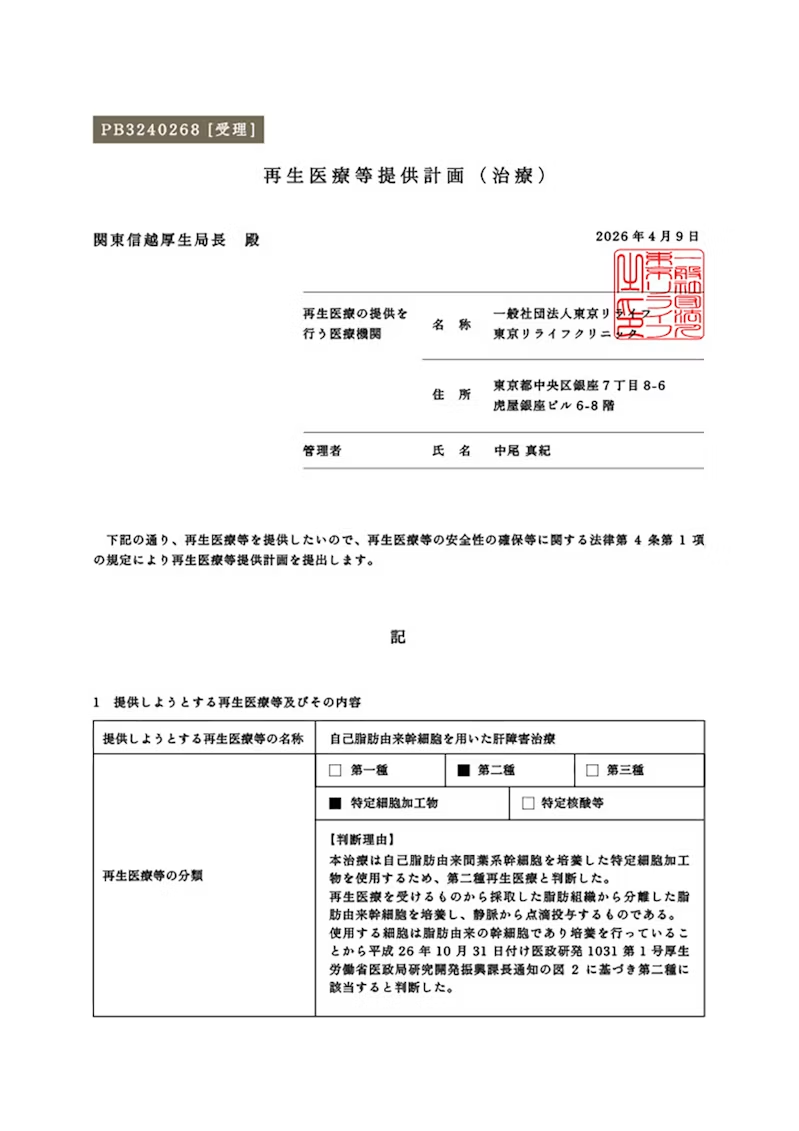
Stem cell therapy is provided under a Regenerative Medicine Provision Plan that has been reviewed in accordance with Japan's Act on the Safety of Regenerative Medicine. The treatment protocol, cell processing, and quality management are conducted under an accepted plan submitted to Japan's Ministry of Health, Labour and Welfare (MHLW).
Accepted Plan PB3240268: Treatment for Liver Function Using Autologous Adipose-Derived Stem Cells
Main Causes of Fatty Liver and Cirrhosis
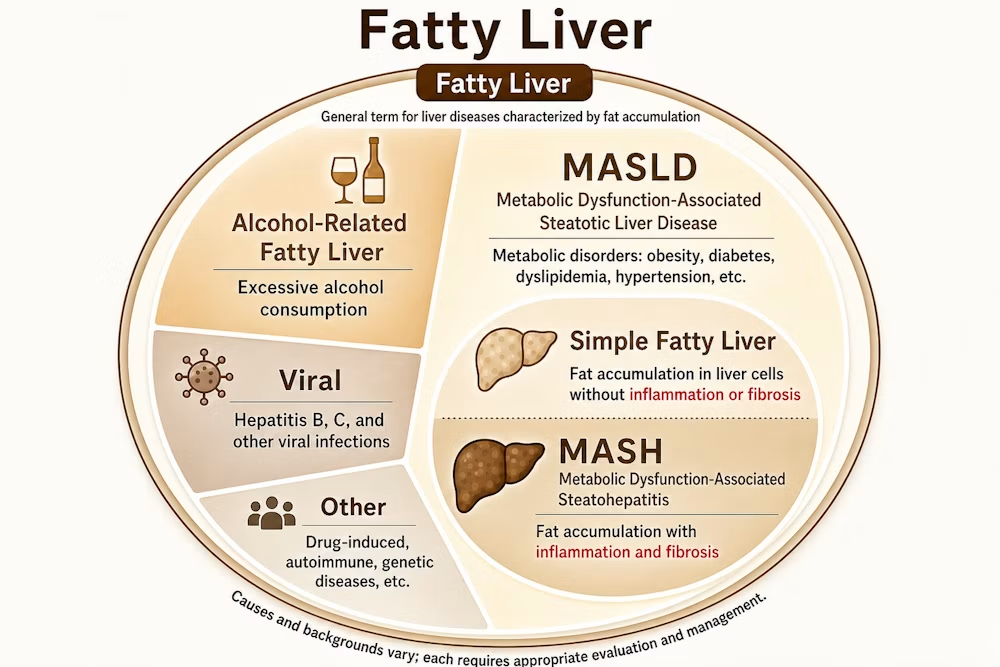
Fatty liver and cirrhosis often involve multiple underlying factors, including metabolic disorders, lifestyle habits, alcohol consumption, viral hepatitis, and autoimmune diseases. In the past, fatty liver was commonly associated with alcohol use. Today, however, a large proportion of cases are linked to metabolic abnormalities related to lifestyle, known as metabolic dysfunction-associated steatotic liver disease (MASLD), as well as liver damage caused by long-term alcohol consumption.
Because the necessary tests and treatment approach vary depending on the cause, it is important not to rely on liver function test results alone but also to identify any underlying conditions. ※3、※4
Fatty Liver Disease Related to Metabolic Disorders and Lifestyle
Fatty liver is a condition in which excess fat builds up in the liver. Fat cells are known to release inflammatory substances. As MASLD progresses, inflammation may develop, leading to metabolic dysfunction-associated steatohepatitis (MASH). In recent years, this type of nonalcoholic fatty liver disease has become increasingly common, making regular monitoring of liver health important. ※5
(Metabolic dysfunction-associated steatotic liver disease (MASLD) is a general term for a condition involving fat accumulation in the liver together with cardiometabolic risk factors such as obesity, diabetes, dyslipidemia, and high blood pressure.)
Alcohol-Related Liver Disease from Long-Term Drinking
Alcohol consumption is one of the factors that can lead to fatty liver, hepatitis, liver fibrosis, and cirrhosis.
If liver function tests show abnormal results, the amount and pattern of alcohol consumption should be assessed. When necessary, support for reducing or stopping alcohol use may be considered. ※4
Other Underlying Diseases
Other conditions that can cause chronic liver damage and cirrhosis include hepatitis B and C virus infections, autoimmune hepatitis, primary biliary cholangitis, hemochromatosis, and Wilson's disease. ※4
For hepatitis caused by hepatitis B or C virus, antiviral treatment based on the type of virus and the condition of the liver is the standard approach. Stem cell treatment has not been established as an antiviral treatment for hepatitis B or C. ※6、※7
Autoimmune hepatitis requires appropriate drug treatment and ongoing monitoring based on the condition. ※8
The human clinical studies on stem cell treatment presented on this page did not target autoimmune liver diseases. ※9〜※12
Because several causes may be present at the same time, it is important to receive a medical evaluation based on your test results, medical history, and the underlying cause of your liver condition.
How Does Liver Disease Progress?
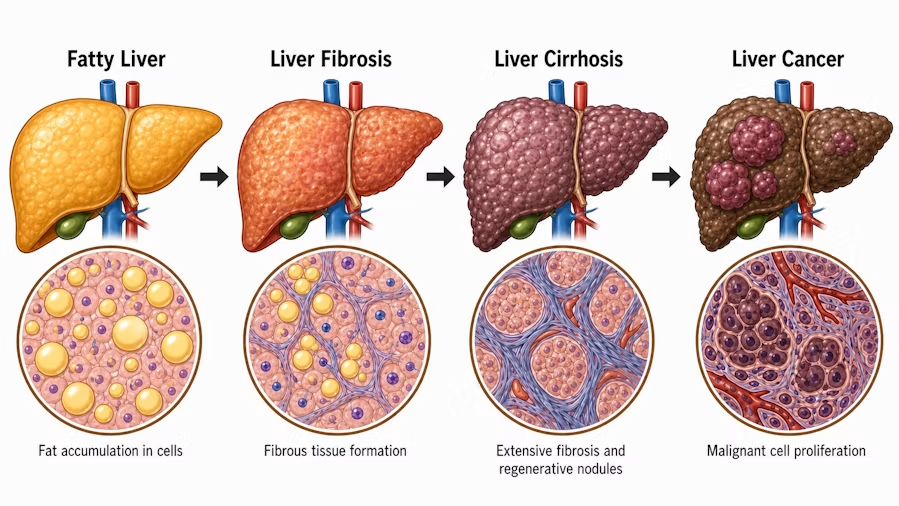
Fatty Liver → Liver Fibrosis → Cirrhosis
Regardless of the underlying cause, liver dysfunction generally progresses in a similar way.
When inflammation or liver damage caused by fatty liver, chronic hepatitis, or alcohol-related liver disease continues over a long period, scar tissue may build up as the liver tries to repair itself, leading to liver fibrosis. As fibrosis progresses, the liver may become stiff and develop into cirrhosis, which can affect liver function and blood flow. ※4、※5
Cirrhosis → Liver Cancer
Cirrhosis can lead to complications such as ascites, jaundice, esophageal or gastric varices, and hepatic encephalopathy. Chronic liver damage and cirrhosis are also among the factors associated with an increased risk of liver cancer.
In people with hepatitis B, liver cancer can sometimes develop before cirrhosis occurs. Regular tests and monitoring based on the underlying liver disease are therefore important. ※4、※6
However, the speed and course of disease progression vary from person to person. In regenerative medicine, it has not yet been established which types of cells or administration methods are most appropriate for each stage of liver disease.
How Regenerative Medicine May Work
Research on regenerative medicine for liver disease has mainly focused on the potential anti-inflammatory effects of mesenchymal stem cells (MSCs) and factors secreted by these cells. Their potential role in processes related to liver inflammation and fibrosis is currently being studied. ※1
1.Research on Inflammation
Studies using mesenchymal stem cells have investigated their interactions with cells and cytokines involved in immune responses and inflammation. Researchers are studying whether MSCs may affect processes involved in the inflammatory environment of the liver. ※1
For fatty liver disease and alcohol-related liver disease, standard management focuses on factors such as diet, physical activity, body weight, glucose and lipid metabolism, and alcohol consumption. ※4、※5
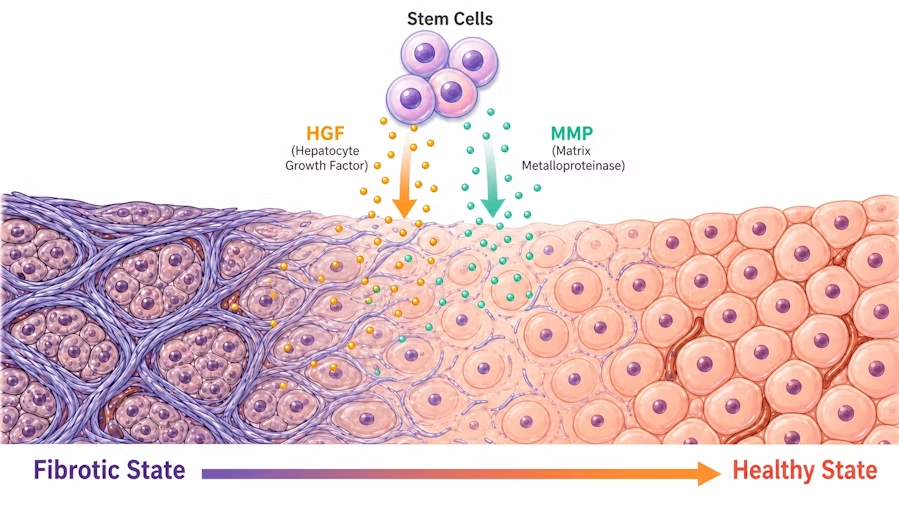
2.Research on Fibrosis Focusing on HGF and MMPs
In liver fibrosis, extracellular matrix components such as collagen accumulate in the liver. HGF and MMPs, which are considered to be secreted by mesenchymal stem cells, have been studied mainly in basic research for their potential involvement in tissue repair and processes related to fibrosis. ※1
However, these findings are still partly at the research stage and do not guarantee clinical results for fatty liver or cirrhosis. It is important not to stop or change lifestyle management or existing drug treatments without consulting your doctor.
Research Reports on Stem Cell Treatment for Fatty Liver and Cirrhosis
The following are clinical studies conducted in humans. Most of these studies involved patients with alcohol-related cirrhosis, decompensated cirrhosis, or fatty liver disease such as MASH.
Study | Participants | Reported Findings |
|---|---|---|
Pilot study using autologous bone marrow-derived mesenchymal stem cells in patients with alcohol-related cirrhosis ※9 | 12 enrolled | 6 of 11 patients (54.5%) showed a clear reduction in fibrosis. Extracellular matrix components associated with fibrosis decreased significantly. |
Multicenter, randomized, open-label, non-inferiority study using autologous bone marrow-derived mesenchymal stem cells in patients with alcohol-related cirrhosis ※10 | 72 | Significant reductions were observed after both the first and second administrations compared with baseline. |
Randomized, placebo-controlled trial using autologous bone marrow-derived mesenchymal stem cells in patients with decompensated cirrhosis ※11 | 27 | No clear significant difference was found between the treatment and placebo groups. |
Investigator-initiated clinical trial using autologous adipose-derived regenerative cells (ADRCs) in patients with nonalcoholic steatohepatitis (NASH) or decompensated cirrhosis ※12 | 7 | Liver protein synthesis improved in 6 patients. Blood coagulation factor synthesis by the liver improved in 5 patients. |
※These were small-scale clinical studies and do not guarantee treatment effectiveness.
A 2025 medical review prepared by an international nonprofit organization evaluated 12 randomized clinical trials involving 823 adults with decompensated cirrhosis.
The review concluded that there is currently insufficient evidence to determine with certainty whether human stem cell treatment differs from control treatment in terms of mortality, serious adverse events, quality of life, complications, or liver function test results. ※2
Side Effects, Complications, and Important Considerations of Stem Cell Therapy
Treatment outcomes vary by individual. This is an unapproved, self-pay medical procedure using autologous cells prepared in our in-house Cell Processing Center.
Potential risks include:
- Fat collection: Bleeding, swelling, allergic reactions
- Infusion: Allergic reactions, pulmonary embolism, nausea
Treatment Process
Stem cell therapy can be administered either by intravenous infusion or by local injection, but the overall process—fat collection, cell culture, and preparation—is largely the same for both.
PRICE
IV DripStandard Stem Cell Therapy 1session
IV DripStem Cell Therapy (Premium Ver.)
IV DripRelife Stem Cell Therapy
Annual Storage Fee
References
※1 Kang SH, et al. Gut Liver. 2020.
※2 Aung HH, et al. Cochrane Database Syst Rev. 2025.
※3 The Japan Society of Hepatology. Understanding Liver Disease. 2020.
※4 The Japanese Society of Gastroenterology and The Japan Society of Hepatology. Guide to Liver Cirrhosis for Patients and Their Families. 2023.
※5 European Association for the Study of the Liver, et al. J Hepatol. 2024.
※6 European Association for the Study of the Liver. J Hepatol. 2025.
※7 The Japan Society of Hepatology. Guidelines for the Treatment of Hepatitis C, Version 8.4 (Abridged Edition). 2025.
※8 European Association for the Study of the Liver. J Hepatol. 2025.
※9 Jang YO, et al. Liver Int. 2014.
※10 Suk KT, et al. Hepatology. 2016.
※11 Mohamadnejad M, et al. Liver Int. 2013.
※12 Sakai Y, et al. Regen Ther. 2021.