Are you struggling with...
Why Does Type 2 Diabetes Worsen Over Time?
Stem Cell Therapy: Targeting the Core Mechanisms
How Stem Cells Work for Diabetes: Key Mechanisms
Who Is Suitable for Stem Cell Therapy?
Evidence from Clinical Research
How to Prevent Diabetes Complications
Why Choose Tokyo Relife Clinic?
Treatment Process
Risks & Safety Precautions
Price
Frequently Asked Questions (FAQ)
Can Stem Cells Help Control Diabetes? A regenerative approach targeting the underlying mechanisms — pancreatic beta cell loss and chronic inflammation — beyond conventional medication.
Are you struggling with:
- High HbA1c despite strict medication?
- Increasing drug types and dosages?
- The daily burden of insulin injections?
- How to prevent progressing complications (e.g., neuropathy, kidney issues)?
- Reluctance to add new drugs?
If current medications aren't enough, we introduce a new option: Stem Cell Therapy. This regenerative approach goes beyond merely managing blood sugar levels; it directly addresses the core issues driving the disease.
Why Does Type 2 Diabetes Worsen Over Time? Core Factors and Mechanisms
Many patients wonder what drives the disease. Even with regular treatment, diabetes often progresses due to three underlying causes that medication alone cannot fully resolve:
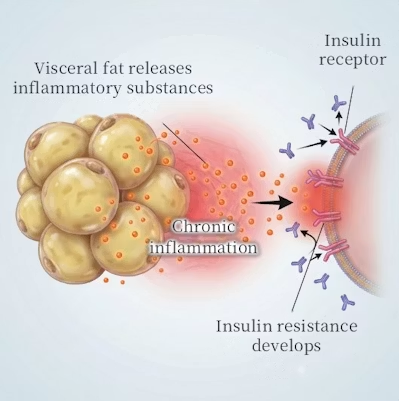
1. Chronic Inflammation (The Vicious Cycle)
Visceral fat releases inflammatory cytokines (TNF-α, IL-6), causing persistent inflammation. This impairs insulin function and directly damages pancreatic beta cells, creating a vicious cycle.※1
2. Insulin Resistance
Chronic inflammation makes muscle and fat cells less responsive to insulin, preventing proper glucose absorption. As a result, blood sugar becomes harder to control.
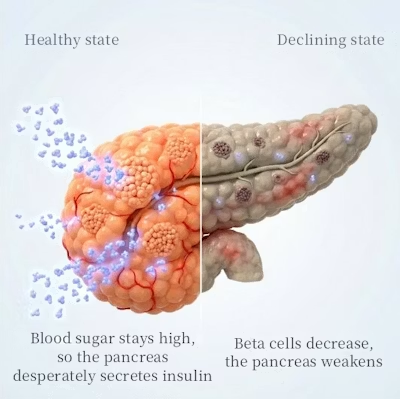
3. Progressive Loss of Pancreatic Beta Cells
Overworked to compensate for insulin resistance, β-cells eventually undergo apoptosis (cell death). Studies show type 2 diabetes patients lose 40–60% of β-cell mass, with insulin secretion already reduced by about 50% at diagnosis.※2,3
These three problems reinforce each other: insulin resistance increases the burden on β-cells, while chronic inflammation accelerates both resistance and cell damage.※4
Breaking this cycle requires addressing these underlying factors—not just lowering blood sugar.
Current Medications Lower Blood Sugar — But Fail to Protect β Cells
Standard treatment uses diet, exercise, and medications—including GLP-1 agonists like semaglutide and tirzepatide—to control blood sugar. While these can lower HbA1c by 1.0–1.8%※5, blood sugar often rebounds upon stopping. Crucially, they do not prevent the ongoing loss of pancreatic β-cells.※6
Even when HbA1c appears stable, β-cells continue to decline, and insulin secretion drops year by year.
This explains a common patient frustration: "I'm taking my medication exactly as prescribed, yet I need more drugs every year." Conventional treatments simply manage glucose levels; they cannot protect your β-cells.
Once Complications Worsen, Options Shrink
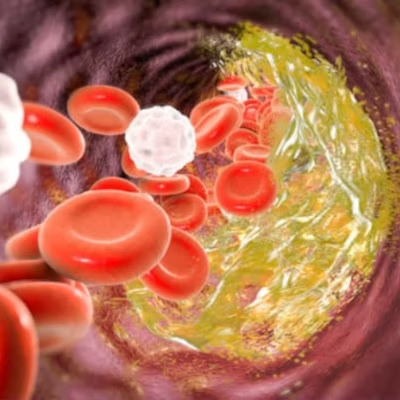
Declining β-cells make blood sugar control harder, chronically damaging blood vessels and nerves. This triggers severe complications such as retinopathy and nephropathy; notably, diabetic nephropathy is Japan's leading cause of dialysis.※7
The Reality: Once severely damaged, neither medication nor stem cell therapy can fully reverse the condition. Progression to dialysis or blindness drastically limits your options.
Early Action is Key: We must act while viable β-cells remain. To prevent progression, targeting the underlying causes is essential—this is the true value of regenerative medicine.
Stem Cell Therapy: Targeting the Core Mechanisms
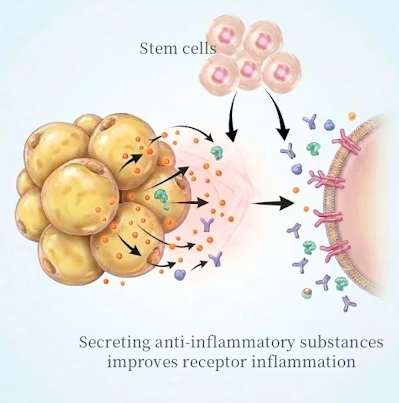
Rather than merely lowering blood sugar, this therapy addresses underlying inflammation to target β-cell decline in the pancreas and insulin resistance directly.
Under Japan's regenerative medicine laws, we utilize Adipose-Derived Mesenchymal Stem Cells (AD-MSCs). A small amount of abdominal fat is collected, cultured, and administered via an IV drip.
Key Advantages:
- Virtually No Rejection: Using your own (autologous) cells minimizes immune risks.
- Low Physical Burden: A quick fat collection under local anesthesia.
- Strictly Regulated: Fully compliant with Japan's Ministry of Health, Labour and Welfare (MHLW) framework.
Note on research: While iPS cell studies for β-cell transplantation are advancing, they are not yet ready for clinical use.
How Stem Cells Work for Diabetes: Key Mechanisms
After infusion, stem cells detect "SOS signals" from damaged tissues, homing in on injured areas like the pancreas. Once there, they release bioactive factors that support cellular repair and address the underlying causes of diabetes.
Research highlights 4 key mechanisms:
- Protecting Weakened β-Cells
Growth factors secreted by stem cells suppress β-cell apoptosis (cell death). They also improve pancreatic blood flow, boosting nutrient supply.※9 - Reducing Chronic Inflammation & Insulin Resistance
Stem cells regulate the immune system to suppress visceral fat inflammation—a primary trigger for insulin resistance.※10 - Multi-Organ Blood Sugar Control
Improves insulin sensitivity across the liver, muscles, and fat tissues, enhancing overall blood sugar control.※11 - Helping Prevent Complications
Through anti-inflammatory and vascular repair effects, this therapy may help delay or prevent the progression of diabetic complications (retinopathy, nephropathy, and neuropathy).
Disclaimer: These mechanisms are based on current research. Individual results vary, and specific outcomes are not guaranteed.
Who Is Suitable for Stem Cell Therapy?
Eligibility Criteria
This treatment is mainly considered for patients with type 2 diabetes who meet the following conditions:
- Early-Stage Type 2 Diabetes: Before complete β-cell exhaustion in the pancreas.
- HbA1c 8–12%: Inadequately controlled by medication alone.
- Residual β-Cell Function: Fasting serum C-peptide ≥ 1.0 ng/mL.※8
*Unsure of your exact numbers? Don't worry. Final eligibility is determined through a comprehensive consultation and blood tests at our clinic.
Treatment Goals
Important: Stem cell therapy is not a cure for diabetes. We offer it as a complementary regenerative approach with the following realistic goals:
- Reduce Burden: Decrease reliance on insulin and multiple medications.
- Stabilize Levels: Maintain or improve HbA1c for better blood sugar control.
- Mitigate Risks: Help prevent or delay severe complications like dialysis and blindness.
Evidence from Clinical Research
Multiple trials highlight the potential of stem cell therapy for diabetes. Key findings include:
Study (Type) | Pts | Key Results |
|---|---|---|
Skyler 2015※12 (RCT) | 61 | HbA1c improved by 0.3–0.6% |
Nguyen 2021※13 (RCT) | 30 | Notable benefits if duration <10 yrs & BMI <23 |
Liu 2014※14 (Pilot) | 22 | Significant HbA1c drop; positive β-cell trend |
Jiang 2011※15 (Pilot) | 10 | Insulin dose reduced; C-peptide increased |
*Note: These are small-scale early trials; larger RCTs are needed for definitive validation. *Crucially, no serious adverse events were reported in these studies. *Stem cell therapy is an advanced complementary approach—not a complete replacement for your prescribed medication.
How to Prevent Diabetes Complications: A Regenerative Approach
Diabetes' real threat isn't just numbers—it's cumulative vascular damage leading to dialysis, blindness, or stroke. Once established, this is incredibly hard to reverse.
Stem cell therapy's core value: actively delaying progression before complications strike.
3 Prevention Mechanisms:
- Vascular Repair: Promotes endothelial repair, slowing microvascular damage.
- Inflammation Control: Reduces chronic inflammation, addressing the underlying causes of complications.
- β-Cell Protection: Protects the pancreas to stabilize blood sugar control.
Exosome Therapy: Lower-Burden Prevention
Exosome therapy delivers regenerative factors secreted by stem cells without cell collection—reducing physical burden while addressing the same underlying causes. It can be used alongside or independently of stem cell therapy.
Why Choose Tokyo Relife Clinic?
Regulatory Compliance
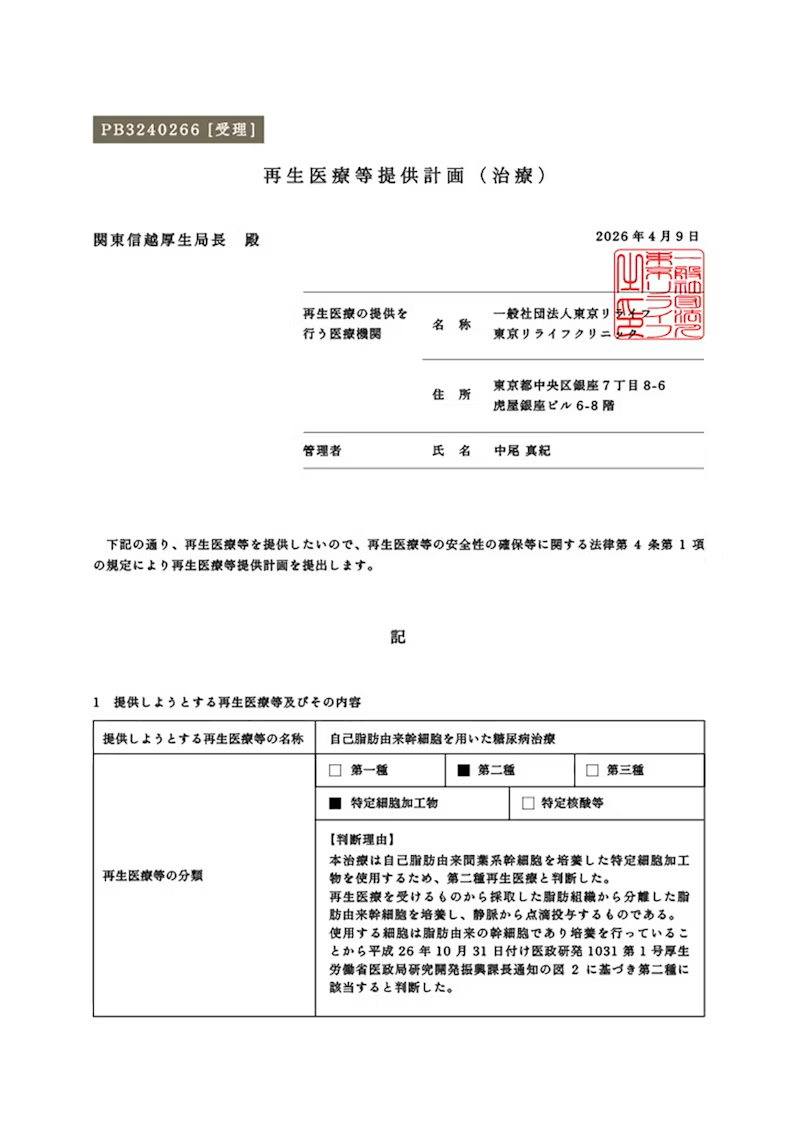
In Japan, regenerative medicine requires third-party committee review and Ministry of Health, Labour and Welfare registration. Our stem cell therapy is Class II Regenerative Medicine — conducted strictly within Japan's national regulatory framework.
・PB3240266: Regenerative medicine using autologous adipose-derived stem cells for glucose metabolism abnormalities
In-House CPC: Complete Quality Control
Our in-house Cell Processing Center (CPC) manages the entire process — from cell collection and culture to quality testing and infusion — eliminating external transport risks and temperature fluctuations.
Before every infusion, we verify:
- Cell count and viability
- Sterility and contamination screening
- Multiple quality parameters
Only cells meeting all standards are administered.
Joint Research with The University of Tokyo
Through ongoing research collaboration with The University of Tokyo, we continuously optimize cell culture methods to provide safer, more effective stem cell therapy.
Treatment Process
Consultation → Examination → Fat Collection → Cell Culture → Intravenous Infusion
For detailed information, please see our dedicated stem cell therapy page.
Risks & Safety Precautions
Treatment outcomes vary by individual. This is an unapproved, self-pay medical procedure using autologous cells prepared in our in-house Cell Processing Center.
Potential risks include:
- Fat collection: Bleeding, swelling, allergic reactions
- Infusion: Allergic reactions, pulmonary embolism, nausea
PRICE
IV DripStandard Stem Cell Therapy 1session
IV DripStem Cell Therapy (Premium Ver.)
IV DripRelife Stem Cell Therapy
Annual Storage Fee
Ready to Take the Next Step?
"Not sure if this is right for me." "I'd like to get tested first." — We welcome any questions.
At your initial consultation, we review your blood test results and provide a clear assessment of your suitability for stem cell therapy.
No commitment required — take your time to decide after consultation.
References
※1 Hotamisligil GS. Nature. 2017;542(7640).
※2 Butler AE, et al. Diabetes. 2003;52(1).
※3 UKPDS Group. Diabetes. 1995;44(11).
※4 Kahn SE, et al. Nature. 2006;444(7121).
※5 Marso SP, et al. N Engl J Med. 2016;375(4). / Marso SP, et al. N Engl J Med. 2016;375(19).
※6 Wilding JPH, et al. N Engl J Med. 2021;384(11).
※7 日本透析医学会. わが国の慢性透析療法の現況. 2024.
※8 日本糖尿病学会 編. 糖尿病治療ガイド 2024-2025. 文光堂.
※9 Caplan AI, Dennis JE. J Cell Biochem. 2006;98(5).
※10 Gao F, et al. Cell Death Dis. 2016;7(1).
※11 Si Y, et al. Diabetes. 2012;61(6).
※12 Skyler JS, et al. Diabetes Care. 2015;38(8).
※13 Nguyen LT, et al. Stem Cells Transl Med. 2021;10(9).
※14 Liu X, et al. Stem Cell Res Ther. 2014;5(2).
※15 Jiang R, et al. Front Med. 2011 Mar;5(1):94-100.
FAQ
- Q:Is the treatment painful?A:
No. Fat collection is performed under local anesthesia with minimal discomfort. The infusion experience is the same as a standard IV drip.
- Q:Is hospitalization required?A:
No. Both fat collection and infusion are completed same-day.
- Q:Can I continue my current diabetes medication or insulin?A:
Yes. Stem cell therapy complements existing treatment — no medication changes required. We coordinate with your primary physician throughout.
- Q:How soon will I see results?A:
Individual results vary. Some patients notice changes in blood sugar control and HbA1c within 1–3 months post-treatment.
- Q:How many infusion sessions are needed?A:
Generally 1–3 sessions per course, determined by individual assessment.

Medical Reviewer:Dr. Maki Nakao
Drawing on extensive clinical experience from over 30,000 cases, Dr. Nakao integrates regenerative medicine and anti-aging medicine into her clinical practice. She is committed to evidence-based advanced medical care, emphasizing meticulous patient communication and individualized treatment planning. Since 2026, she has served as Director of Tokyo Relife Clinic, providing optimized and personalized medical care to each patient.