What Is Cerebrovascular Disease?
Who Is Stem Cell Therapy For?
Recovery and Rehabilitation After Stroke
Types of Complications & Stem Cell Potential
Stroke & Dementia: A Connected Risk
How Stem Cells Work After Stroke
Regulatory Approval
Clinical Research: Stroke Sequelae Treatment
Risks & Safety Precautions
Treatment Fees
Treatment Process
Frequently Asked Questions (FAQ)
After a stroke or cerebral infarction, the sequelae—such as paralysis, aphasia, and spasticity—often hit a plateau where rehabilitation stalls.
When conventional treatments reach their limits, stem cell therapy offers new possibilities for life after stroke by supporting neurological repair and angiogenesis.
What Is Cerebrovascular Disease?
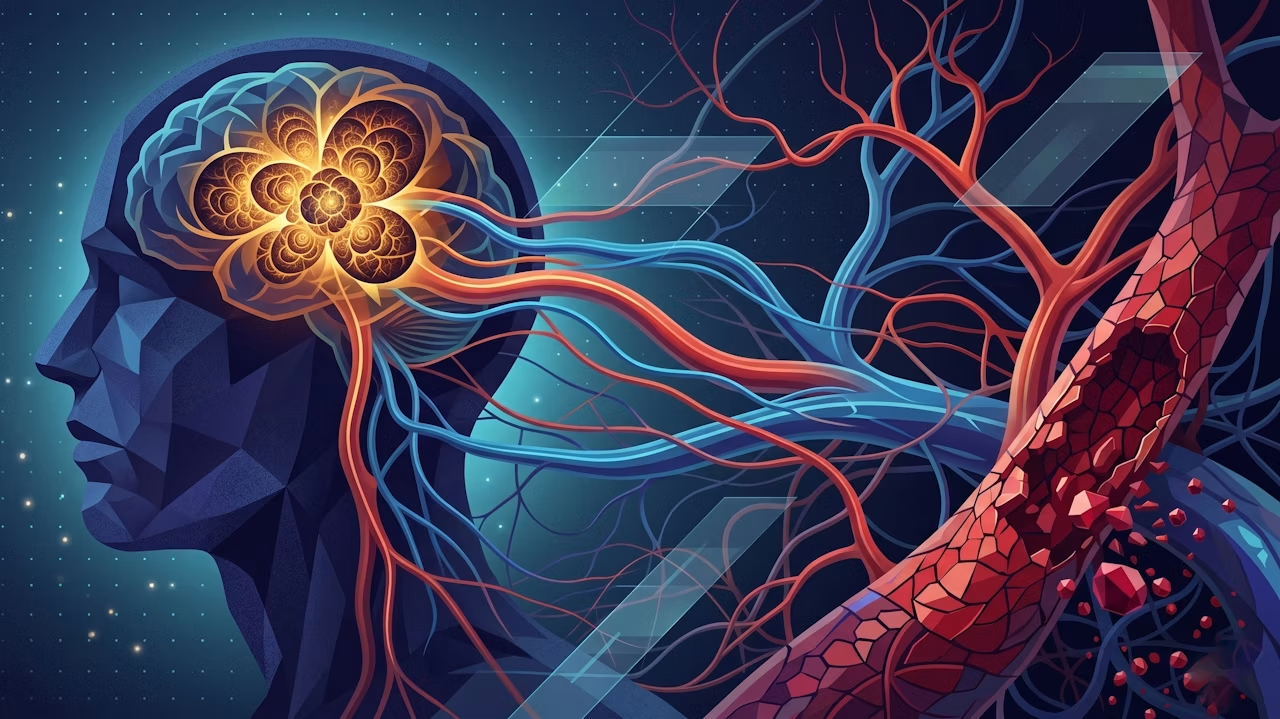
It refers to brain damage caused by blocked vessels (cerebral infarction) or ruptured vessels (hemorrhage).
Cerebral Infarction vs Stroke:
- Stroke: The umbrella term for all acute cerebrovascular events.
- Cerebral Infarction: The most common type of stroke, caused specifically by a blocked vessel.
Typical early stroke symptoms:
- Facial drooping
- Slurred speech or confusion
- Severe headache
- Loss of consciousness
Even with prompt emergency care, life after stroke often involves lasting challenges. Depending on the damaged brain area, complications may include physical disability, cognitive impairment, or dysphagia (swallowing difficulty).
Who Is Stem Cell Therapy For?
At Tokyo Relife Clinic, we evaluate stem cell therapy for patients facing the long-term effects of stroke or:
- Cerebral infarction
- Cerebral hemorrhage
- Subarachnoid hemorrhage
- Vascular Dementia (with cognitive impairment)
- Stalled rehabilitation progress
- Being told further recovery is unlikely
- Seeking new options alongside standard care
Recovery and Rehabilitation After Stroke
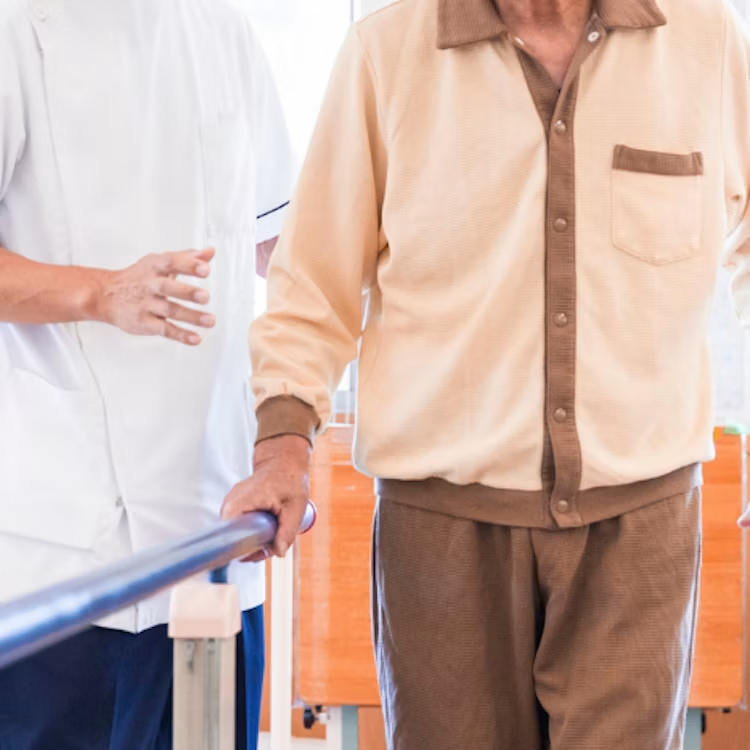
Even when acute treatment saves a patient's life, early rehabilitation is essential to prevent disuse syndrome and maximize brain plasticity. During the first 3–6 months, many patients show marked functional recovery.※1
However, in the chronic phase, improvement often stalls despite ongoing rehab. This is known as the recovery plateau.※2
Why Does a Recovery Plateau Occur?
This plateau stems from fundamental changes in the brain environment. Three major barriers emerge:
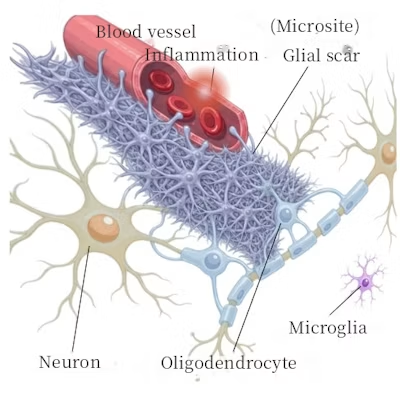
Chronic Inflammation
Persistent inflammation around the injury disrupts surviving neurons.
Glial scar formation
As a defense mechanism, glial cells form a hard scar that physically blocks new neural circuits.
Depleted Growth Factors
Continuous inflammation and scarring exhaust essential neurotrophic factors (like BDNF), sharply reducing brain plasticity.
Additionally, long-term inactivity due to paralysis leads to muscle weakness, spasticity, and disuse syndrome. Even if the brain retains recovery potential, physical limitations further reinforce the plateau.
Types of Complications & Stem Cell Potential
Depending on the damaged brain area, a stroke can leave various lasting complications. Below are the primary conditions frequently reported to improve in studies combining stem cell therapy with rehabilitation:

Motor Impairment (Paralysis & Spasticity)
Difficulty moving the limbs, walking only with a cane or device, or performing fine motor tasks (buttons, chopsticks), affecting almost all aspects of daily life.
Speech & Swallowing Issues (Aphasia & Dysphagia)
Difficulty speaking or understanding language (aphasia), slurred speech, and swallowing difficulties (dysphagia) that increase the risk of choking (aspiration).
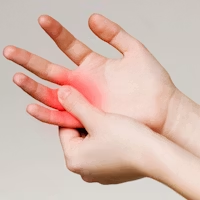
Sensory Sequelae
Persistent numbness, pain, diminished sense of touch, or partial visual field loss.
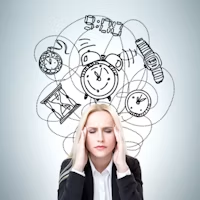
Higher Brain Dysfunction (Cognitive Impairment)
- Memory: Difficulty retaining new information.
- Attention: Inability to maintain focus.
- Executive Function: Struggling to plan and execute tasks.
- Spatial Neglect: Unawareness of one side of space. (Note: Aphasia is medically in this category, but here we focus on cognitive aspects).
Emotional & Psychological Sequelae
Post‑stroke depression with loss of motivation, anxiety, and emotional lability (e.g., crying easily with minor triggers).
Stroke & Dementia:A Connected Risk
Cognitive impairment after a stroke—such as memory and attention deficits—can be difficult for even specialists to distinguish from dementia without proper testing.
Research confirms that vascular damage from a stroke not only triggers vascular dementia, but also accelerates the progression of underlying Alzheimer's disease.※3
How Stem Cells Work After Stroke
Stem cell therapy tackles the 3 underlying barriers of the recovery plateau through paracrine effects (bioactive secretions):
1. Inflammation Control
Anti-inflammatory cytokines suppress chronic inflammation, helping to restore a healthier brain environment for surviving neurons.※4
2. Scar Softening & Angiogenesis
Stem cells secrete MMP (scar-softening enzymes) and VEGF (vascular endothelial growth factor).※5 This helps build new microvascular networks that guide nerve regeneration.
3. Growth Factor Replenishment
Stem cells secrete BDNF and other growth factors to help replenish depleted neurotrophic support, promoting brain plasticity and the rebuilding of neural circuits.※6
Synergistic Effects: Stem Cell Therapy + Rehabilitation
Research shows that combining stem cell therapy with rehabilitation yields significantly better outcomes than either treatment alone.※7
.png?w=700&h=510&fm=avif)
This combined approach helps break through the traditional "recovery plateau," offering new possibilities beyond conventional limits.
Regulatory Approval
Tokyo Relife Clinic operates under Japan's Act on the Safety of Regenerative Medicine:
Plan No. PB3240265: Autologous adipose-derived stem cell therapy for cerebrovascular disease sequelae
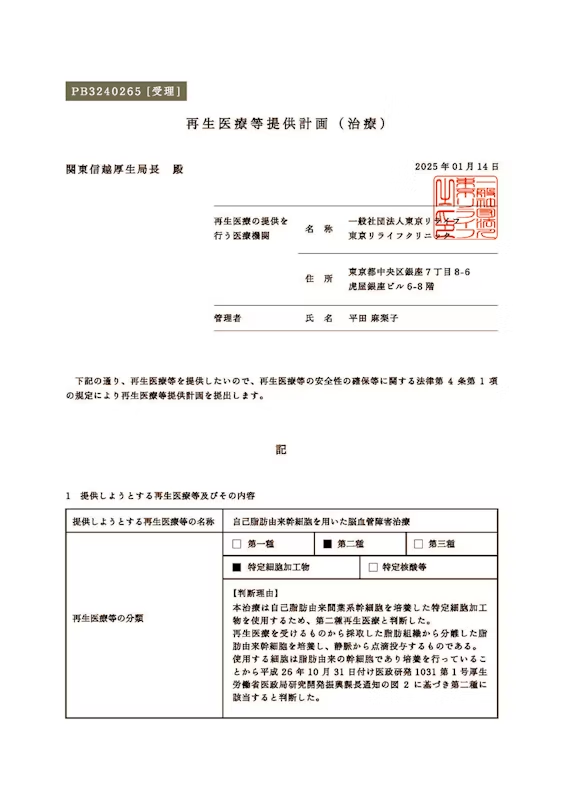
※ Class II Regenerative Medicine. Self-pay procedure; not covered by Japan's public health insurance.
※ Uses patient's own cells prepared at our in-house CPC — not a pharmaceutical product.
Clinical Research: Stroke Sequelae Treatment
Representative studies on stem cell therapy for stroke recovery:
Study Focus | Patients | Key Results |
|---|---|---|
Plateau-phase stroke patients ※8 | 18 | Significant motor & neurological improvement |
Stroke with aphasia ※9 | 40 | Motor & language improvement |
Plateau-phase stroke patients ※10 | 24 | Motor, tactile & pain improvement |
Cerebral infarction sequelae ※11 | 48 | Motor & reduced cognitive impairment |
※Note: Provided for academic reference only. Individual results vary, and specific outcomes are not guaranteed.
Risks & Safety Precautions
Treatment outcomes vary by individual. This is an unapproved, self-pay medical procedure using autologous cells prepared in our in-house Cell Processing Center.
Potential risks include:
- Fat collection: Bleeding, swelling, allergic reactions
- Infusion: Allergic reactions, pulmonary embolism, nausea
PRICE
IV DripStandard Stem Cell Therapy 1session
IV DripStem Cell Therapy (Premium Ver.)
IV DripRelife Stem Cell Therapy
Annual Storage Fee
Treatment Process
For a detailed explanation of the treatment process, please see our Stem Cell Therapy page.
→ Stem Cell Therapy Details
References
※1 Nudo RJ, et al. J Neurosci. 1996;16(2):785-807.
※2 Kwakkel G, et al. Stroke. 2004;35(9):2181-6.
※3 Snowdon DA, et al. JAMA. 1997;277(10):813-7.
※4 Ohtaki H, et al. Proc Natl Acad Sci U S A. 2008;105(38):14638-43.
※5 Abdul-Muneer PM, et al. Mol Neurobiol. 2016;53(9):6106-6123.
※6 Honmou O, et al. Brain. 2011;134(Pt 6):1790-807.
※7 Yasuhara T, et al. Stem Cell Res Ther. 2023;14(1):10.
※8 Steinberg GK, et al. Stroke. 2016;47(7):1817-24.
※9 Bhasin A:Cerebrovasc Dis Extra. 2011;1(1):93-104
※10 Chen DC:Cell Transplant. 2014;23(12):1599-1612
※11 Nguyen LT, et al. Stem Cells Transl Med. 2025;14:szaf063.
※12 Hare JM, et al. Nat Med. 2025;31(4):1257-1271.
FAQ
- Q:It has been many years since my stroke. Can I still receive stem cell therapy?A:Yes. Our stem cell therapy is designed for both post-acute and chronic "plateau" phases. Even years after a stroke, chronic inflammation can persist. By improving the brain environment, stem cells may help you regain potential for functional recovery. Please don't give up just because time has passed—feel free to consult us.
- Q:If I receive stem cell therapy, can I stop rehabilitation?A:No. Continuing rehabilitation is essential. Studies show that for managing the complications of life after stroke, combining stem cell therapy with rehab produces significantly better functional recovery than either treatment alone.※7
- Q:When will I feel an effect?A:It varies by patient. Some studies report initial improvements within a few weeks, with clearer gains around 6 months post-treatment.※8-11 Rebuilding neural circuits takes time. Unlike acute treatments that offer immediate change, this approach requires ongoing rehab and long-term observation.
Note: Not all patients experience visible benefits.
- Q:Which stroke symptoms are most likely to improve?A:While individual results vary, research shows potential improvements in: Motor function (paralysis, spasticity); Speech (aphasia) & swallowing (dysphagia); Sensory issues; Cognitive impairment. Because stem cells act on the entire brain through paracrine effects (reducing inflammation and promoting tissue repair), they may offer comprehensive support for these long-term effects of stroke.
(Note: Specific outcomes are not guaranteed.)
- Q:Is dementia caused by a stroke also treatable?A:Yes. Vascular dementia and mixed forms associated with stroke are within our scope. Studies suggest that improving the brain environment with stem cell therapy may help maintain or support cognitive function.※12
However, because cognitive improvements often take longer to appear than motor recovery, a long-term approach is essential.
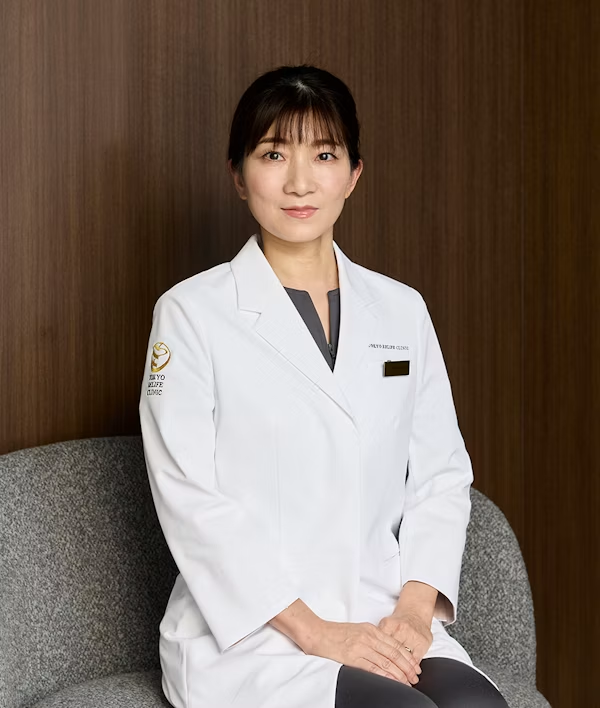
Medical Reviewer:Dr. Maki Nakao
Drawing on extensive clinical experience from over 30,000 cases, Dr. Nakao integrates regenerative medicine and anti-aging medicine into her clinical practice. She is committed to evidence-based advanced medical care, emphasizing meticulous patient communication and individualized treatment planning. Since 2026, she has served as Director of Tokyo Relife Clinic, providing optimized and personalized medical care to each patient.TEAMS