Our clinic provides both stem cell culture supernatant and exosomes, and we are often asked about the differences between them.
Although both have recently attracted attention in the fields of "regenerative medicine" and "aging care," many people have a general impression of them but find it difficult to understand their specific differences. This page explains the differences in their mechanisms, treatment purposes, and combination therapy.
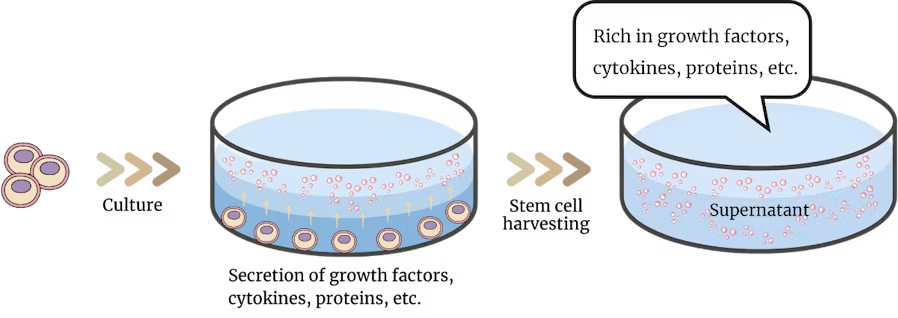
What Is Stem Cell Culture Supernatant?
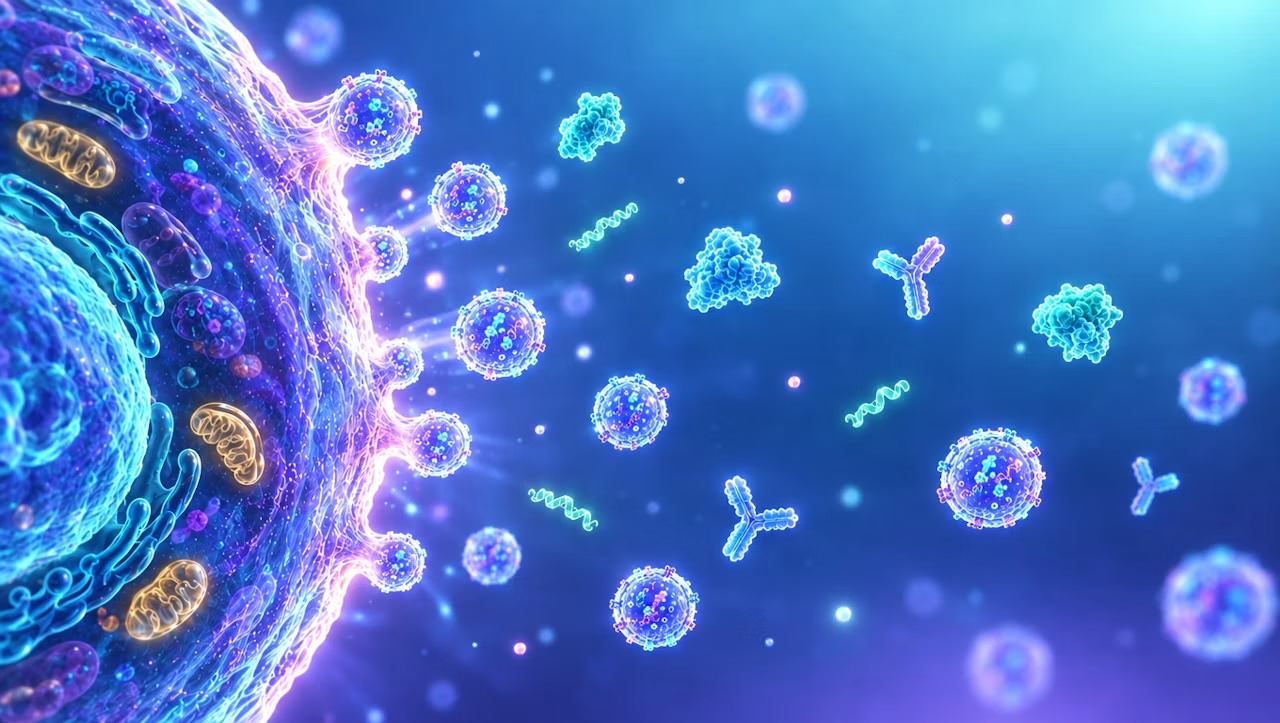
Stem cell culture supernatant is the clear liquid obtained during the process of culturing stem cells. It contains abundant exosomes, growth factors (GFs), and cytokines in a "free state (unencapsulated state)." Because these components act directly on cellular receptors, changes in cellular condition can be expected from a relatively early stage※1.
It is suitable for treatments aimed at directly targeting areas of concern and rapidly supporting cellular function.
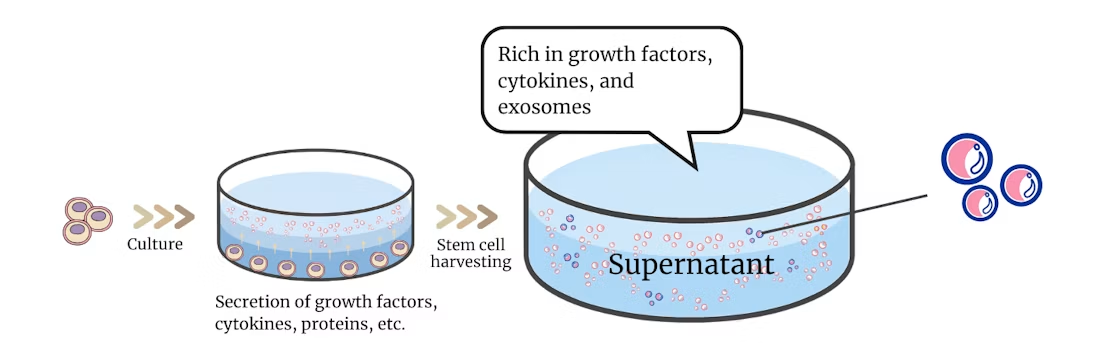
What Are Exosomes?
Exosomes are extracted at high purity from the exosomes contained in stem cell culture supernatant. Their lipid bilayer encapsulates miRNAs, growth factors (GFs), and other substances, making them more stable than stem cell culture supernatant. Due to their extremely small size, they can easily reach blood vessels at the peripheral level. Exosomes contain large amounts of miRNAs, which are thought to be involved in gene function after being taken up into cells. For this reason, research is progressing both in Japan and overseas on their role in regulating cellular functions.
Although it depends on the treatment method, there have been reports of effects lasting for 21 months after two treatments ※2. Exosomes are therefore often used to support medium- to long-term aging care for the body and cells.
Recommended For
Stem Cell Culture Supernatant
- Those who want to quickly improve areas affected by acute inflammation
- Those who want intensive support for postoperative scars or tissue damage
- Those who want intensive care for specific areas, such as the scalp or skin
- Those who want to feel the effects at an early stage
- Those who have accumulated fatigue and want to regain their energy quickly
Exosomes
- Those who experience recurring physical discomfort or chronic age-related concerns
- Those who want to pursue aging care at the cellular level
- Those who want to improve the body's overall underlying condition through intravenous infusion
- Those who want to continue care with an emphasis on medium- to long-term changes
- Those who have experienced the immediate care provided by stem cell culture supernatant and are considering the next step
Summary
Item | Stem Cell Culture Supernatant | Exosomes |
|---|---|---|
Stability | Low | High (protected by a lipid bilayer) |
Speed of Action | Fast (direct binding to receptors) | Slow (cellular uptake → miRNA action → regulation of gene expression) |
Duration of Effects | Short (3–6 months) ※3 | Long (6–10 months) ※4 |
Response to Inflammation | Fast | Slow but fundamental |
Involvement in Metabolism | Indirect | Relatively direct |
Compatibility with Administration Methods | Local injection is particularly effective. IV infusion is also possible. | Mainly IV infusion |
Best Suited For | Acute conditions, immediate effects, intensive localized care | Chronic conditions, medium- to long-term improvement of cellular condition, whole-body approach |
※ The duration and manifestation of effects vary among individuals. Treatments using stem cell culture supernatant and exosomes are still in the research stage and do not guarantee any treatment effects or treatment duration.
Suitable Treatment Areas for Each Approach
Based on the theory explained above, our clinic offers intravenous treatments using both stem cell culture supernatant and exosomes.
Stem cell culture supernatant, which is considered to act more directly and rapidly, is also actively used in combination with local injections. On the other hand, for brain condition and whole-body aging care, exosomes are often recommended to take advantage of their small size and unique functions.
Concern / Purpose | Supernatant | Exosomes | Rationale |
|---|---|---|---|
Support for the condition of the skin, scalp, male function, knees, and lungs | ◎ | ◯ | A direct growth factor approach to the targeted area is suitable |
Brain Condition | ◯ | ◎ | Refreshing through an IV infusion approach |
Whole-Body Aging Care | ◯ | ◎ | Suitable for gradually improving the body's overall underlying condition |
Recurring Physical Discomfort | ◯ | ◎ | Suitable for an approach that gradually restores the body from within |
※The physician will recommend the most appropriate treatment after consultation, taking into account your symptoms, medical history, and preferences.
Combining Stem Cell Culture Supernatant and Exosomes
Stem cell culture supernatant and exosomes are not a matter of "only one being the right choice." By taking advantage of the strengths of each and combining them, it is also possible to aim for care that is better suited to the intended purpose.
Stem Cell Culture Supernatant for Local Areas, Exosomes to "Build a Foundation" for the Whole Body
- For areas of concern such as the scalp, joints, and male function, stem cell culture supernatant is locally injected for a direct and immediate approach.
- At the same time, exosome IV infusion is used to improve the foundation of the body's cellular environment, circulation, and metabolism over the medium to long term.
Stem Cell Culture Supernatant in the Acute Phase, Then Shift to Exosomes in the Chronic Phase
- When sudden changes in physical condition or inflammation are prominent, stem cell culture supernatant is used for early care.
- Once the condition has stabilized, the focus shifts to exosomes with the aim of "creating a condition less prone to recurrence.
First Experience the "Effects" of Stem Cell Culture Supernatant, Then Move to a "Long-Term Plan" with Exosomes
- For those who are new to regenerative medicine and have concerns, local injection or IV treatment with stem cell culture supernatant can help them gain an idea of the changes.
- Once they are satisfied with the treatment, we propose a medium- to long-term care plan combining exosomes.
By considering the respective roles of each in this way, it becomes easier to understand how they can be combined.
※ The appropriate combination varies depending on the type and duration of your concerns, lifestyle, budget, and other factors. During your consultation, please tell us "what you would like to achieve" and "the timeframe in which you would like to work toward it.
Side Effects, Downtime, and Precautions for Stem Cell Culture Supernatant and Exosomes
General side effects associated with injections and IV infusions may include pain, bruising, and swelling at the injection site. These symptoms usually resolve naturally within a few days, although allergic reactions may occur in rare cases.
For detailed information on other side effects and precautions, please refer to the respective treatment pages.
FAQ
- Q:How long do the effects of stem cell culture supernatant and exosomes last?A:
The duration varies depending on your physical condition and treatment goals. Based on clinical experience, an estimated duration of approximately 1–2 months are generally provided for stem cell culture supernatant and approximately 3–6 months for exosomes.
- Q:What is the difference between IV infusion and local injection for stem cell culture supernatant and exosomes?A:
Stem cell culture supernatant is particularly suitable for local injection and is appropriate for an approach that delivers its components directly to areas of concern, such as the scalp, joints, and male-specific concerns. It can also be administered by IV infusion. Exosomes are mainly offered as an IV infusion for a whole-body approach, while research is also progressing on intranasal administration as an approach to supporting brain condition.
- Q:If I continue exosome treatment, will my metabolism improve or will I lose weight?A:
It has been reported that exosomes may activate pathways involved in regulating energy metabolism and may regulate cellular functions. However, it has not been proven that simply receiving exosome IV infusions breaks down fat or causes weight loss. Please understand that the treatment is intended to improve overall circulation and the body's underlying condition, with the aim of reducing susceptibility to fatigue and improving metabolic function.
- Q:Can I receive stem cell culture supernatant and exosomes at the same time?A:
Yes. However, rather than administering both by IV infusion, a typical plan is to locally inject stem cell culture supernatant into the areas of concern while simultaneously administering exosomes by IV infusion to improve the body's overall underlying condition. Please consult your physician during your examination to determine which combination is appropriate for you.
- Q:This is my first experience with regenerative medicine, and I am not sure which treatment to choose: stem cell culture supernatant or exosomes.A:
For those who are new to regenerative medicine, we recommend first discussing your concerns and goals during a consultation. Based on the details discussed, the physician will recommend whether to start with stem cell culture supernatant or exosomes, or whether to combine the two.
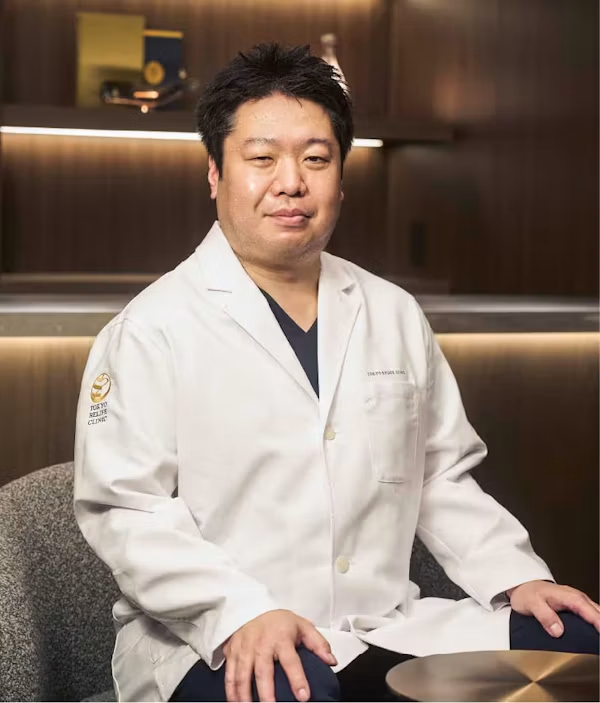
Medical Reviewer:Dr. Yoshiyasu Shinohara
He has over 20 years of experience in cell biology, genetic testing, and regenerative medicine in academia, life science companies, and biotech companies. In addition, he is also involved in the development of new therapeutic technologies. In addition, he leads research that pushes the boundaries of cell science worldwide, while brushing up therapeutic technologies.