What Are Stem Cells?
Stem cells are a general term for cells that have the ability to self-renew and proliferate, as well as the ability to differentiate into different types of cells under certain conditions, secretory functions, homing effects, paracrine effects, and immunomodulatory and anti-inflammatory effects.[1]
The adult human body is composed of approximately 30–40 trillion cells. In newborn babies, stem cells increase the number of cells through self-renewal and multilineage differentiation as the body develops into adulthood. However, it is known that both the number and function of stem cells decline with growth and aging.
Main Functions of Stem Cells
01|Self-Renewal and Proliferative Capacity — The Ability to Increase Their Own Numbers —
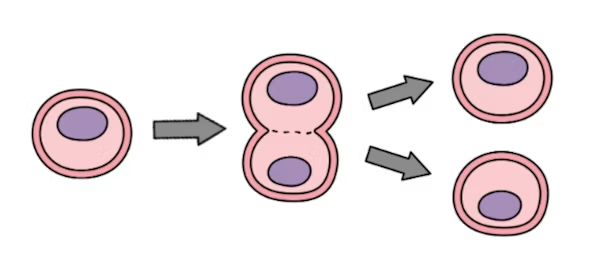
One of the fundamental characteristics of stem cells is their ability to self-renew and proliferate.[1][5]
Self-renewal and proliferative capacity are important fundamental abilities that enable stem cells to increase to the required number and subsequently exert functions such as differentiation, secretion, paracrine signaling, and homing.
02|Multilineage Differentiation Potential — The Ability to Differentiate into Different Types of Cells —
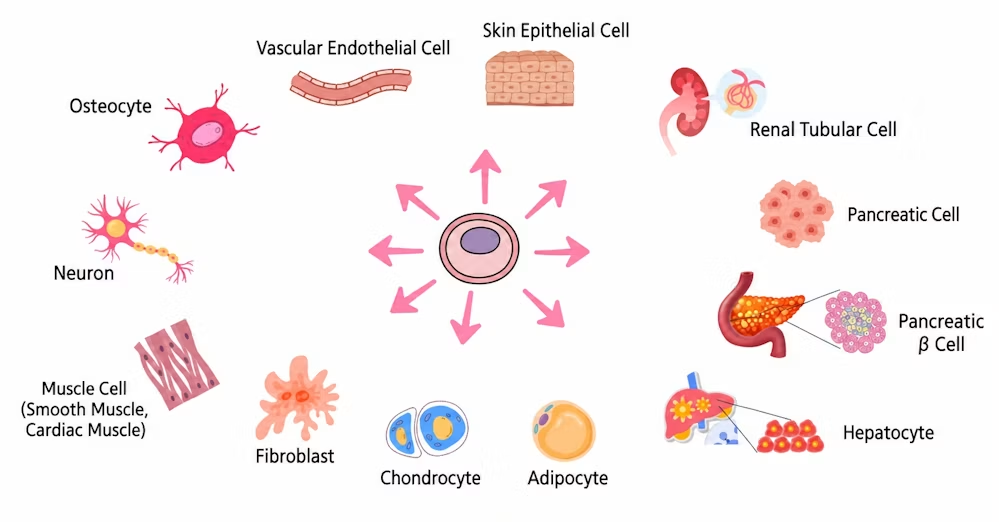
Stem cells maintained through self-renewal and proliferation can differentiate into different types of cells under certain conditions or stimuli. MSCs (mesenchymal stem cells) are known to have the ability to differentiate into cell lineages such as those of the brain, heart, blood, teeth, bone, cartilage, and adipose tissue.[1][5]
Multilineage differentiation potential is an important ability through which stem cells differentiate into different types of cells under certain conditions, contributing to tissue maintenance and repair and supporting the potential for the body's natural recovery and health maintenance in regenerative medicine.
03|Homing — The Ability to Migrate to Where They Are Needed —
Stem cells can respond to changes in the body's environment and migrate to specific tissues or sites, a property known as "homing." When tissue damage or inflammation occurs, various signals are generated in the surrounding area. Research has shown that some MSCs respond to these signals and migrate to the relevant tissues.[3][4]
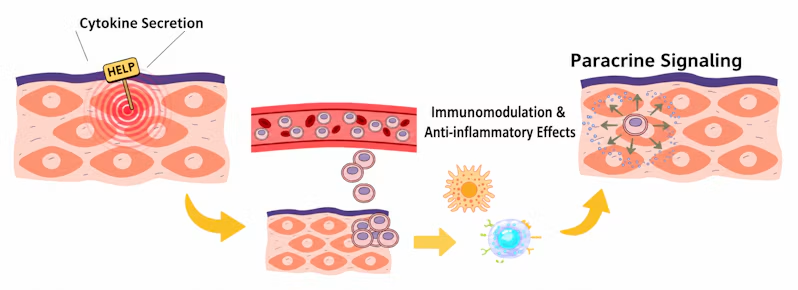
04|Secretory and Paracrine Effects — The Ability to Communicate Information to Surrounding Cells —
Stem cells not only proliferate and differentiate but also secrete various bioactive substances, including growth factors, cytokines, chemokines, and extracellular vesicles. The mechanism by which these substances act on surrounding tissue cells and immune cells to regulate cellular functions and the tissue environment is known as the "paracrine effect."
Through these secreted substances, stem cells can communicate with surrounding cells. This effect is thought to be involved in tissue maintenance and repair and in regulating the immune and inflammatory environment, making it an important mechanism of action in regenerative medicine.
05|Immunomodulatory and Anti-Inflammatory Effects — Regulation of the Immune and Inflammatory Environment —
MSCs have been studied for their ability to regulate immune responses and the inflammatory environment. Through secreted bioactive substances and intercellular interactions, MSCs have been reported to affect immune cells such as T cells, macrophages, and dendritic cells.[3][5]
Here, "anti-inflammatory effect" does not simply mean eliminating inflammation. It is important to understand it as the ability to regulate excessive immune responses and the inflammatory environment.
Stem cells maintain cell populations through self-renewal and proliferation and contribute to growth, tissue maintenance, and repair through differentiation. They also secrete growth factors and cytokines, migrate to tissues in response to changes in the body's environment through homing, communicate with surrounding cells through paracrine effects, and act on surrounding cells and the immune and inflammatory environment.
Regenerative medicine that utilizes these characteristics focuses on the body's inherent mechanisms of repair and maintenance and is expected to have future applications in maintaining health and addressing age-related changes in physical function.
References
[1] Weissman IL. Cell. 2000;100(1):157–168.
[2] Caplan AI, Dennis JE. J Cell Biochem. 2006;98(5):1076–1084.
[3] Yagi H, et al. Cell Transplantation. 2010;19(6):667–679.
[4] Regulski MJ, et al. Cells. 2022.
[5] Brown C, et al. Mesenchymal stem cells: 2019
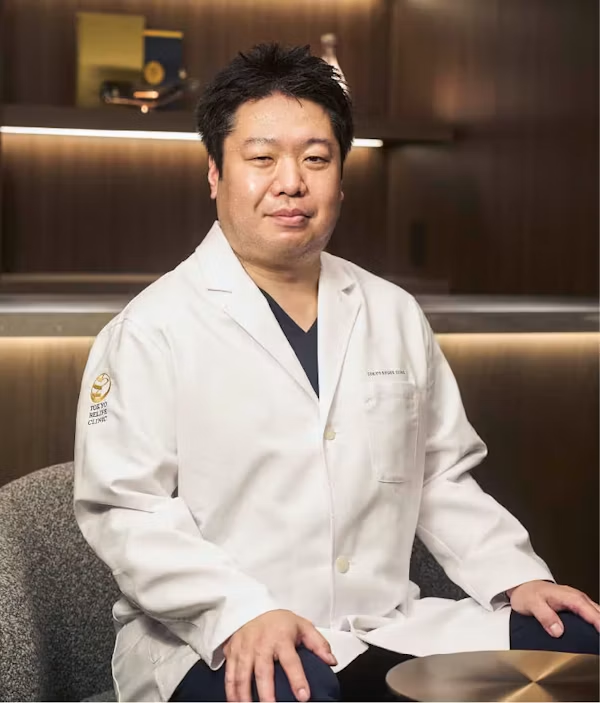
Medical Reviewer:Dr. Yoshiyasu Shinohara
He has over 20 years of experience in cell biology, genetic testing, and regenerative medicine in academia, life science companies, and biotech companies. In addition, he is also involved in the development of new therapeutic technologies. In addition, he leads research that pushes the boundaries of cell science worldwide, while brushing up therapeutic technologies.