The iPS Cell Nobel Prize and the Regenerative Medicine Safety Act
What Is Regenerative Medicine?
From Laboratory to Clinic: A Physician's Path to Clinical Regenerative Medicine
Types of Cells Used in Regenerative Medicine
Regenerative Medicine in Clinical Practice: Feedback on Stem Cell Therapy
Evidence-Based Care Through University Partnerships
Intravenous Administration and Whole-Body Effects
The Induction Phase and Maintenance Phase
The Limits of Regenerative Medicine: Combined with Standard Therapy
About Stem Cell Therapy at Tokyo Relife Clinic
Key Takeaways
- How the iPS cell Nobel Prize and Japan's regenerative medicine laws have reshaped the industry.
- iPS cells moving toward clinical use, versus regenerative medicine therapies already used in practice.
- The limits of regenerative medicine, and the value of combining it with standard therapy.
In recent years, regenerative medicine has attracted worldwide attention as a field with the potential to reshape conventional medicine. On THE LONGEVITY, a YouTube program operated by Tokyo Relife Clinic, regenerative medicine and longevity medicine are frequently discussed. Building on that discussion, this article explains how regenerative medicine is applied in clinical practice — from its history to today's treatment options.
THE LONGEVITY
The iPS Cell Nobel Prize and the Regenerative Medicine Safety Act
One of the most significant turning points in the history of regenerative medicine is the discovery of iPS cells (induced pluripotent stem cells). In 2012, Professor Shinya Yamanaka was awarded the Nobel Prize in Physiology or Medicine.
Typically, 30 to 40 years of research are needed before a major medical discovery receives a Nobel Prize. iPS cells were awarded within ten years of their discovery. This is regarded as evidence that the reliability and future potential of the technology were evaluated with exceptional speed by the international community.
Following this Japan-based breakthrough, strong momentum for regenerative medicine development was formed within the country. In 2014, the Act on the Safety of Regenerative Medicine (the "Safety Act") was fully enforced in Japan. Under strict safety standards and national supervision, a foundation has since been established for the standardized and safe clinical application of regenerative medicine.
What Is Regenerative Medicine?
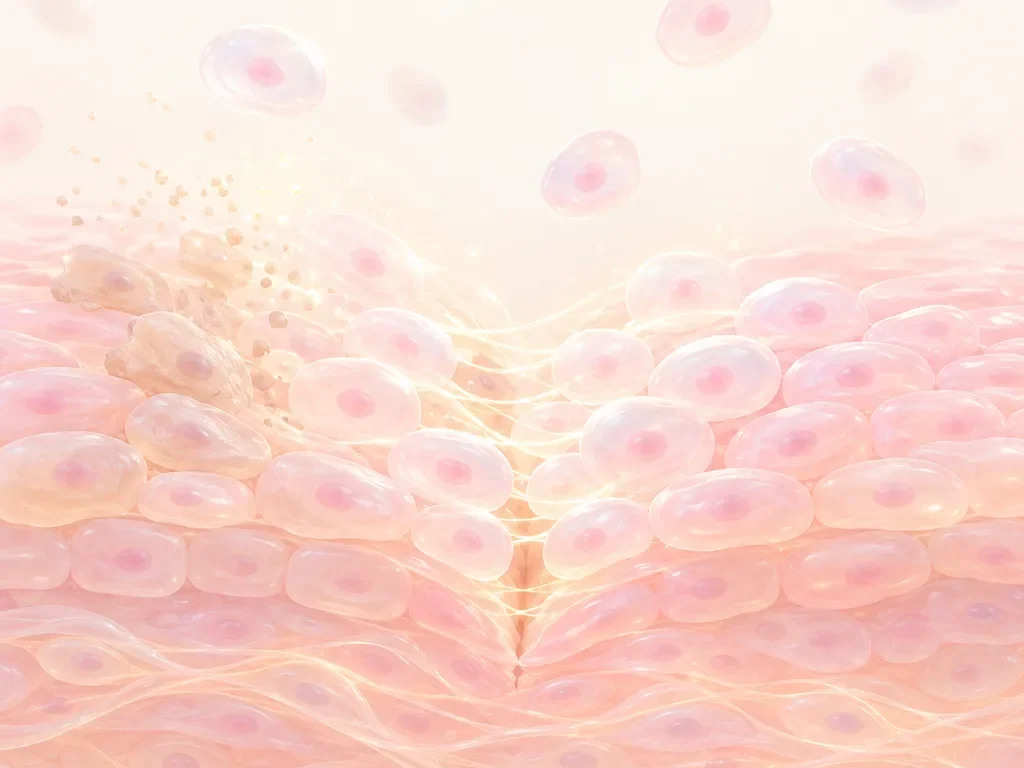
Regenerative medicine is a medical approach aimed at restoring the function of organs and tissues damaged by disease or injury. The human body is inherently equipped with a self-healing mechanism — aging cells are replaced with new ones, and damaged tissue is repaired. Regenerative medicine seeks to support this natural healing power through artificial means, exploring new options for conditions that are difficult to improve with conventional treatment.
Specifically, a patient's own cells (or donor cells) are cultured outside the body (in vitro) and re-administered to promote tissue repair at the affected site. For patients with limited treatment options, this technology is viewed as a potential means to support quality of life (QOL).
From Laboratory to Clinic: A Physician's Path to Clinical Regenerative Medicine
Director Nakao of Tokyo Relife Clinic experienced this historic turning point from the front lines of scientific research. In 2011, Dr. Nakao completed research at Harvard University and returned to Japan; the following year, the iPS cell Nobel Prize was announced.
Until then, regenerative medicine had largely remained at the "laboratory stage." With refined national regulations and established support systems in Japan, the industry environment shifted significantly. For Dr. Nakao, long engaged in basic research, this carried deep significance: it meant that cutting-edge treatment options could be offered to patients within a nationally recognized safety framework.
Types of Cells Used in Regenerative Medicine
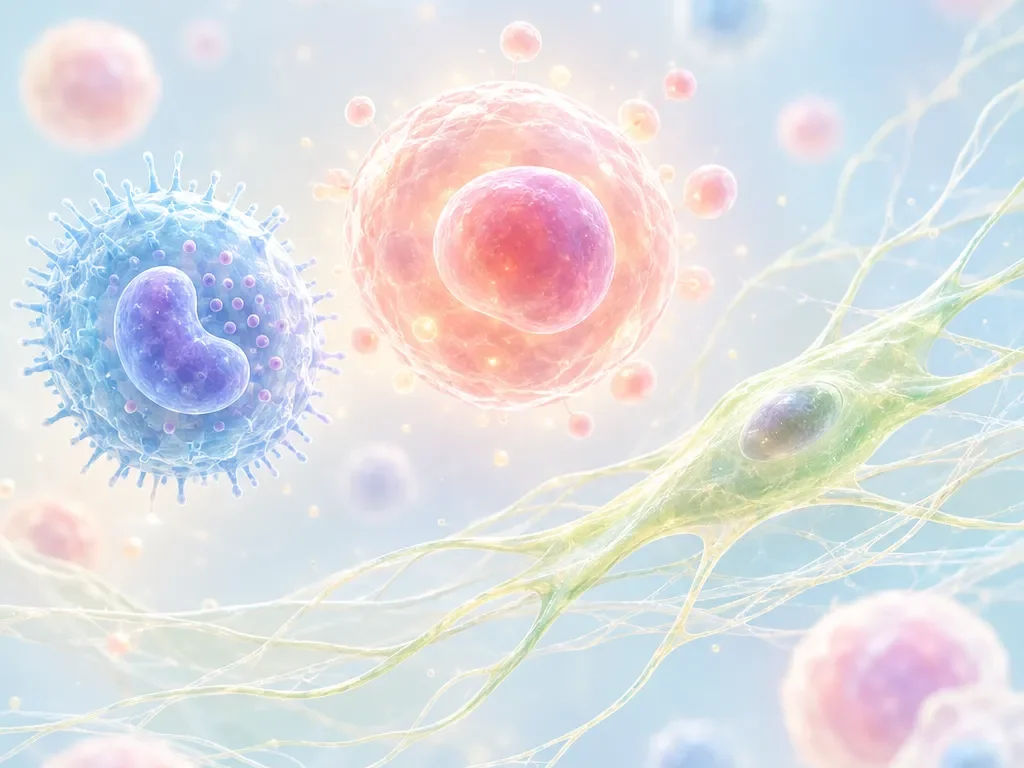
Stem Cells
In regenerative medicine, different cell types are selected according to therapeutic goals. Currently, mesenchymal stem cells (MSCs) are widely used in clinical practice. Stem cells possess both self-renewal ability (generating identical cells) and differentiation capacity (transforming into tissues such as bone, cartilage, and blood vessels), and are considered to play an important role in repairing damaged areas and supporting the recovery of bodily functions.
Stem Cell Details Page
NK cells (natural killer cells)
In addition, NK cells (natural killer cells) are attracting attention in research on immune function support. NK cells are immune cells that circulate throughout the body and are responsible for identifying and responding to abnormal cells, such as virus-infected cells. These cells are activated and expanded in vitro, then re-administered to the body to support immune function and health management.
NK Cell Details Page
Fibroblasts Cells
Furthermore, fibroblasts are applied in aesthetics and skin anti-aging. Located in the dermal layer of the skin, fibroblasts produce components essential to skin firmness and elasticity, such as collagen and elastin. By replenishing fibroblasts — which decrease with age — this approach is intended to address skin aging concerns such as wrinkles and sagging.
Regenerative Medicine in Clinical Practice: Feedback on Stem Cell Therapy
Currently, iPS cells are still under research and development, mainly for intractable diseases, and time is still needed before they are widely adopted in routine clinical care. In contrast, the treatment plans already practiced at Tokyo Relife Clinic, with accumulated clinical feedback, are those using autologous mesenchymal stem cells and exosomes.
When the term "stem cell therapy" is heard, many people assume that the injected stem cells directly differentiate into damaged cells and replace them. However, it is currently widely believed that in mesenchymal stem cell therapy, the effects of the active ingredients secreted by stem cells — such as growth factors and cytokines — may be more critical than differentiation by the cells themselves.
These active ingredients are understood to act on cells throughout the body, support the body's self-healing power, and potentially exert what is known as a "paracrine effect" (the transmission of signals to surrounding cells) — for example, through the suppression of inflammation. Rather than intervening at a single point for a single disease, this therapy is considered capable of broadly influencing the overall functional state of the body. This is one of the main reasons the treatment draws attention.
Evidence-Based Care Through University Partnerships
Precisely because regenerative medicine is cutting-edge medicine, scientific evidence is essential. Collaborative frameworks have been established with multiple universities and research institutions, and clinical data is continuously accumulated. Providing patients with treatment plans grounded in scientific evidence, supported by university research capabilities, is one of the defining features of the clinic.
As the number of treated patients grows, so does the clinical data collected. Symptoms once "considered potentially unsuitable" can now be re-evaluated against the latest data and may fall within the scope of treatment discussion — gradually broadening the options available to patients.
Intravenous Administration and Whole-Body Effects
In stem cell therapy, intravenous administration (IV infusion) is commonly used for systemic anti-aging and conditioning of various sub-health discomforts. Blood vessels extend to every part of the body. When stem cells and their secreted components are administered intravenously, they travel through the bloodstream and tend to gather at sites of damage or inflammation (known as "homing").
In clinical observation, some patients who regularly receive intravenous administration have reported improvements in their physical condition, and favorable comprehensive blood test results have been observed in certain cases. Individual results vary.
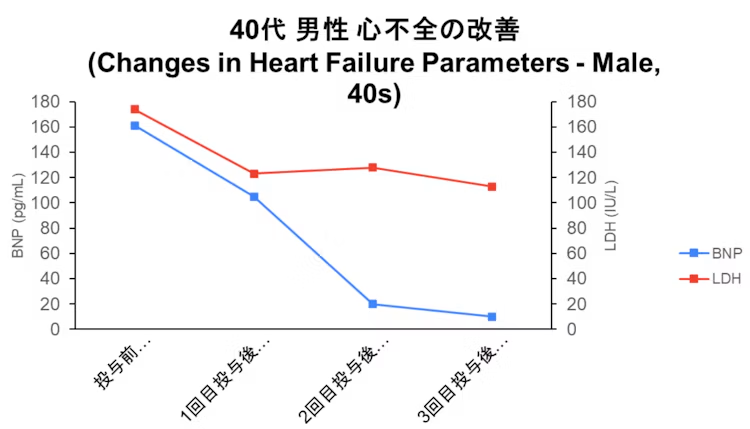
Male, 40s [ Objective ] Heart Failure Improvement
An increase in BNP is known to reflect cardiac stress and changes in heart function. In this case, BNP was well above the normal range before treatment, suggesting a possible burden on the heart. LDH is a marker that rises when there is cellular damage or metabolic stress, and it was slightly elevated before treatment. After two stem cell treatments, both markers showed improvement. During treatment and follow-up, BNP gradually decreased and eventually returned to the normal range.
Total of 3 infusions.
[ Case Study Disclaimer & Precautions ]
・Disclaimer: The cases shown reflect specific patient outcomes at our clinic. Individual results vary and are not guaranteed.
Final outcomes depend on baseline health, age, and lifestyle factors.
・Side Effects & Risks: Potential risks include injection site pain or bruising, allergic reactions, and a minor risk of infection. Extremely rare complications may include pulmonary embolism, phlebitis, or unintended cell proliferation.
・Legal Notice: This is a self-pay treatment (not covered by public insurance) provided strictly under Japan’s Act on the Safety of Regenerative Medicine.
All stem cells are processed in our in-house CPC.
The Induction Phase and Maintenance Phase
One point should be understood before considering regenerative medicine treatment: it is not a matter of "receiving it once and keeping the effects permanently." Continuity of treatment is generally important for conditioning bodily functions. At the clinic, the overall treatment process is broadly divided into two stages and explained to patients as follows:
- Induction Phase — The initial stage of treatment. Through a relatively concentrated treatment frequency, declining cellular functions are targeted, and a solid foundation for bodily functions is built.
- Maintenance Phase — The stage aimed at preserving the condition adjusted during the induction phase. Treatment intervals are extended appropriately, and maintenance is continued to sustain good health over the long term.
The Limits of Regenerative Medicine: Combined with Standard Therapy
Although regenerative medicine acts on the whole body, it does not mean that "receiving regenerative medicine cures all diseases." As a rigorous, practical branch of medicine, regenerative medicine alone has objective limitations.
A more ideal medical path is built upon standard therapy — tested over a long history and verified by extensive clinical data — with regenerative medicine scientifically combined as an adjunctive measure. This concept is known as "Combined with Standard Therapy." By combining the strengths of standard therapy and regenerative medicine, further improvement in treatment outcomes and support for patients' quality of life (QOL) are pursued.
About Stem Cell Therapy at Tokyo Relife Clinic
As mentioned in the history of regenerative medicine above, clinical treatments using iPS cells are not currently offered at the clinic. What is provided to patients is adipose-derived stem cell therapy — autologous mesenchymal stem cell therapy using cells collected from the patient's own adipose tissue.
The clinic's stem cell therapy strictly adheres to Japan's Act on the Safety of Regenerative Medicine (Safety Act). It undergoes rigorous review by a Certified Special Committee for Regenerative Medicine accredited by the Ministry of Health, Labour and Welfare, and is implemented only after a treatment provision plan is formally submitted to and accepted by the national government.
If you are troubled by chronic sub-health discomforts, or are interested in evidence-based systemic conditioning, please feel free to browse the Stem Cell Therapy details page.
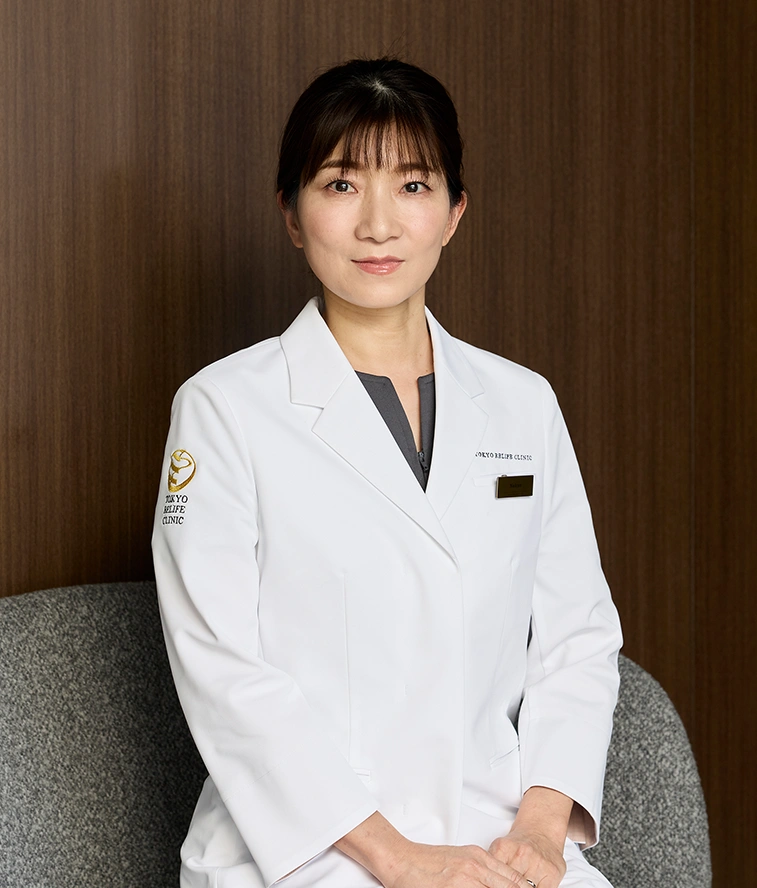
Medical Reviewer:Dr. Maki Nakao
Dr. Maki Nakao graduated from St. Marianna University School of Medicine in 1997 and subsequently completed her postgraduate studies in Regenerative Medicine and Immunopathology at the same institution. She obtained her PhD in Medicine in 2009.
In the same year, she served as a Research Fellow at Massachusetts Eye and Ear Infirmary, Harvard Medical School, where she gained extensive experience spanning from basic research to clinical application.
With a strong foundation in ophthalmology, Dr. Nakao integrates regenerative medicine and anti-aging medicine into her clinical practice. She is committed to evidence-based advanced medical care, emphasizing meticulous patient communication and individualized treatment planning. Since 2026, she has served as Director of Tokyo Relife Clinic, providing optimized and personalized medical care to each patient.
TEAMS (Doctors & Cell Culture Specialists)