
Key Points
- Forgetting things more often after your 50s: normal age-related memory decline or MCI? Key signs to tell the difference
- Memory loss is not always just a memory problem: other possible causes of forgetting things
- When is it okay to wait and see, and when should you seek medical advice?
Among the different types of MCI, amnestic MCI is the type in which memory loss is the most noticeable symptom. However, some degree of forgetfulness can also occur in other types of MCI. So, what causes us to forget things in the first place?
What Causes Forgetfulness and Memory Decline?
The causes of memory loss can be understood from different perspectives. Here, we explain two main aspects: physical factors in the body and changes in cognitive function.
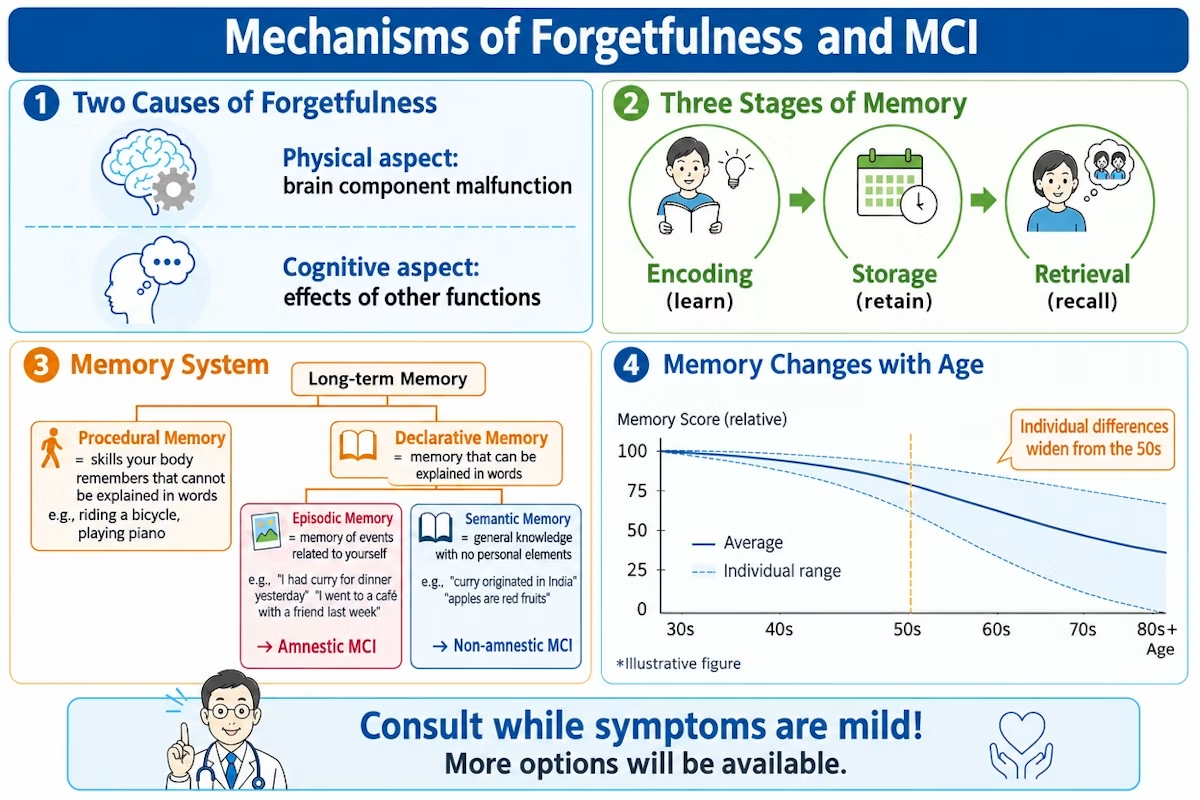
Physical Causes of Memory Loss
From a physical perspective, memory loss may occur when parts of the brain involved in memory do not function as well as they should. If any part of the brain’s memory network becomes impaired, forgetting things may become more noticeable.
The hippocampus is well known for its role in memory, but many other brain regions are also involved. Problems in any of these areas can affect memory function.
When memory loss is suspected, brain imaging such as MRI may be used to examine the brain in more detail. One way to understand this is to think of the brain as a smartphone: if one of its components is not working properly, certain functions may also stop working properly.
Cognitive Causes of Memory Loss
From a cognitive perspective, the causes of memory loss are more complex. There are two main possibilities:
(1) A problem within the memory system itself causes memory loss.
(2) A problem with another cognitive function leads to apparent memory loss.
In the first case, forgetting things occurs because part of the memory system is not working properly. We will explain the memory system in more detail below.
The second case is easier to understand with an example. Imagine that you are distracted when a family member says, “Let’s go shopping together tomorrow.” If you are not paying enough attention, the information may not be properly stored as a memory. The next day, you may feel that you have “forgotten” the plan.
In this case, the problem may actually be reduced attention rather than memory itself, resulting in apparent forgetfulness.
When evaluating memory loss in clinical practice, psychological tests are used to assess memory and, when necessary, other cognitive functions. These results can also help identify the type of MCI.
When MCI Is Suspected
Two main patterns are considered:
(1) A problem with the memory system itself → Amnestic MCI
(2) Memory decline caused by problems with other cognitive functions → Other types of MCI
Identifying the type of MCI is important because the appropriate next steps may differ. Psychological testing requires time and specialized expertise, but it provides information that brain imaging alone cannot and is important for a comprehensive assessment.
Remember, Retain, Recall: The 3 Steps of Memory
Memory is often thought of simply as the ability to remember things. In reality, memory involves several stages and types, which are associated with different areas of the brain.
It can be easier to understand memory by looking at two aspects: how information is processed and the memory system in which information is stored.
The 3 Stages of Memory Processing
Memory processing is generally divided into three stages:
- Encoding = taking in and learning information
- Storage = retaining information over time
- Retrieval = recalling stored information
Problems at any of these stages can lead to forgetting things.
Types of Memory by Storage Duration
Memory can also be classified by how long information is retained:
- Sensory memory (like a sticky note) = holds information for only a moment
- Short-term memory (like a memo) = holds information for a short period
- Long-term memory (like a printed book) = stores information for hours, years, or even longer
Today, short-term memory is also often discussed in relation to working memory, although the two terms are not always identical.
Types of Long-Term Memory
Long-term memory can be broadly divided into:
- Procedural memory = skills and procedures that are difficult to explain in words but that the body “remembers”
Examples: riding a bicycle or playing the piano - Declarative memory = memories and knowledge that can be expressed in words
Types of Declarative Memory
- Episodic memory = memory of personal experiences and events
Examples: “I ate curry for dinner yesterday” or “I went to a café with a friend last week.” - Semantic memory = general knowledge that is not tied to a specific personal experience
Examples: “Curry originated in India” or “Apples are a type of fruit.”
These types of memory are also related to the classification of MCI:
Problems with episodic memory → Amnestic MCI
Problems with semantic memory → Non-amnestic, single-domain MCI, which may be associated with conditions such as semantic dementia
What we commonly call forgetfulness or memory loss often refers to a decline in episodic memory. Similarly, in clinical practice, the term memory impairment mainly refers to problems with episodic memory.
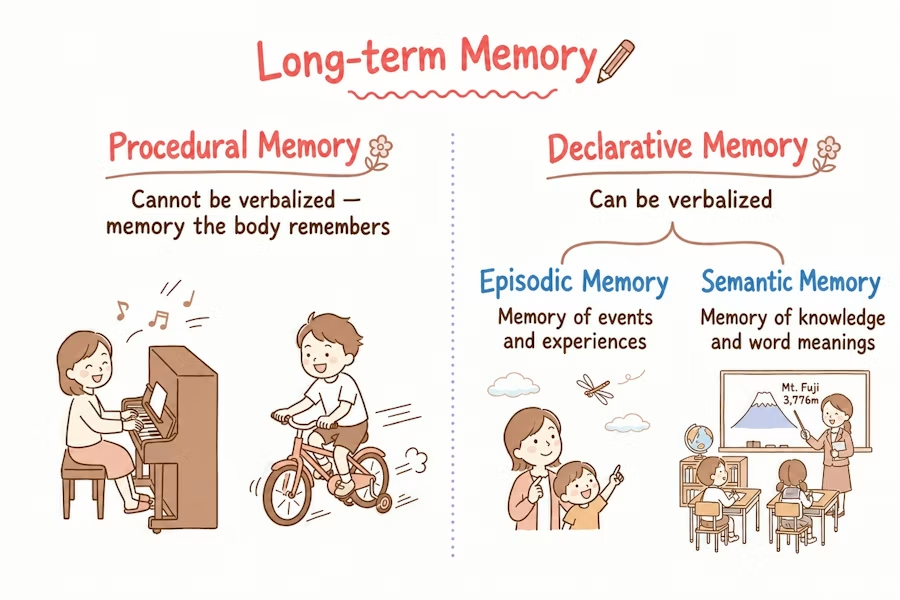
Quoted from Reference 1
Age-Related Forgetfulness: Changes That Often Begin in Your 50s
Even without a medical condition, many people begin to notice forgetting things more often from their 50s, such as feeling that their memory is not as good as before.
The graph below shows memory test scores by age among healthy adults using the Japanese version of the Rivermead Behavioural Memory Test (RBMT), a test commonly used in clinical practice.
As shown by the arrow, scores tend to decline with age. From around age 50, the range of scores also becomes wider, showing greater differences between individuals. In other words, some degree of memory decline can occur as part of healthy aging.
Greater individual differences from the 50s onward
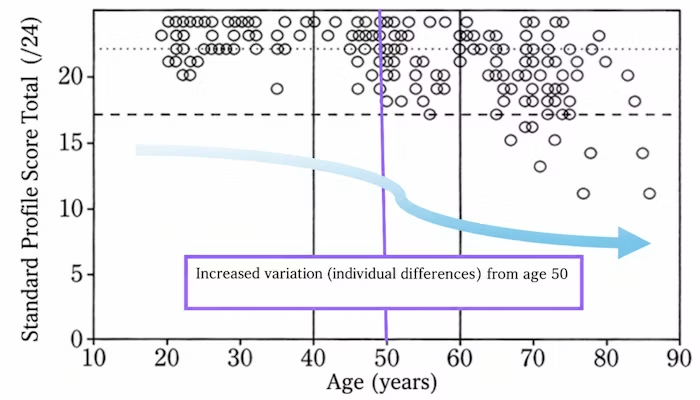
Memory Test Scores by Age in Healthy Adults Using the Japanese Version of the Rivermead Behavioural Memory Test (RBMT)
Quoted from Reference 2, with minor additions
Memory Decline in Your 40s
When people in their 40s or younger notice memory decline, possible causes may include unexpected medical conditions, such as problems with blood vessels in the brain, as well as severe stress or low mood.
When considering memory loss from the 50s onward, it is also important to recognize that age-related memory decline may have begun. Compared with younger adults, there is a wider range of what may be considered normal for healthy people in their 50s. As a result, a memory test score that might require attention in someone in their 40s could still fall within the healthy range in their 50s. Conditions such as cerebrovascular disease also become more common with age.
When Should You Seek Help for Memory Loss?
Forgetting things tends to become more common with age, but memory problems can also occur with MCI, dementia, or after a stroke.
Does this mean mild memory loss is nothing to worry about? Not necessarily. Even mild forgetfulness can affect work and daily life and may cause significant stress for some people. Even if others say, “You’re worrying too much,” the changes may still feel important to the person experiencing them.
There is no single level of memory loss that determines when you should see a doctor. However, if forgetting things is causing stress or affecting your daily life, it may be worth seeking medical advice. Specialized assessments can help determine whether the changes are part of healthy aging, related to MCI, or caused by another medical condition.
MCI is a condition in which symptoms such as memory decline are present but do not significantly interfere with everyday independence. In this sense, the symptoms are relatively mild. Addressing memory concerns at an early stage may provide more options for evaluation, lifestyle support, and appropriate care. Seeking advice while symptoms are still mild can therefore help you better understand your condition and consider the available next steps.
【Notice from Tokyo Relife Clinic 】
If memory loss or frequent forgetfulness is causing stress in your daily life, you do not have to manage these concerns alone. At Tokyo Relife Clinic, we offer specialized assessment by speech-language-hearing therapists and guidance on lifestyle improvement.
Depending on your condition, we may also propose supportive approaches aimed at optimizing the cellular environment, including intranasal stem cell culture supernatant/exosome therapy and NAD+ IV therapy.
Even if you are unsure whether you should see a doctor, an assessment can be a useful first step toward understanding your current memory and cognitive function.
Written and contributed by: Mie Koyama, Speech-Language-Hearing Therapist
<Professional Background>
Worked in psychological assessment at the Memory Clinic of Musashi Hospital, National Center of Neurology and Psychiatry (now the National Center of Neurology and Psychiatry). She later worked in speech-language-hearing therapy at the Department of Communication Sciences and Disorders, Prefectural University of Hiroshima; the Rehabilitation Department of Yokohama Brain and Spine Center; and long-term care health facilities.
References
※1Types and Roles of Memory: Short-Term and Long-Term Memory – Hello, Psychology
※2 Kazui H, et al. Evaluation of the Usefulness of the Japanese Version of the Rivermead Behavioural Memory Test (RBMT). Advances in Neurological Sciences. 46(2), 2002.