Key Points
- Attention and concentration involve several different functions.
- Poor attention can also affect other cognitive functions. However, it can be difficult to recognize these changes yourself, and they may be mistaken for other problems.
- This article explains practical steps you can take when you notice poor concentration or a shorter attention span.
Have you recently felt that you cannot concentrate even when you have work to do, or that multitasking is more difficult than it used to be? Like memory, attention is one of the cognitive functions in which age-related changes are relatively easy to notice. Here, we explain how attention works.
There Are Different Types of Attention
There are several ways to classify attention. Here, classifications are widely used in psychology and in medical practice. The classification of attention was originally developed in psychology and was later applied in the medical field.
In psychology, attention is divided into four types.
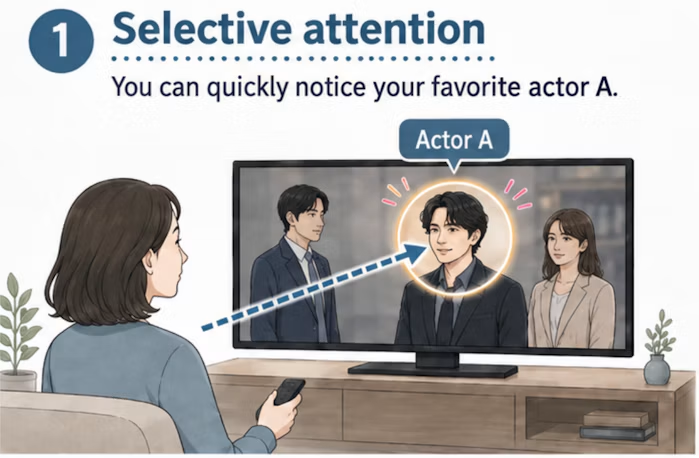
1. Selective Attention
The ability to focus on specific information among many different stimuli.
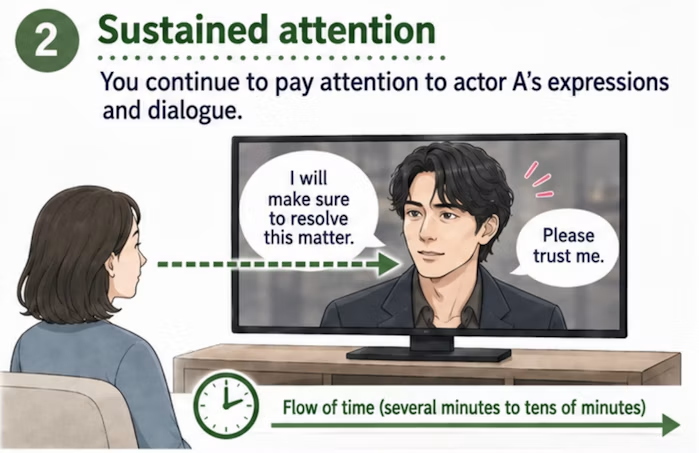
2.Sustained Attention
The ability to maintain attention and concentration for a certain period of time.
3. Divided Attentio
The ability to direct attention to multiple tasks at the same time.
4. Shifting Attention
The ability to switch attention from one target or task to another.
Example of Selective Attention
For example, when many actors appear in a TV drama, you can quickly spot your favorite actor, Actor A.
Sustained Attention
This is when you continue to focus on Actor A, paying attention to their facial expressions and what they say.
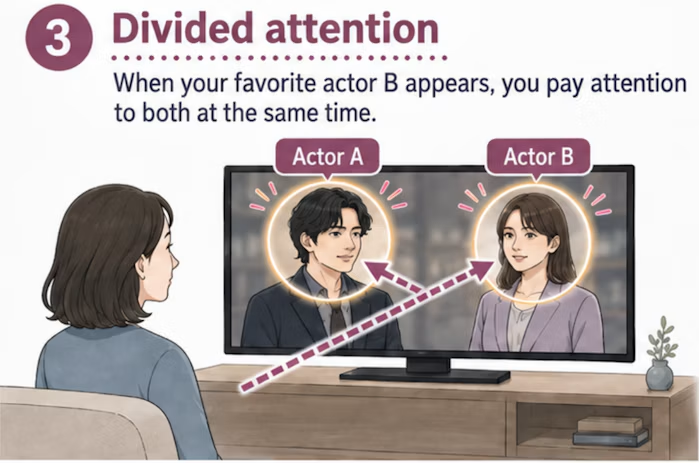
Divided Attention
When another favorite actor, Actor B, appears, you pay attention to both Actor A and Actor B at the same time.
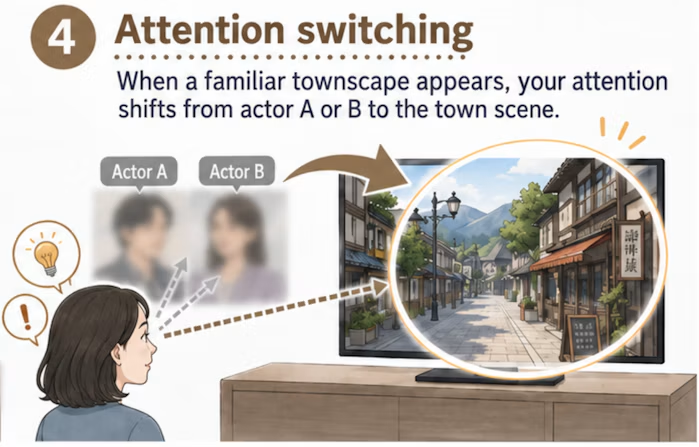
Shifting Attention
This is when you notice that the background on the TV screen looks like a familiar town, and your attention shifts from Actors A and B to the scenery.
Cognitive processing involves more than attention alone. Rather than continuing a single process for a long time, the brain switches between multiple processes or handles several at the same time.
As a result, different types of attention can work within a very short period, while other cognitive functions are also being used. For example, when you recognize “Oh, that’s Actor A,” language processing is also involved.
Medical Classification of Attention — What Is Becoming Difficult?
When you feel, “I keep getting distracted and can’t concentrate,” you may wonder what you can do about poor concentration.
The following classification is similar to the psychological classification described above, but is used in rehabilitation. It organizes attention functions by level of difficulty and also reflects the order in which rehabilitation for attention disorders is generally approached. In other words, this classification can provide clues about what to do when you have difficulty focusing your attention.
Classification of Attention — Comparison Between Rehabilitation and Psychology
Difficulty | Step | Rehabilitation Model of Attention (Sohlberg & Mateer) | Description | Corresponding Classical Psychological Model | Description |
|---|---|---|---|---|---|
1 | 1 | 1.Focused Attention | Quickly directing attention to specific information among many stimuli | 1.Selective Attention | Focusing on specific information among many stimuli |
2 | 2 | 2.Sustained Attention | Maintaining attention for a certain period of time | 2.Sustained Attention | Maintaining attention for a certain period of time |
3 | 3 | 3.Selective Attention | Suppressing distracting stimuli and focusing on a target | 1.Selective Attention | Focusing on specific information among many stimuli |
4 | 4 | 4.Alternating Attention | Switching attention between different rules or tasks | 4.Shifting Attention | Switching attention from one target to another |
5 | 5 | 5.Divided Attention | Paying attention to multiple tasks at the same time | 3.Divided Attention | Paying attention to multiple sources of information |
(References: ※1、※2,table compiled by the author.)
The classical psychological model is shown on the right to correspond with the rehabilitation model on the left. Some categories overlap in the psychological model.
The rehabilitation classification is based on psychological concepts of attention. However, rather than classifying attention functions themselves, it is organized from the perspective of what types of attention difficulties can occur.
Attention Also Declines with Age
Like memory, attention can also be affected by aging. The graph below shows age-group data from the Clinical Assessment for Attention (CAT), developed by the Japan Society for Higher Brain Dysfunction
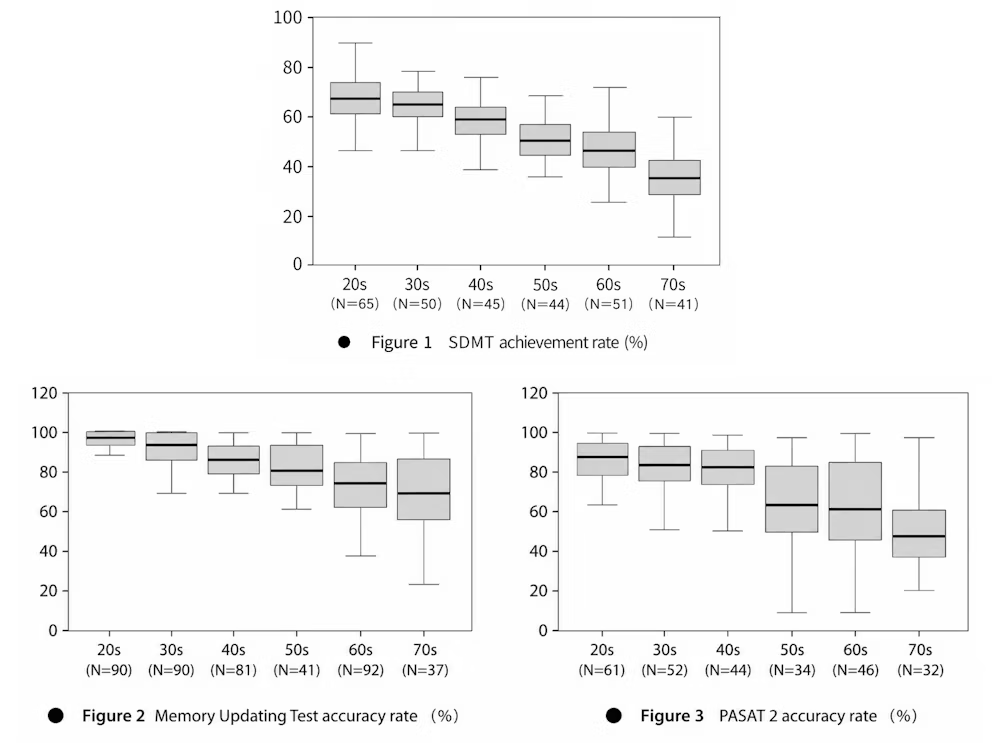
It presents the results of three CAT subtests and shows the following:
- Average attention scores begin to decline around the 50s, while individual differences become greater.
- Even among attention tests, the pattern of decline varies. The age at which changes appear differs depending on the type of attention function being measured.
Data from CAT (Clinical Assessment for Attention) subtests (cited from Reference ※3, with some additions)
The subtests shown in the graph are briefly explained below.
SDMT(Symbol Digit Modalities Test)
This is a test in which you fill in the blanks with the numbers corresponding to specific symbols, while referring to a reference chart.
●The graph shows a gradual decline from the 20s through the 70s.
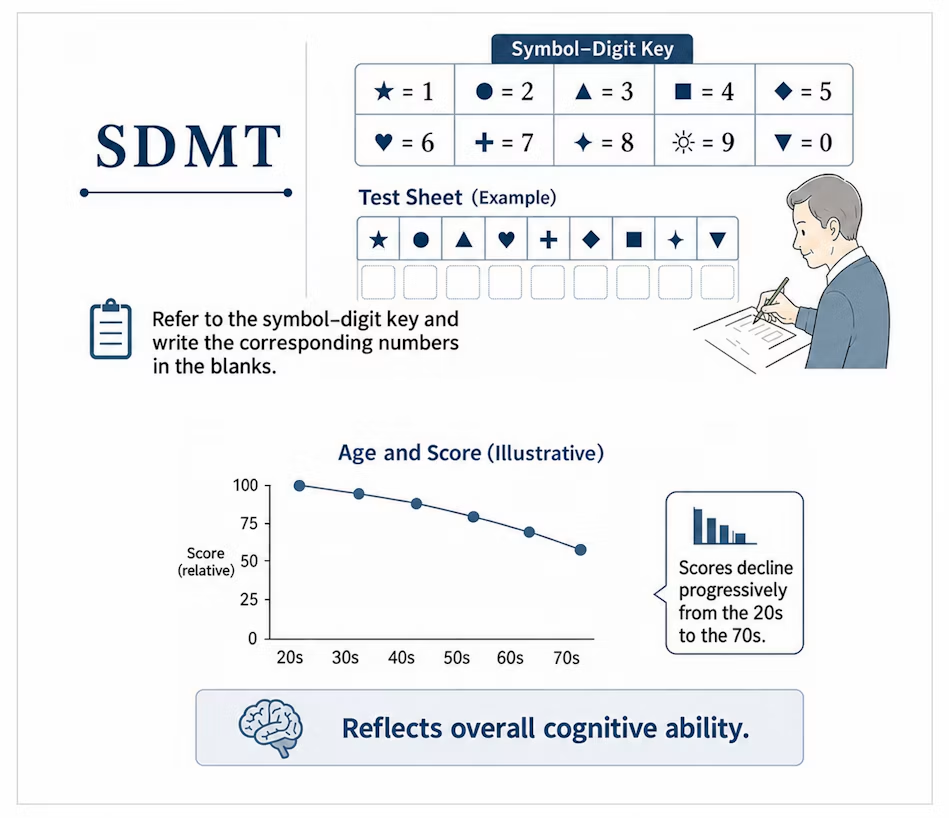
※For accurate test results, please refer to the graph shown above. The graph in the figure is an illustration of age-related trends.
Memory Updating Test— 3-Span
In this test, you memorize a series of numbers and then give the last three or four digits as instructed.
(Example: Memorize 96783451. If instructed to give the “last 3 digits,” answer 451.)
▲The graph shows: Scores gradually decline from the 20s through the 70s, but the difference is smaller than in the SDMT.
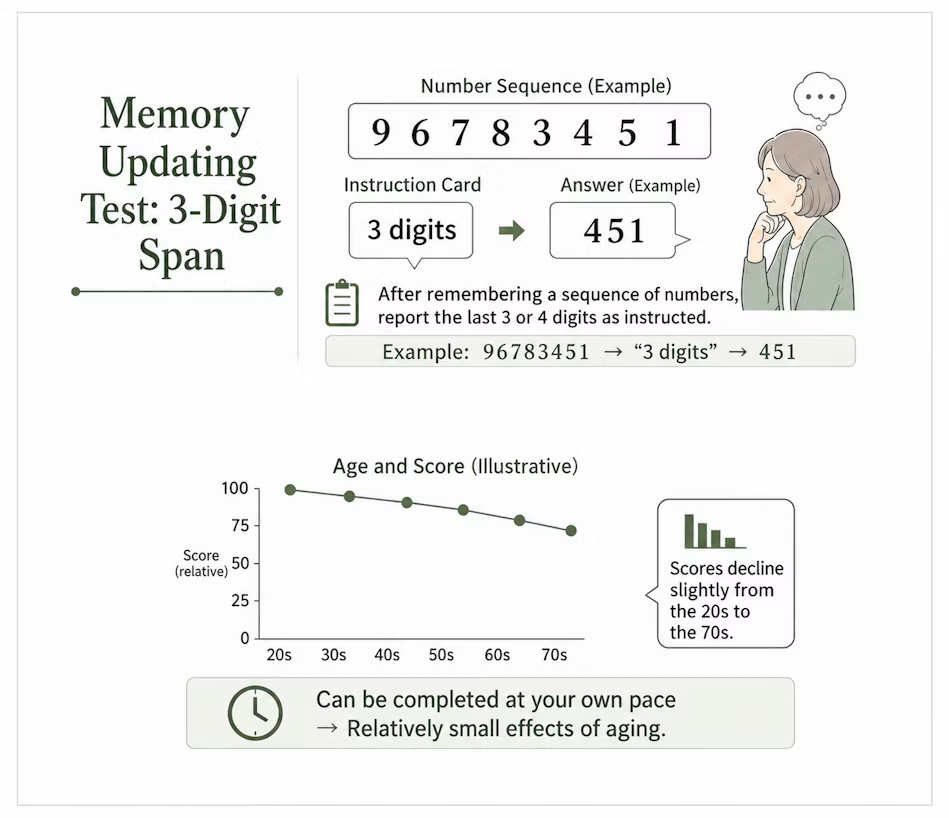
※For accurate test results, please refer to the graph shown above. The graph in the figure is an illustration of age-related trends.
PASAT(Paced Auditory Serial Addition Test)
In this test, single-digit numbers are read aloud one after another. You add each number to the one immediately before it and give the answer.
(Example: For 1 → 3 → 9 → 5 → 4 → 7..., the answers are 4 → 12 → 14 → 9 → 11...)
The graph shows: Scores decline significantly in the 50s and continue to decline through the 70s.
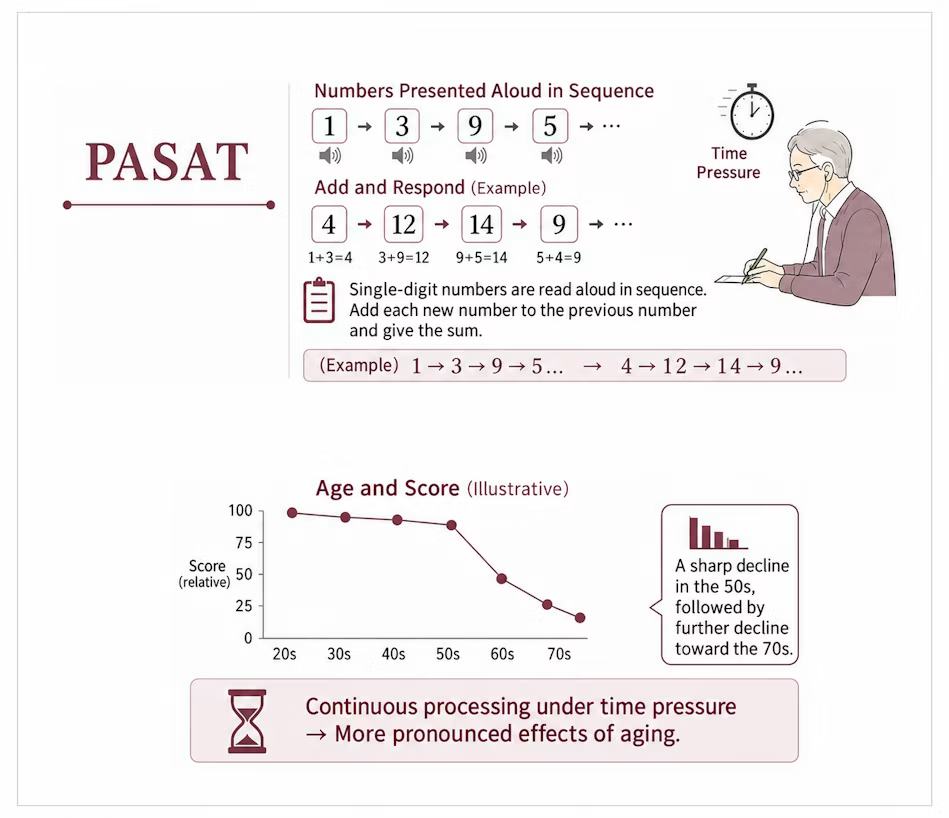
※For accurate test results, please refer to the graph shown above. The graph in the figure is an illustration of age-related trends.
The SDMT requires not only attention but also mental processing and memory. Therefore, it reflects overall cognitive ability more broadly than the other two tests. Considering that abilities measured by intelligence tests generally peak in the late teens to 20s, the SDMT shows a similar pattern.
In contrast, the Memory Updating Test and PASAT are relatively less affected by mental processing ability and are considered to reflect attention more strongly.
One difference between these two tests is the pace of the task.
In the Memory Updating Test, you move on to the next question after giving your answer, making it easier to work at your own pace.
In the PASAT, numbers are presented at a fixed speed. This gives you less time to think and makes the task more demanding.
In other words, aging may have a relatively small effect on tasks that can be completed at your own pace. However, its effects may become more noticeable in situations where there is little time to think and information must be processed continuously.
How Poor Attention Affects Other Cognitive Functions
When attention declines, it can significantly affect other cognitive functions, such as memory and language.
For example:
- You cannot concentrate and do not fully remember your plans (effect on memory).
- You mishear something because you were not listening carefully (effect on language function).
- You do not notice differences in a design because you were not looking carefully (effect on visuospatial cognition).
Attention is the first step in using other cognitive functions. If you do not take in enough information at the beginning, it will naturally affect how that information is processed afterward.
When you are concerned about forgetfulness, you may focus on a “memory mistake,” such as remembering the wrong date or time of an appointment. However, it can be difficult to realize that you did not pay enough attention to the date or time when you first heard or learned it.
The Gap Between Poor Attention and How You Perceive It
In this way, what is actually happening can differ from how you perceive the problem. If the situations described above continue, many people may mistakenly think:
- “My memory has gotten worse recently.” (decline in memory)
- “Is my hearing getting worse?” (hearing problem)
- “Is my eyesight getting worse?” (vision problem)
They may then have their memory, hearing, or vision tested, but it can still be difficult to identify the actual cause.
This is why it is considered important to use tests like those described above, which assess different cognitive functions—such as attention, memory, and language—separately.
What to Do About Poor Concentration
If you feel that “everything distracts me” or “I can’t seem to finish my work,” try focusing on one task at a time and making sure you complete it.
It may also help to start with simple tasks or finish one task before moving on to the next. This may sound simple, but it can be surprisingly difficult for people whose attention tends to shift easily.
Building these work habits early may help you work more efficiently over the long term. Of course, changing habits you have followed for many years is not easy, and you may not notice results right away. However, these strategies can be an easy first step in dealing with poor concentration and declining attention.
【Notice from Tokyo Relife Clinic】
A New Approach to MCI (Mild Cognitive Impairment)
If you have recently noticed poor concentration or feel that your attention span is getting shorter, you do not have to deal with these concerns alone. At Tokyo Relife Clinic, professional assessments are offered by speech-language-hearing therapists and guidance on improving lifestyle habits. Support aimed at optimizing the cellular environment may also be recommended, including intranasal stem cell culture supernatant/exosomes and NAD+ IV therapy.
Even if you are unsure whether you should see a doctor, why not start by reviewing and understanding your current condition?
Written and contributed by: Mie Koyama, Speech-Language-Hearing Therapist
<Career Background>
She worked in psychological assessment at the Memory Clinic of Musashi Hospital, National Center of Neurology and Psychiatry(now National Center Hospital, NCNP). She later worked in speech-language-hearing therapy at the Department of Communication Sciences and Disorders, Prefectural University of Hiroshima; the Department of Rehabilitation, Yokohama Brain and Spine Center; and long-term care health facilities.
Reference
※1 Functions of Attention | Cognitive Psychology
※2 Yutaka Toyokura. Clinical Aspects of Attention Disorders. Higher Brain Function Research, 28(3): 320–328, 2008.
※3 Motoichiro Kato. Development and Progress of the Clinical Assessment for Attention (CAT) and Clinical Assessment for Spontaneity (CAS). Higher Brain Function Research, 26(3): 310–316, 2006.