What is High-Activity NK Cell Therapy?
NK Cell Therapy at Tokyo Relife Clinic
The Science of NK Cells
Immune Cell Types & Key Differences
Key Features of NK Cell Therapy at Tokyo Relife Clinic
NK Cell Therapy vs Stem Cell Therapy
Procedure Guide: NK Cell Therapy
Precautions for NK Cell Therapy
Price
Frequently Asked Questions (FAQ)
What is High-Activity NK Cell Therapy?
High-Activity NK (Natural Killer) cell therapy is an immune cell therapy that collects NK cells from your own blood, cultures and activates them at a specialized Cell Processing Center (CPC), then returns them to your body via infusion.
NK cells are immune cells that naturally monitor and eliminate abnormal cells in your body. Various studies indicate they may play key roles in eliminating cancer cells and clearing senescent cells (aging cells).
Based on this scientific foundation, NK cell therapy is expected not only to help maintain immune function and support overall health management, but also to serve as a promising immune cell therapy for future cancer risk management and anti-aging care.
Because we use your own cells (autologous), the risk of allergic reactions and immune rejection is generally considered low.
NK Cell Therapy at Tokyo Relife Clinic
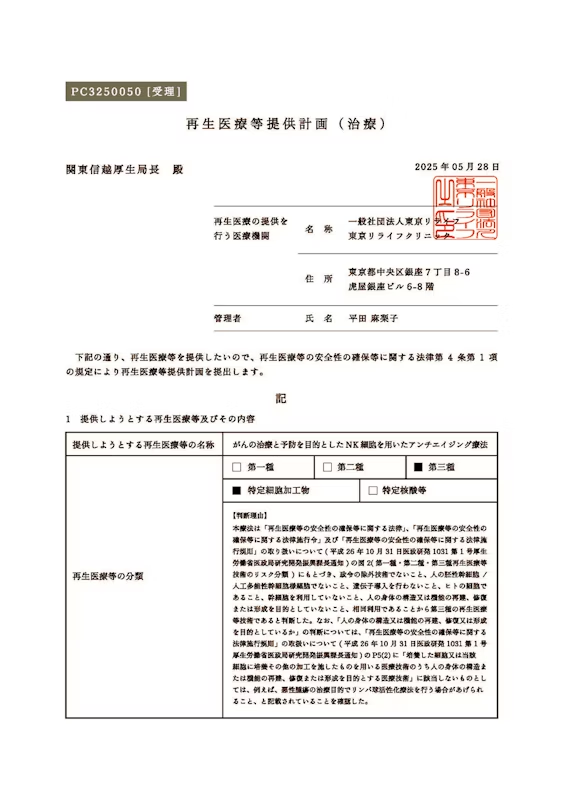
Tokyo Relife Clinic operates in full compliance with Japan's Act on the Safety of Regenerative Medicine and has received official acceptance from the Ministry of Health, Labour and Welfare to provide the following NK cell therapy:
PC3250050: NK cell anti-aging therapy for cancer treatment and prevention
Research Shows: Declining NK Cell Activity Linked to:
- Increased susceptibility to infections ※1
- Higher cancer risk ※2
- Accelerated accumulation of senescent (aging) cells ※13
- Cancer recurrence risk ※4
The Science of NK Cells
NK (Natural Killer) cells are lymphocytes that make up approximately 10–30% of all lymphocytes and serve as core components of the body's innate immune system.
Unlike other immune cells, NK cells can autonomously recognize and attack abnormal cells without waiting for instructions.
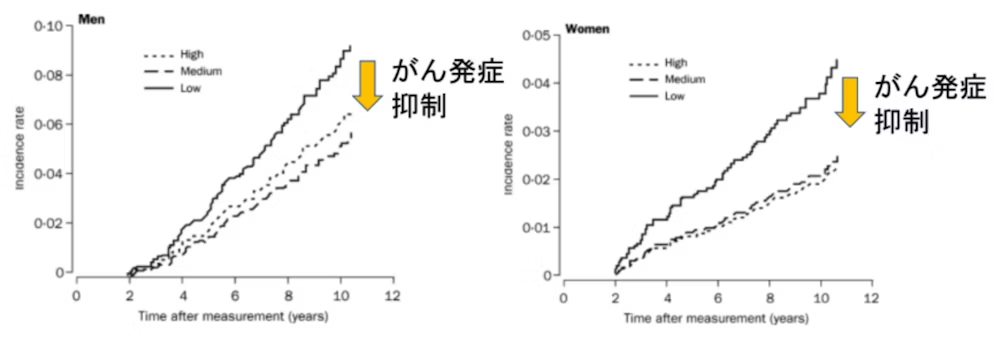
Research shows that declining NK cell activity—caused by aging, chronic stress, and lifestyle factors—is associated with higher infection rates, increased cancer incidence, and accelerated aging ※5.
This graph shows that individuals with higher NK cell activity have lower cancer incidence rates compared to those with lower activity.
This graph shows results from a small-scale human study: NK cell infusion not only reduced senescent cells in patients but also decreased various inflammatory markers ※6.
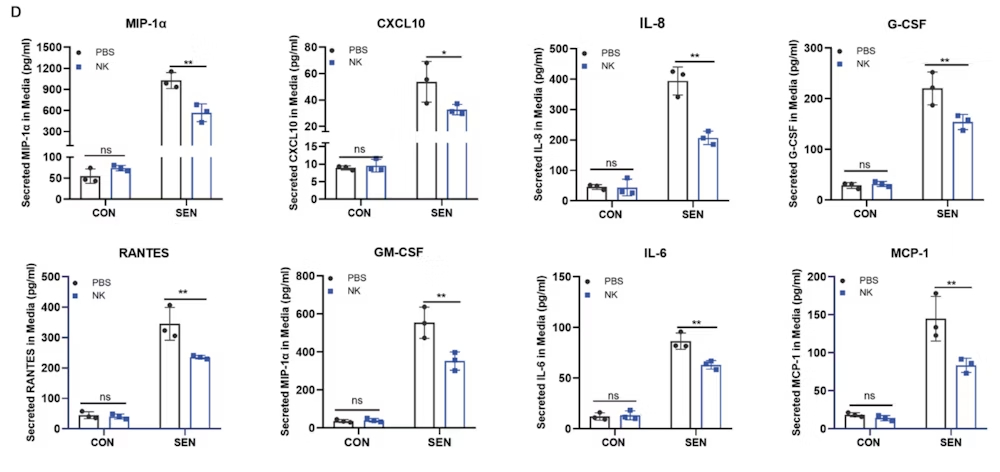
Note: These are observational or small-scale exploratory studies and do not prove treatment efficacy.Based on this research, NK cells are recognized as key immune cells responsible for monitoring abnormal cells, including cancer cells, virus-infected cells, and senescent cells.
Immune Cell Types & Key Differences
Cell Type | Main Targets | Response | Senescent Cell Relation |
|---|---|---|---|
NK Cells | Cancer cells, Virus-infected cells, Abnormal cells | Immediate (No instruction needed) | Research on clearing senescent cells |
Macrophages | Bacteria, Dead cells, Foreign matter | Engulf → trigger inflammation | Can clear but may cause chronic inflammation |
T Cells | Specific infected cells, Cancer cells | Requires antigen recognition | Limited recognition ability |
B Cells | Viruses, Bacteria | Produce antibodies | Limited recognition ability |
Key Features of NK Cell Therapy at Tokyo Relife Clinic
Enhanced NK Cell Activity
Uses unique cytokine environment control technology to boost NK cell activity during culture.
Utilizing Natural Defense Mechanisms
Various studies show NK cells can clear abnormal cells (cancer cells, senescent cells)—our therapy utilizes this natural ability.
High-Proliferation Culture Technology
Advanced techniques can expand NK cells to billions of cells in select cases.
Superior Purity & Viability
Our process emphasizes higher purity and survival rates compared to conventional culture methods.
Cell numbers and proliferation rates vary by individual. Specific values are not guaranteed.
NK Cell Therapy vs Stem Cell Therapy
Both therapies are regenerative medicine, but they serve completely different purposes:
NK Cell Therapy: Enhances and strengthens immune function
Stem Cell Therapy: Provides anti-inflammatory effects and immune regulation
Note: Research shows that under specific conditions, stem cells may help suppress excessive immune responses ※7.
Procedure Guide: NK Cell Therapy

1. Medical Questionnaire & Consultation
Complete medical history and allergy assessment. Our nurse discusses your treatment goals.

2. Physician Examination & Consent Form
The physician explains treatment suitability and planning. After understanding the procedure, you will sign the consent form.
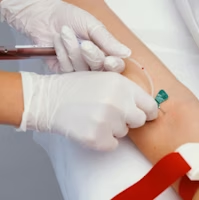
3. Blood Collection & Testing
Approximately 70 mL of blood is collected for infectious disease screening:
HIV, Hepatitis B, Hepatitis C, Syphilis, HTLV-1
Once cleared, the same sample is used for NK cell culture.

4. Payment Processing
Payment is completed while waiting for test results.
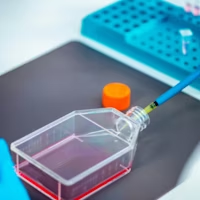
5. NK Cell Culture Period (Approximately 3 weeks)
Cells are sent to a certified Cell Processing Center (CPC) for professional culture and activation.
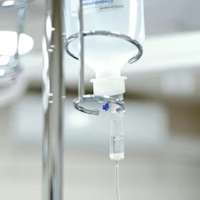
6. First NK Cell Infusion
Cultured high-activity NK cells are returned to your body via infusion. Follow-up consultation scheduled to assess response and adjust treatment plan as needed.
7. Second & Subsequent Infusions
Additional infusions typically scheduled 3 weeks to 6 months after the first session, based on individual response.
Precautions for NK Cell Therapy
Blood Collection & Infusion
- Needle insertion may cause temporary pain or bruising—heals naturally
- Avoid alcohol and smoking from the day before
- Inform us if taking anticoagulants, immunosuppressants, or steroids
Day of Infusion
- Treatment may be postponed if you have fever or feel unwell
- Mild fever may occur as an immune response
- Avoid alcohol from the day before
- No smoking on treatment day
Who May Not Be Suitable for NK Cell Therapy
NK cell therapy may not be appropriate for those who:
- Are under 18 years of age
- Test positive for HTLV-1 (Human T-cell leukemia virus type 1)
- Have autoimmune diseases (rheumatoid arthritis, collagen diseases, etc.)
- Are pregnant, possibly pregnant, or breastfeeding
- Have severe heart disease (severe arrhythmia, heart failure, etc.)
- Currently have acute fever or inflammation
Final suitability will be determined by the treating physician.
Conditions Requiring Careful Medical Evaluation
The following individuals require comprehensive medical assessment before NK cell therapy:
- Active Bacterial Infections (e.g., Syphilis, Gonorrhea, Tuberculosis)
- Sepsis or suspected sepsis
- Malignant Tumors (Active cancer requires physician evaluation)
- Severe Metabolic or Endocrine Disorders
- Connective Tissue Diseases (Collagen Disease) or Blood Disorders
- Liver Disease
- Transmissible Spongiform Encephalopathy (TSE), suspected cases, or Dementia
- Specific Genetic Disorders or a family history of such conditions
Viral Screening Protocol (Parvovirus B19): Infection status will be confirmed via medical interview. If necessary, specific testing (Serological tests, NAT, etc.) will be conducted to ensure safety.
Important Note: This treatment is an elective, self-pay medical procedure. Effectiveness for the treatment or prevention of specific diseases is not guaranteed and individual results may vary.
PRICE
Senescent Cell Clearance with NK Cell Therapy
Resources:
※1:Ogata K, et al. Clin Exp Immunol. 2001;124(3).
※2:Imai K, et al. Lancet. 2000;356(9244).
※3:Brauning A, et al. Front Immunol. 2022;13.
※4:Lee HA, et al. Front Immunol. 2021;12.
※5:Imai K, et al. Lancet. 2000;356(9244).
※6:Bai Z, et al. Cell Death Dis. 2022;13(4).
※7:Najar M, et al. Front Immunol. 2016;7.