
Is "Always Tired" a Warning Sign from Your Body?

"I'm still tired after 8 hours of sleep."
"Even after sleeping so much, I'm still tired."
If this sounds familiar, you’re not alone.
Many people assume persistent fatigue is simply due to aging.
But it might actually be your body's SOS signal.
Chronic or unexplained fatigue is often linked to:
Poor sleep quality
Autonomic nervous system imbalance or chronic stress
Hormonal changes or nutritional deficiencies
Metabolic dysfunction
Declining cellular energy production
This article explains the "real medical reasons" behind "always tired and sleepy" and introduces comprehensive solutions—from daily self-care to medical interventions.
Self-Check: What Type of Fatigue Do You Have?
Fatigue is not one-size-fits-all. Identifying your fatigue pattern is the first step toward effective treatment.

【Type A】
□ Takes more than 30 minutes to fall asleep
□ Wake up multiple times during the night
□ Don't feel like you've had "deep sleep" in the morning
□ Family members say you snore heavily
□ Sleep 2+ hours longer than usual on days off

【Type B】
□ Often replace proper meals with quick carbs like pasta or bread
□ Frequently crave sweets or caffeinated drinks
□ Recent skin problems or hair thinning
□ Hot flashes or sudden sweating (menopause-like symptoms)
□ Feel more irritable or anxious than before

【Type C】
□ Recovery from tiredness takes longer than before
□ Experience "brain fog" and difficulty concentrating
□ Body often feels heavy with mild aches in multiple areas
□ Small efforts (like climbing stairs) feel tiring
□ People often say you "look tired" or "look pale"
The Three Main Causes of Chronic Fatigue
*This differs from Chronic Fatigue Syndrome (a specific medical condition).
How to Interpret Your Self-Check Results
If 3 or more items apply within a single type, that factor is likely strongly related to your fatigue
If multiple types apply, your symptoms may result from overlapping causes
【Type A】Poor Sleep Quality (Sleep-Related Fatigue)
One of the most common reasons for feeling tired even after sleep is insufficient deep sleep (non-REM sleep)—even when total sleep time seems adequate. This is sometimes called "hidden sleep deficiency."
If others have noticed loud snoring, sleep apnea may also be contributing to your fatigue.
【Type B】Nutritional Deficiency & Hormonal Imbalance
A carb-heavy diet can cause rapid blood sugar spikes and crashes, leading to reduced brain energy, daytime sleepiness, poor concentration, and persistent fatigue※2.
Research shows that nutritional deficiencies can contribute to chronic fatigue through multiple pathways:
- Glucose metabolism requires significant amounts of vitamin B complex. When intake is insufficient, production of neurotransmitters such as serotonin may be reduced, potentially increasing irritability and anxiety※3.
- Lack of essential nutrients may reduce protein synthesis for skin and hair, appearing as skin problems or hair thinning※4.
- Chronic blood sugar instability may also disrupt stress hormone secretion patterns, sometimes causing symptoms similar to hormonal imbalance, such as hot flashes or excessive sweating※5.
- Over time, ongoing nutritional imbalance can further reduce cellular energy production, contributing to chronic fatigue※6.
【Type C】Cellular Energy Decline (Mitochondrial Dysfunction)
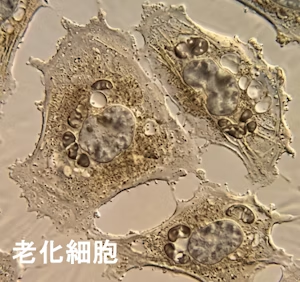
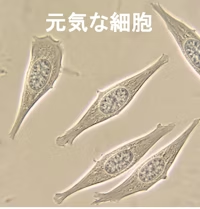
When fatigue persists, the underlying cause often involves mitochondrial aging or dysfunction. In addition to sleep and nutritional issues, aging and oxidative stress are major contributors to this decline in cellular vitality.
Mitochondria act as the body's "energy factories," producing ATP (adenosine triphosphate).
Research shows that when cellular energy production drops, it affects the body in several ways:
- Recovery from fatigue may take twice as long or more※7.
- The brain consumes 20% of total energy. When energy supply is insufficient, it can cause "brain fog"—difficulty concentrating and slow thinking※8.
- Mitochondrial dysfunction is linked to the severity of fatigue and muscle pain※9. This is why simple actions like climbing stairs or walking can feel exhausting when you have brain fog.
- Severe fatigue is often accompanied by poor complexion and dull skin※10.
If multiple types apply, overlapping causes may be making your fatigue harder to resolve.
Self-Care Strategies by Fatigue Type
Here are practical methods you can start today, tailored to your specific fatigue pattern. If multiple types apply, combining strategies may be more effective.
【Type A】Solutions for Poor Sleep Quality
If you're not getting deep sleep, here are evidence-based strategies to calm your sympathetic nervous system and optimize your sleep environment.
Research shows:

No Screens 2 Hours Before Bed
Blue light suppresses melatonin and tricks your brain into thinking it's daytime, making deep sleep harder ※11.
No Caffeine After 3 PM
Even coffee consumed 6 hours before bed can disrupt sleep ※12.
Take a Warm Bath 1–2 Hours Before Bed
Deep sleep occurs when core body temperature drops. A 10–15 minute bath (40–42°C) helps your body cool naturally afterward ※13.
Optimize Bedroom Conditions
Humidity: 50–60%
Temperature: ~26°C (summer), ~20°C (winter) ※14

Get Morning Sunlight
Expose yourself to sunlight immediately after waking to reset your body clock. Use warm-toned lighting in the evening ※15.
If you've improved your lifestyle but still feel so tired, and experience any of the following, consult a sleep specialist or ENT specialist:
・Loud snoring
・Breathing pauses during sleep
【Type B】Solutions for Nutritional & Hormonal Imbalance
Here are evidence-based strategies to stabilize blood sugar and supplement essential nutrients, helping you reduce that "always tired" feeling.
Research shows:
Dietary Strategies to Prevent Blood Sugar Spikes
1. Eat Vegetables First ※16
Order your meals: vegetables → protein → carbs.
Fiber slows glucose absorption and prevents blood sugar spikes.
2. Choose Low GI(Glycemic Index) Foods ※2
Select brown rice, whole-grain bread, buckwheat, oatmeal instead of white rice/bread. This helps reduce post-meal drowsiness and fatigue.
3. Get 25g+ Protein Per Meal ※17
Consuming at least 25g of protein per meal helps stabilize blood glucose levels for sustained energy.
4. Supplement Key Nutrients ※3,18,19
Vitamin B Complex (B1, B6, B12): Essential for glucose metabolism and energy production
Iron: Low ferritin levels may cause persistent fatigue
Zinc & Magnesium: Required for ATP energy production; magnesium deficiency may contribute to insomnia and muscle tension
【Type C】Solutions for Cellular Energy Decline
To overcome chronic fatigue, here are evidence-based strategies to support mitochondrial function and improve cellular energy production.
Research shows:

1. Regular Moderate Exercise ※20
Moderate exercise is one of the most effective ways to increase mitochondrial number and function, activating your cellular "energy factories."
2. Boost Antioxidant Intake ※21
Mitochondria are vulnerable to oxidative stress. Key antioxidants include:
CoQ10, Vitamin C, Vitamin E, Astaxanthin
3. Prioritize Quality Sleep ※22
Mitochondrial repair occurs during sleep. Combine with Type A sleep strategies for deeper cellular recovery.
4. Reduce Chronic Stress ※23
Chronic stress causes excessive cortisol secretion, directly damaging mitochondrial function※17. Managing stress is essential for maintaining cellular vitality.
If Fatigue Still Does Not Improve
If you:
Still feel so tired despite improving your lifestyle
Notice declining energy with age
your body may be experiencing cellular-level energy deficiency that self-care alone cannot address.
Tokyo Relife Clinic offers comprehensive medical solutions—from infusion therapy to replenish essential nutrients to regenerative medicine that supports cellular repair and anti-aging care.
1. High-Dose Vitamin C Infusion
~Powerful antioxidant support to prevent cellular "rusting"~
Research shows high-dose vitamin C infusion, combined with glutathione and vitamin B complex, achieves blood concentrations over 70 times higher than oral intake※24. This helps eliminate free radicals and support mitochondrial function.
Recommended for:
・Type B (nutritional & hormonal imbalance) symptoms
・Chronic stress or reduced immunity
2. Exosome Infusion
~Cellular Signaling to Support Deep Repair~
Research shows exosomes rich in mRNA and microRNA deliver "repair instructions" to damaged or aging cells, helping awaken cellular function throughout the body.
Recommended for:
・Persistent chronic fatigue that's hard to improve
・Type A (sleep-related) and Type C (cellular energy decline) symptoms
3. Stem Cell Therapy (Autologous Adipose-Derived Stem Cell Infusion)
〜Fundamental Anti-Aging Using Your Own Cells〜
This regenerative medicine treatment involves harvesting stem cells from your own fat tissue, culturing them, and reinfusing them into the body via infusion. Stem cells have powerful tissue repair and anti-inflammatory capabilities, helping improve physical condition at a fundamental cellular level.
Recommended for:
・Fundamental improvement from persistent fatigue
・Type A (sleep-related) and Type C (cellular energy decline) symptoms
・Those with limited results from conventional treatments
Resources:
※1: Bonnet MH, et al. Sleep Med Rev. 2010;14(1).
※2: Breymeyer KL, et al. Appetite. 2016;107.
※3: Kennedy DO. Nutrients. 2016;8(2).
※4: Almohanna HM, et al. Dermatol Ther (Heidelb). 2019;9(1).
※5: Cryer PE. N Engl J Med. 2013;369(15).
※6: Fiorentino TV, et al. Curr Pharm Des. 2013;19(32).
※7: Santanasto AJ, et al. J Gerontol A Biol Sci Med Sci. 2015;70(11).
※8: Theoharides TC, et al. Neuroscientist. 2015;21(6).
※9: Holden S, et al. Mitochondrion. 2020;55.
※10: Ogawa Y, et al. Skin Res Technol. 2020;26(3).
※11: Chang AM, et al. Proc Natl Acad Sci U S A. 2015;112(4).
※12: Drake C, et al. J Clin Sleep Med. 2013;9(11).
※13: Haghayegh S, et al. Sleep Med Rev. 2019;46.
※14: Okamoto-Mizuno K, et al. J Physiol Anthropol. 2012;31(1).
※15: Wahl S, et al. Chronobiol Int. 2019;36(12).
※16: Imai S, et al. Diabetes Care. 2011;34(5).
※17: Gannon MC, et al. Am J Clin Nutr. 2003;78(4).
※18: Vaucher P, et al. CMAJ. 2012;184(11).
※19: Pickering G, et al. Nutrients. 2020;12(12).
※20: Hood DA, et al. Cell Metab. 2011;13(4).
※21: Barja G. Biochim Biophys Acta. 2002;1567(1-2).
※22: Schmitt K, et al. Cell Metab. 2018;27(3).
※23: Picard M, et al. Psychosom Med. 2018;80(2).