What is Hair Regeneration Treatment?
Hair Loss Causes
Traditional Hair Loss Treatment vs Hair Regeneration Treatment
Hair Regeneration Treatment Programs at Tokyo Relife Clinic
Treatment Schedule Guidelines
Oral Medication for Hair Loss
Hair Regeneration Treatment Process
Important Precautions for Hair Regeneration Treatment
Treatment Fees
Frequently Asked Questions (FAQ)
What is Hair Regeneration Treatment?
Hair Regeneration Treatment is an advanced medical approach that applies regenerative medicine principles to address hair loss conditions such as androgenetic alopecia (AGA), female pattern hair loss (FAGA), and diffuse hair loss. This treatment focuses on hair follicle function and scalp environment optimization to support the restoration of conditions favorable for healthy hair regrowth.
Healthy hair growth requires multiple factors working in harmony: active hair matrix cells, an inflammation-free scalp environment, and optimal blood flow circulation. When these factors become imbalanced, the hair growth cycle becomes disrupted—the growth phase (anagen) shortens, hair undergoes miniaturization (becoming finer and weaker), and hair loss becomes increasingly apparent.
Core Characteristics of Hair Regeneration Treatment
This treatment focuses on the body's natural inflammation regulation and tissue repair capabilities. By optimizing the scalp and hair follicle environment, it helps create an optimal environment for healthy hair growth.
Specific treatment plans and suitability will be determined by your physician during consultation, based on your individual scalp condition and the progression of hair loss.
Hair Loss Causes
There are many apparent causes of hair loss, such as lack of sleep, high stress, unbalanced diet, and aging itself. However, these various factors ultimately lead to the following two fundamental causes that directly result in hair loss:
Cause 1: Hormonal Changes
For Men: The most common cause of male hair loss is hormonal influence, which shortens the hair growth cycle. This progressively makes hair finer and shorter (miniaturization).
Specifically, testosterone is converted into DHT (dihydrotestosterone) by an enzyme called 5α-reductase. When hair follicles are affected by DHT, they undergo miniaturization, leading to AGA (Androgenetic Alopecia)※1.
For Women: Various hormonal changes that occur with aging can also lead to hair thinning and loss※2.
Cause 2: Micro-Inflammation & Reduced Blood Flow
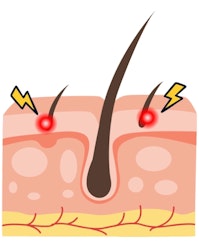
Even when the scalp appears healthy, microscopic examination of hair loss areas often reveals chronic micro-inflammation around hair follicles.
This inflammation causes the tissue surrounding hair follicles to harden (fibrosis), which leads to reduced blood flow※3. Research indicates that blood flow in balding areas can be as low as 40% compared to healthy scalp tissue※4.
When blood flow remains consistently low, hair follicles cannot receive sufficient nutrients, which hinders healthy hair growth.
Traditional Hair Loss Treatment vs Hair Regeneration Treatment
Traditional medication therapy works as a "defensive" approach—it focuses on blocking the signals that cause hair loss. However, these medications do not repair or regenerate hair follicle function at the cellular level.
Hair Regeneration Treatment takes an "offensive" approach. It directly stimulates hair follicles that are dormant or have weakened growth activity, helping to reactivate them at the cellular level.
These two methods are not competing approaches—they simply work in different ways with different goals. When combined under your physician's guidance, they can work together to potentially provide enhanced treatment results.
Category | Traditional Treatment(Mainly Medication) | Hair Regeneration Treatment |
|---|---|---|
Target Patients | Mainly AGA (men). Limited options for women | Both men and women. Various types of hair loss |
Primary Goal | Suppressing hair loss progression | Improving scalp environment. Promoting hair regrowth |
Time to See Results | Changes often felt relatively early | Changes appear gradually (Time is required) |
Requirements | Limited by gender & suitability. Living hair follicles required | Living hair follicles required |
Hair Regeneration Treatment Programs at Tokyo Relife Clinic
Tokyo Relife Clinic offers a range of advanced hair regeneration treatment options.
Through comprehensive physician consultation, we help you select the most suitable treatment approach based on your individual condition and needs. Our approach focuses on improving hair follicle function and the scalp environment to help create optimal conditions for healthy hair growth.
Category | PRP Treatment | Stem Cell Culture Supernatant | Stem Cell Local Injection |
|---|---|---|---|
Primary Function | Uses growth factors (VEGF, PDGF etc...) to support tissue repair | Uses bioactive factors (growth factors and cytokines) to control inflammation & repair | Uses live stem cells for long-term anti-inflammation and repair |
Preparation | Blood draw required (Same day) | Ready to use (Immediate) | Fat tissue culture required (2+ visits) |
Suitable Stage | Early to Mild | Mild to Moderate | Mild to Advanced (Long-lasting) |
Women? | Yes | Yes | Yes |
※Individual results may vary. This comparison provides general information and does not guarantee specific outcomes or improvements.
PRP Treatment
Numerous clinical studies have reported positive outcomes for androgenetic alopecia (AGA) and female pattern hair loss (FAGA) with PRP treatment※5.
PRP treatment uses your own blood. A small amount of blood is collected and processed through centrifugation to extract platelet-rich plasma (PRP), which is then injected into the scalp.
Platelets contain high concentrations of growth factors such as PDGF and VEGF. These growth factors help improve blood flow around hair follicles and create better scalp conditions, supporting natural hair regeneration.
PRP Treatment Details
Stem Cell Culture Supernatant
Stem cell culture supernatant treatment uses the bioactive components that stem cells naturally secrete during culture (growth factors, cytokines, etc.). These components help control inflammation, support tissue and blood vessel repair, and improve blood flow—creating better scalp conditions for hair regeneration.
Compared to PRP, stem cell culture supernatant contains a richer variety of growth factors (including VEGF, HGF, PDGF, and KGF). Research indicates that these growth factors can stimulate dormant hair follicles, increase blood vessel formation, and promote hair matrix cell division※6.
Additionally, no blood collection is required.
Important Note: This treatment does not involve direct injection of living stem cells themselves, so its regenerative effects may be more limited compared to actual stem cell injection treatment.
Stem Cell Culture Supernatant Treatment Details
Stem Cell Injection Treatment
Stem cell injection treatment uses your own stem cells, injected directly into the scalp.
While stem cell culture supernatant contains components secreted by stem cells, direct stem cell injection allows living stem cells to remain right at the hair follicle sites and continuously produce growth factors and cytokines. These secreted factors stimulate surrounding cells to:
- Help control inflammation
- Support tissue and blood vessel repair
- Improve blood flow
Together, these actions create more comprehensive improvements to the hair follicle environment※7.
Regenerative Medicine Regulatory Information
Tokyo Relife Clinic operates in full compliance with Japan's Act on the Safety of Regenerative Medicine. We have obtained official acceptance for the following treatment plan:
PB3240294: Regenerative medicine using autologous fat tissue-derived stem cells for hair tissue regeneration
Stem Cell Injection Treatment Details
Treatment Schedule Guidelines
Hair Regeneration Treatment is typically not a one-time procedure—multiple sessions are usually recommended based on your individual condition.
Treatment intervals and the total number of sessions will be determined by your physician during consultation based on your specific scalp condition and hair loss progression.
Treatment Method | Interval | Notes |
|---|---|---|
PRP Treatment | Every 1-3 months | Multiple sessions for early to mild cases. |
Stem Cell Culture Supernatant | Every 1-3 months | Flexible intervals based on response. |
Stem Cell Injection | Every several months | Longer-lasting effects. Requires physician planning. |
Treatment schedules are determined by your physician based on individual condition.
Oral Medication for Hair Loss
Tokyo Relife Clinic also prescribes dutasteride and finasteride, medications recognized for helping prevent hair loss progression.
Category | Dutasteride | Finasteride |
|---|---|---|
DHT Reduction | >90% | ~70% |
Target | Type I & II | Type II only |
Effectiveness | Higher hair count※8 | Standard AGA drug |
Half-life | 3-5 weeks | 6-8 hours |
Side Effects | Sexual dysfunction | Sexual dysfunction |
For Women | No | No |
※Prescription requires physician consultation.
Hair Regeneration Treatment Process

1. Consultation & Assessment
We review your hair loss condition, medical history, and lifestyle. Your physician examines your scalp and explains suitable treatment options.
2. Treatment Planning
Based on consultation, we select the best approach from:
- PRP Treatment
- Stem Cell Culture Supernatant
- Stem Cell Injection Treatment
Single or combination therapy may be recommended.
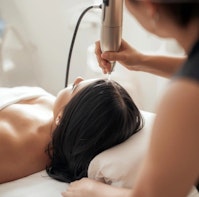
3. Treatment Session
Scalp injection performed based on your plan. All treatments completed same day (except stem cell injection, which requires fat tissue culture).

4. Follow-Up Assessment
Physician checks scalp condition and adjusts treatment intervals based on results. Additional therapies may be recommended.
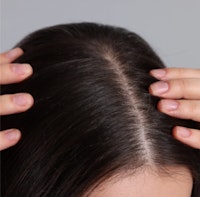
5. Ongoing Care
Hair regeneration requires ongoing treatment. Regular consultations ensure optimal long-term results.
Important Precautions for Hair Regeneration Treatment
Tokyo Relife Clinic offers PRP Treatment, Stem Cell Culture Supernatant, and Stem Cell Injection Treatment. Each has specific precautions.
Please review detailed precautions for your chosen treatment:
➤ PRP Treatment Precautions
➤ Stem Cell Culture Supernatant Precautions
➤ Stem Cell Injection Treatment Precautions
PRICE
Stem Cell Culture Supernatant
PRP(Platelet-Rich Plasma)
Adipose-Derived Stem Cell Therapy
Frequently Asked Questions (FAQ)
Q: How soon can I see results?
A: Results vary by treatment and individual condition, but research shows changes typically begin around 3 months for PRP, stem cell culture supernatant, and stem cell treatments※6,7,8.
This treatment does not guarantee immediate results.
Q: Is one treatment enough?
A: Hair regeneration requires multiple sessions based on your condition.
Research shows:
・Stem Cell Treatment: Improvement from 3 months after 1 session※8
・PRP / Supernatant: Improvement after 3-6 sessions※6,7
Q: Can hair regenerative medicine alone stop hair loss?
A: As explained in Causes 1 & 2, hair loss has different mechanisms. Combining regenerative treatment with oral medication works best—regenerative medicine improves scalp environment while medication helps prevent hair loss progression.
Advanced Combination Therapy Option
We offer Stem Cell Infusion for Menopausal/Andropausal Symptoms, officially accepted by Japan's Ministry of Health, Labour and Welfare (Plan Number: PB3240267).
Combining local scalp treatment with systemic stem cell infusion may provide enhanced synergistic effects.
※Suitability and specific treatment plans will be determined through physician consultation.
Q: How long do results last?
A: Unlike medication, regenerative medicine improves the scalp environment naturally. Results vary by lifestyle and health, but studies show improvements lasting several months to about 1 year※6,7,8.
Q: Will treatment be painful?
A: You may feel discomfort during injection, but we use anesthesia to minimize pain.
Q: Is there downtime?
A: Typically no downtime. Minor redness or swelling at injection sites may occur but usually resolves within a few days.
Q: Can both men and women receive treatment?
A: Yes. We provide treatment plans for both androgenetic alopecia (AGA) and female pattern hair loss (FAGA) based on individual condition.
Q: Can I use oral hair loss medication at the same time?
A: Yes, combination therapy is typically possible. Specific plans will be determined through physician consultation.
Q: Are there side effects or risks?
A: Primarily temporary injection-related reactions (redness, bruising) and occasional allergic responses. Serious side effects are extremely rare.
We use only products that pass rigorous viral and bacterial testing, minimizing infection risk. Our physicians are prepared to respond immediately to any allergic reactions.
Q: Will everyone see results?
A: Results vary by individual. Effectiveness depends on hair loss cause and progression stage. If hair follicles are completely gone, improvement cannot be expected. Physician consultation can confirm follicle viability.
References:
※1: Kaufman KD. Expert Opin Investig Drugs. 2002;11(12).
※2: Fabbrocini G, et al. Int J Womens Dermatol. 2018;4(4).
※3: Mahé YF, et al. Int J Dermatol. 2000;39(8).
※4: Klemp P, et al. J Invest Dermatol. 1989;92(5).
※5: Gupta AK, et al. J Cosmet Dermatol. 2019;18(6).
※6: Fukuoka H, et al. J Cutan Aesthet Surg. 2017;10(1).
※7: Elmaadawi IH, et al. J Cosmet Dermatol. 2018;17(3).
※8: Gkini MA, et al. Dermatol Surg. 2014;40(12).
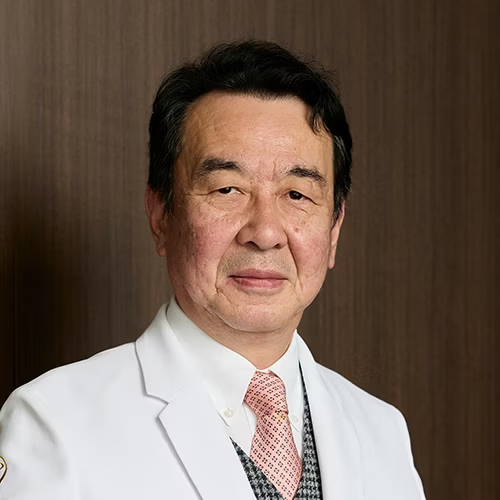
Medical Reviewer:Dr. Akira Takeda
Dr. Takeda is an Emeritus Professor at Kitasato University and a former board member of the Japanese Society of Clinical Hair Science. He is a highly respected expert with extensive experience in hair medicine and hair regenerative therapy.