What is Fibroblast Therapy?
What Exactly are Fibroblast?
Suitable for the Following Groups of People
Characteristics of Fibroblast therapy at TOKYO RELIFE CLINIC
Duration and Process of the Effects of Fibroblast Therapy
Treatment Process
PRICE
Precautions for Fibroblast Therapy
Contraindications for Fibroblast Therapy
Special Considerations for Patients
Frequently Asked Questions (FAQ)
What is Fibroblast Therapy?
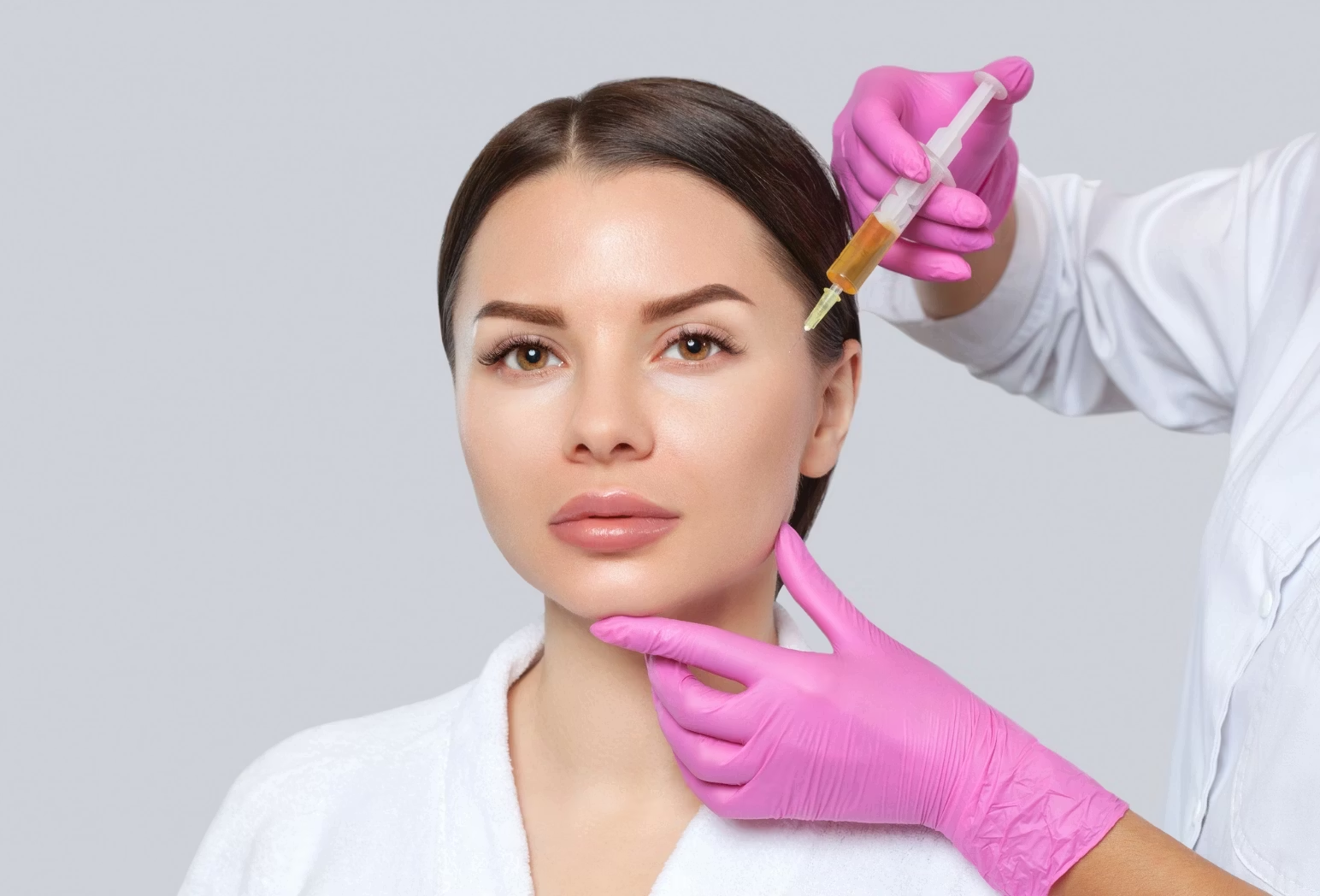
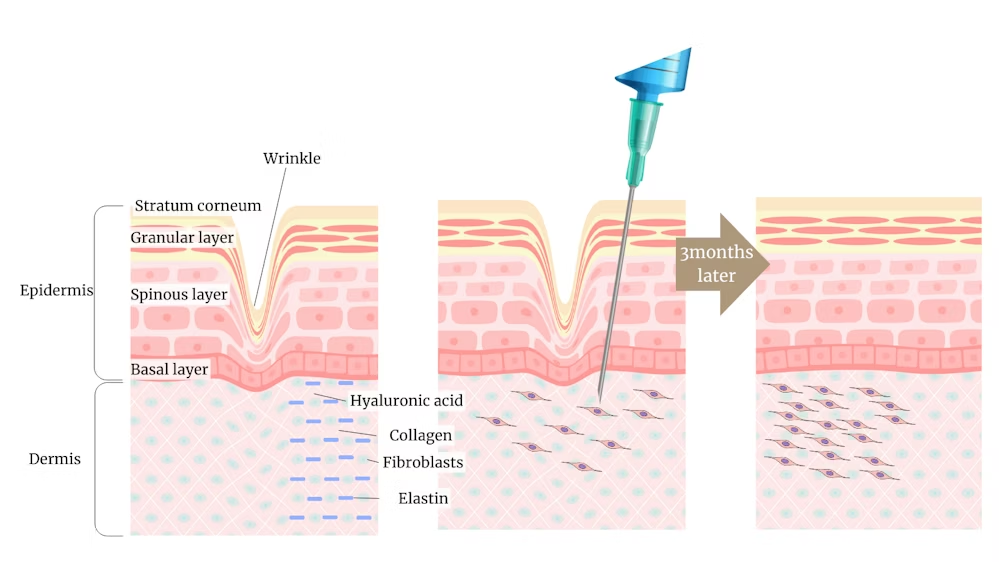
Fibroblast therapy involves collecting cells from the patient's own skin and cultivating hundreds of millions of these cells over 6 to 8 weeks at a CPC. The cultured cells are then injected into the desired areas of the skin needing improvement using methods such as mesotherapy or manual injections. The skin is the largest organ of the human body, and skin harvesting requires only a relatively safe method with an inconspicuous wound of about 1 centimeter.
This is a cutting-edge Regenerative Medicine technology that fundamentally regenerates the skin's firmness, elasticity, wrinkles, and sagging.
Since Fibroblast therapy uses "autologous cells" to promote the skin's regenerative ability, it is a fundamental treatment. By simultaneously injecting external substances such as Hyaluronic acid or Botox to temporarily fill or suppress wrinkles and sagging as symptomatic treatment, fundamental therapy can further achieve skin rejuvenation and maintain healthy skin.
What Exactly are Fibroblast?
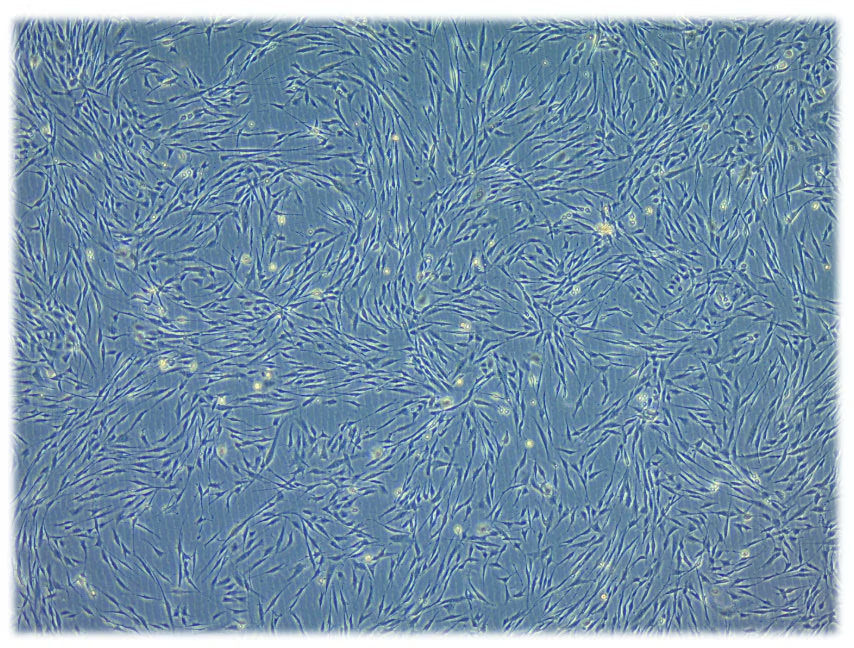
Fibroblast are important cells that exist in the dermis layer of the skin. It plays a role similar to a "skin skeleton factory," producing collagen, elastin, and Hyaluronic acid that support the skin's elasticity and firmness.
The subcutaneous tissue of the human body is divided into the epidermis and the dermis. The role of the epidermis is to "protect the surface of the skin," while the role of the dermis is to "build and support the foundation of the skin."
With the effects of aging, ultraviolet damage, and life stress, the number of Fibroblast gradually decreases, and their function also declines. The signs of aging that arise include wrinkles, sagging, dullness, and decreased elasticity.
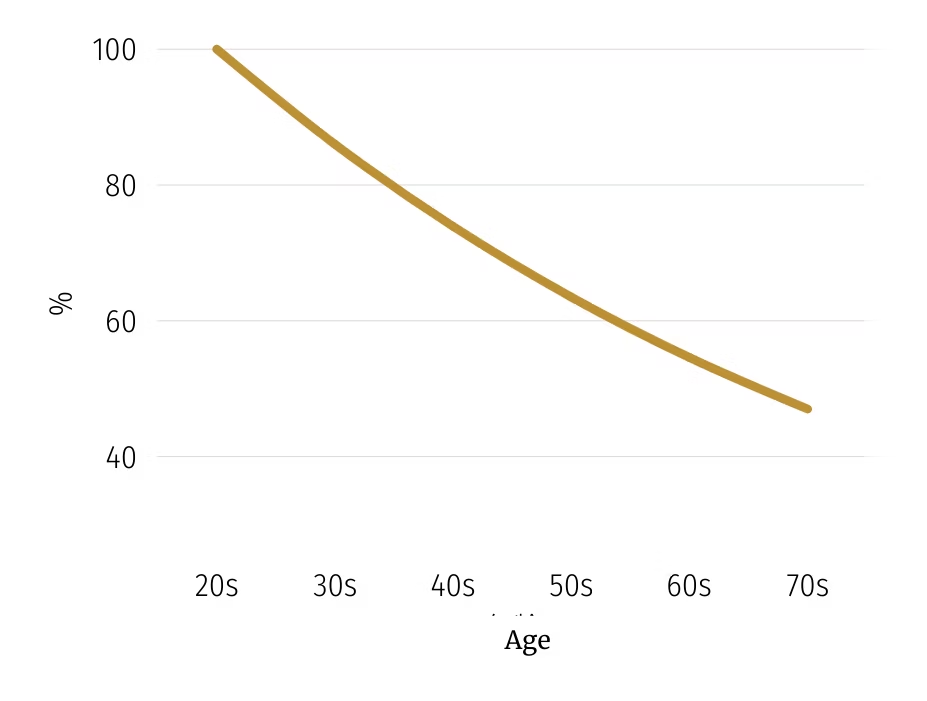
According to research, the activity of Fibroblast peaks in adulthood and then decreases by about 1.5% each year, resulting in roughly a 50% reduction by the time one is in their 60s※1. In other words, the key to maintaining youthful skin lies in how to maintain and regenerate Fibroblast.
Storing Fibroblast from youth holds promise for various applications in the future.
※1 Source:David M. Reilly, Jennifer Lozano (2021)。 Skin collagen through the lifestages: importance for skin health and beauty. Plastic and Aesthetic Research. DOI:10.20517/2347-9264.2020.153
Suitable for the Following Groups of People
- The skin's firmness and elasticity have decreased
- Nasolabial folds, wrinkles, and sagging
- Aging in thin-skinned areas such as the neck wrinkles and backs of the hands
- People with noticeable fine wrinkles around the eyes and corners of the mouth
- People who want to firm the cheeks and facial contours
- People who want to improve enlarged pores and rough skin texture
- People who feel their skin is dry, dull, and losing its radiance
- Those who desire natural rejuvenation
- Those looking to improve the essence of their skin
Characteristics of Fibroblast therapy at TOKYO RELIFE CLINIC
1.Our Clinic provides young and vibrant fibroblast thanks to its own Cell Culture facilities.
Once fibroblast leave the culture flask, their survival rate drops within minutes due to environmental changes. Even if placed in a dedicated preservation solution or saline, ideally it should be injected within a few hours.
Our clinic can immediately use cells taken from the culture facilities for treatment, offering fibroblast of high survival rate and quality. This can maximize cell regenerative capacity and provide high-quality regenerative medical treatment.
2.Achieving Three-dimensional and Natural Rejuvenation Using 3D Design Injections
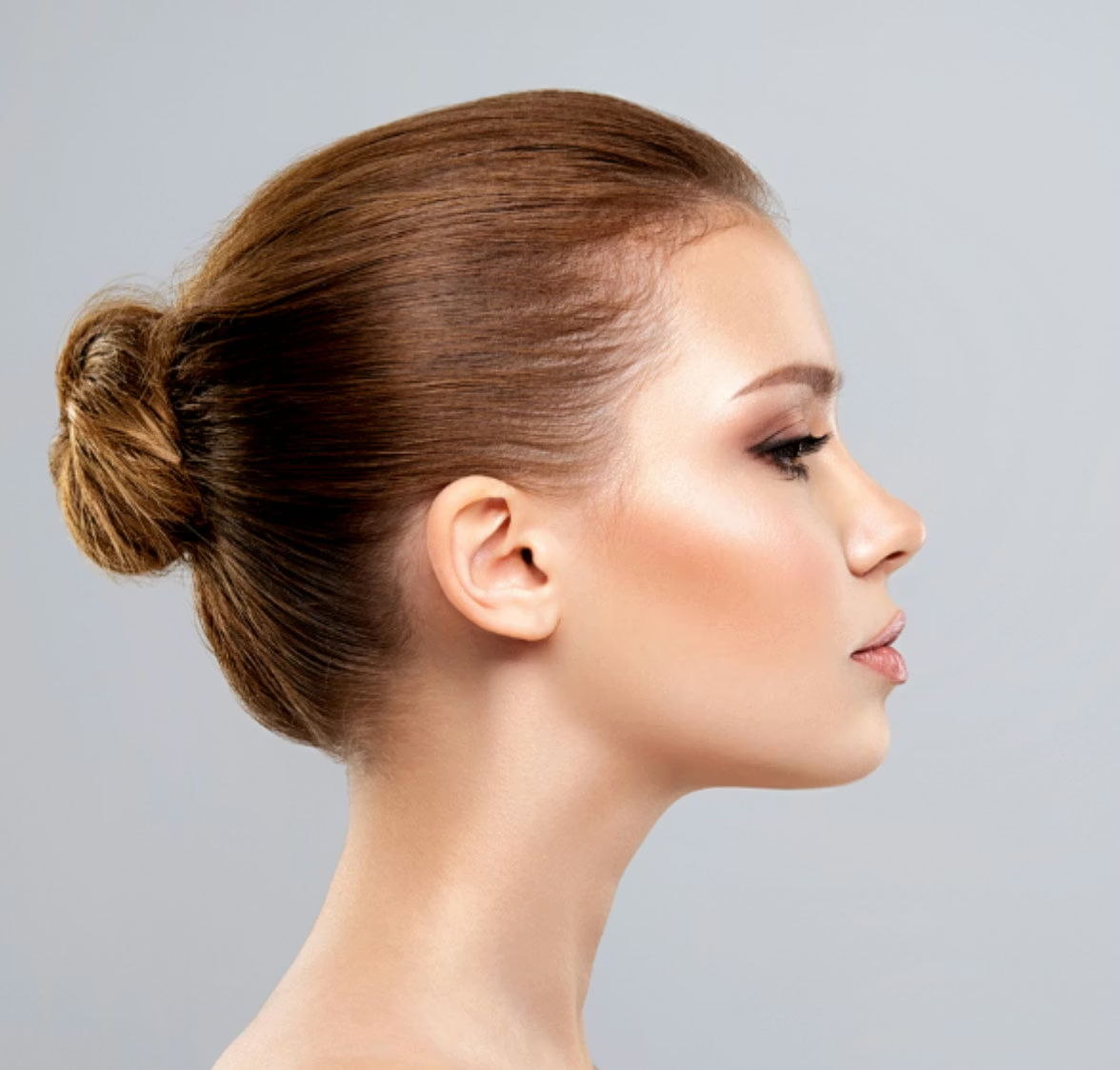
'3D design injection' is a technique that treats the face as three-dimensional (3D) rather than flat, considering the thickness of bone, muscle, fat, and skin as well as light reflection during injection. It not only simply fills wrinkles but also reconstructs the entire facial structural balance to achieve a naturally harmonious rejuvenation effect.
This highly specialized injection design can only be performed by doctors who have anatomical knowledge and rich experience.
※ This method is usually combined with other treatment methods.
3.Employ a Layered Treatment Approach, Targeting the Dermis for Optimal Treatment to Promote Regeneration.
TOKYO RELIFE CLINIC accurately injects fibroblast into the appropriate dermal layers of various facial areas based on the overall facial design.
・Superficial dermis: Improves skin texture and enhances firmness.
・Deep dermis: Improves fine lines and depressions.
・From subcutaneous to periosteal layers: Tightens facial contours and corrects volume.
Through this “layered therapy” approach, cellular regenerative capacity is maximally stimulated to achieve a natural and lasting rejuvenation effect.
Duration and Process of the Effects of Fibroblast Therapy
After injecting fibroblast, it takes about 3 to 6 months for them to exert their regenerative effects within the skin.
By gradually reconstructing the dermal structure, a natural and lasting firming effect and elasticity improvement can be achieved.
Results vary from person to person, but typically last about 2 to 3 years. Long-term youthful appearance can be expected through regular maintenance injections.
By preserving cells long-term, treatments using youthful cells can be performed 10 or 20 years later.
Treatment Process
- Fill Out the Medical Questionnaire and Have a Consultation (approximately 20 minutes)
First, please fill out the consultation form to confirm your physical condition, medical history, allergy status, etc. Meanwhile, the consultant will ask about your current needs and the areas you wish to improve. - Doctor's Consultation (about 20 minutes)
During the consultation, the skin condition is thoroughly assessed to determine whether Fibroblast suitable.
The doctor will explain in detail the treatment content, effects, risks, and recovery period. - Signing the Consent Form and Blood Collection (approximately 50 minutes)
After you have understood and agreed to the treatment details, you will be asked to sign a consent form. Then blood will be drawn to test for infectious diseases (hepatitis B virus HBV, hepatitis C virus HCV, human immunodeficiency virus HIV, adult T-cell leukemia virus HTLV, syphilis).
Only if infected with the human immunodeficiency virus (HIV) will you be unable to undergo treatment and culture. Besides this, even if infectious diseases test positive, treatment can be received, but surgery may need to be postponed for a while due to special preparations required.
※ This examination is necessary to safely culture cells. - Payment (about 10 minutes)
Make the payment while waiting for the blood test results. - Skin Collection Surgery (about 30 minutes)
On the same day or a subsequent day, collect a grain-sized piece of skin (approximately 2 to 3 millimeters) from inconspicuous areas such as behind the ear.
Since the incision is made along the wrinkles near the ear, the scars are not noticeable. Local anesthesia will be used during the surgery, resulting in almost no pain.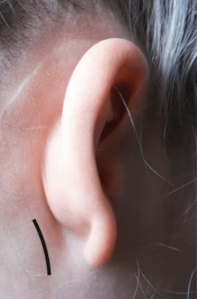
- Go Home
Finish by applying a small adhesive bandage to the sampling site. It has almost no impact on daily life, and you can start baths from the next day.
PRICE
Fibroblast Therapy
Treatment Fee
Annual Storage Fee
Precautions for Fibroblast Therapy
- Redness, swelling, temporary pigmentation, and subcutaneous bruising may appear locally (at the treatment site) during and after the treatment. In rare cases, the skin outside the treatment area may experience redness, swelling, transient pigmentation, and subcutaneous bruising (for example, when treating the upper eyelid, the lower eyelid may be affected). Generally, these symptoms will completely disappear within about a week, but in very rare cases, they may persist for several months to about a year.
- After treatment, an inflammatory reaction may occur at the treatment site. Swelling may last for several days to about one week. Generally, these symptoms will completely disappear within one to two weeks, but in very rare cases, inflammatory changes may persist for several months to about one year.
- After treatment, the skin may temporarily feel rough and uneven, and in very rare cases, these symptoms may also be noticeable in appearance. Generally, these skin symptoms will subside after several months, but in extremely rare cases, they may persist for about a year.
- The degree and duration of the effect vary depending on the patient's symptoms, age, and number of treatments.
- Since the biological material used comes from the patient's own body, the scope of a single treatment is limited.
- Antibiotics (streptomycin, gentamicin) will be used in cell culture, which may cause foreign body reactions (such as allergic reactions) to these antibiotics. (Although multiple cleansings are performed, their impact cannot be completely ruled out)
- Besides, the drugs used during treatment may cause side effects. If drug side effects occur, appropriate treatment will be provided based on the symptoms. Please contact our clinic immediately.
Contraindications for Fibroblast Therapy
- Pathogenic microorganism testing, HIV-positive patients
- Patients with malignant tumors
- Patients allergic to anesthetics used during cell collection (such as local anesthetic lidocaine)
- Patients who have had allergic reactions to amifostine, human albumin, streptomycin, or gentamicin
- Pregnant women and breastfeeding women
- Patients undergoing dialysis.
- Minor patients
- Patients who cannot understand the contents of this Regenerative Medicine consent form.
- Other than these, patients deemed unsuitable for this regenerative treatment by the responsible treating physician.
Special Considerations for Patients
- People with severe heart, blood, Lung, kidney, liver, brain, or mental diseases.
- People with bleeding tendencies.
- People who have had allergic reactions to penicillin (other antibiotics are used during the culturing process).
- People who have been cancer-free for more than 5 years after a malignant tumor was cured.
※Receiving treatment requires meeting certain criteria. In addition, even if consenting to participate in the treatment, it may not be possible to receive the treatment depending on whether the preliminary examination meets the standards.
Frequently Asked Questions (FAQ)
Q:What should be noted before the surgery?
A:It is recommended to avoid alcohol and smoking the day before.
Q:How long does the surgery take approximately?
A:The skin harvesting itself takes about 30 minutes. The entire process (including anesthesia, preparation, and postoperative care) will be completed within 1 hour.
Q:Is the surgery painful? How long will the pain last?
A:Because local anesthesia is used, there is almost no pain during the treatment. After the anesthesia wears off, there is only slight discomfort, which lasts for about 1 to 2 days.
Q:Can I go back to work the next day?
A:The skin harvest site only needs to be covered with a band-aid and it has almost no impact on daily life and work. If you work in an office, you can start working the same day.
Q:When can I start showering and washing my hair?
A:You can start from the next day. It is recommended to start taking baths from the day after the operation.
Q:How long does the cultivation take?
A:Due to individual differences in cell conditions at the initial culture stage, it usually takes about 6 to 8 weeks for proliferation. After quality inspection (sterility, viability, etc.), it is adjusted to a state suitable for injection.
Q:How frequently should injection treatment be administered?
A:The effect of a single injection can last from 1 to 2 years. By injecting approximately once every three months, the skin can look more youthful; if the goal is just to maintain the effect of one injection, an annual injection is also acceptable. The specific injection frequency can be decided after a doctor's consultation, based on your personal preferences.
Q:Does the treatment cause pain?
A:The intensity of pain sensation varies from person to person, but anesthetic cream or block anesthesia will be used, so please rest assured.
Q:How long is the recovery time after treatment?
A:Redness, mild swelling, and bruising may last from a few hours up to about a day, but makeup and face washing can be resumed from the next day.
Q:Can it be used together with hyaluronic acid injections or botox toxin injections?
A:It’s best to schedule them at different times. The detailed situation should be determined based on the doctor's diagnosis.
Q:How long can the cells be preserved at most?
A:Because it is cryopreservation, it can be stored for up to 20 years.
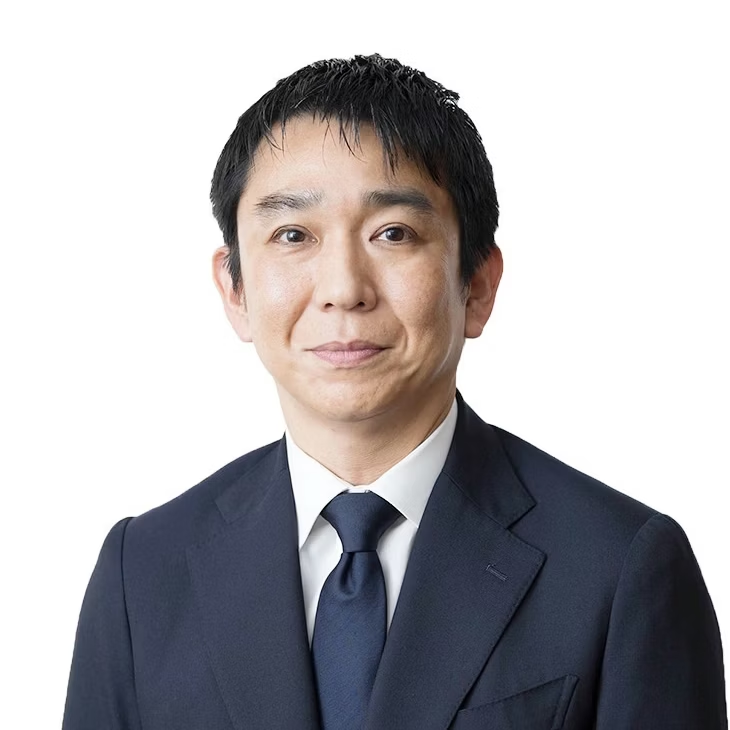
Medical Reviewer:Dr. Minekatsu Akimoto
Dr. Akimoto has extensive clinical experience in plastic and aesthetic surgery, gained through years of practice at university hospitals and major general hospitals. He holds multiple board certifications, including Specialist certification from the Japan Society of Aesthetic Plastic Surgery (JSAPS), and is known as a well-rounded physician with broad medical knowledge and advanced technical skills.