
What is Epigenetic Clock Testing?
Epigenetic clock testing is an advanced assessment method that precisely evaluates biological age by analyzing the "on/off state" of DNA, unlike traditional genetic testing which only examines DNA sequences.
Through a blood test, we do not analyze the DNA sequence itself. Instead, we precisely analyze methylation patterns—essentially the balance of your DNA's "on/off" switches. This allows us to calculate a biological age indicator that reflects your body's current condition.

While your DNA sequence is innate and remains largely unchanged throughout your life, gene activity levels fluctuate due to aging, lifestyle habits, stress, and various environmental factors*1. This mechanism of regulating gene activity is known as epigenetics.
Research into the Epigenetic Clock is advancing rapidly as a cutting-edge method for objectively evaluating individual differences in aging within the fields of anti-aging research and preventive medicine. It is currently widely used as a vital reference indicator for accurately understanding one's own health status.
Caution: This test is not intended for the diagnosis, treatment, or prediction of specific diseases.
Why Consider Epigenetic Clock Testing?
Research shows that for most people, epigenetic clock testing results closely match their chronological age—meaning their biological age and actual age are similar. However, some individuals show a noticeable "gap" between the two. This gap can tell us important things about your current health when we look at it together with your lifestyle habits and overall health condition*2.
Tokyo Relife Clinic's Comprehensive Diagnostic Approach
At our clinic, we never make decisions based on test results alone. Instead, we take a comprehensive approach by combining:
- Your detailed medical history and lifestyle assessment
- Face-to-face consultation with our physician
- All available test results and examinations
We use this integrated approach as one of the important foundations for planning your future health management strategy. Based on your specific symptoms and examination findings, we recommend the most suitable treatment plan tailored to your individual needs.
Who Should Consider This Test?
At Tokyo Relife Clinic, we recommend epigenetic clock testing as a valuable tool for objectively tracking physical changes before and after treatment—especially for patients considering or undergoing stem cell therapy and other regenerative medicine treatments.
This test is ideal for those who:
- Want to see if lifestyle changes (exercise, diet, sleep) are actually reflected in their body's condition
- Wish to understand their precise biological age
- Are concerned about their personal rate of aging
- Want to establish a baseline measurement before starting various treatments
- Prefer to regularly monitor key indicators of their overall health status
※While this test cannot guarantee treatment outcomes, it is widely used as an important assessment tool for comparing and tracking changes in physical condition over time.
What Can Epigenetic Clock Testing Tell You? (Test Results & Information)
Based on your current epigenetic patterns, this test provides comprehensive information on the following key indicators.
Report Language:
Test results are provided in Japanese as standard. If you require a report in Chinese, we offer professional translation services for an additional fee. Please inquire for details.
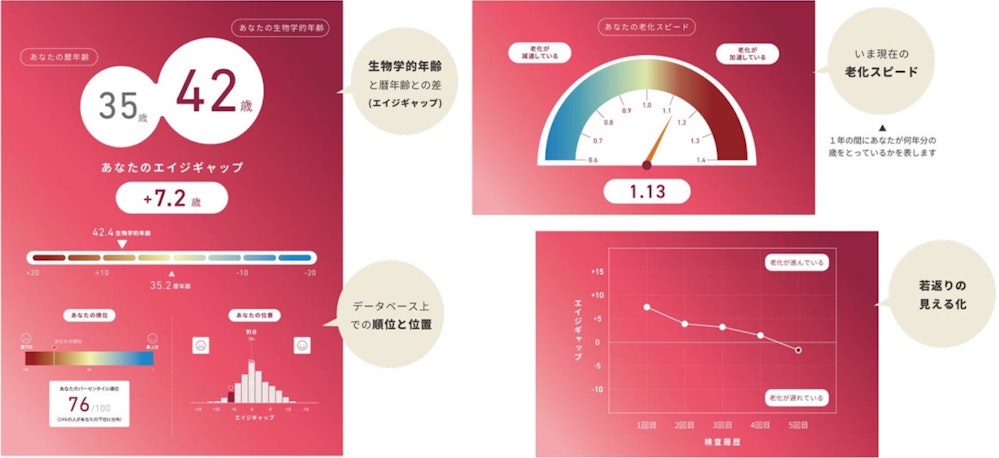
■Core Epigenetic Indicators
- Biological Age Indicator: Your body's functional age compared to your chronological age.
- Aging Rate Indicator: The speed at which your body is currently aging.
■Comprehensive 10-Point Body Status Trends
We evaluate trends related to the following bodily functions from a multidimensional perspective based on your epigenetic status:
- Physical Function
- Respiratory Function
- Vascular Function
- Immune Balance
- Chronic Inflammation Status
- Metabolic Function
- Liver Function
- Kidney Function
- Tissue Regeneration Capacity
- Cognitive Function
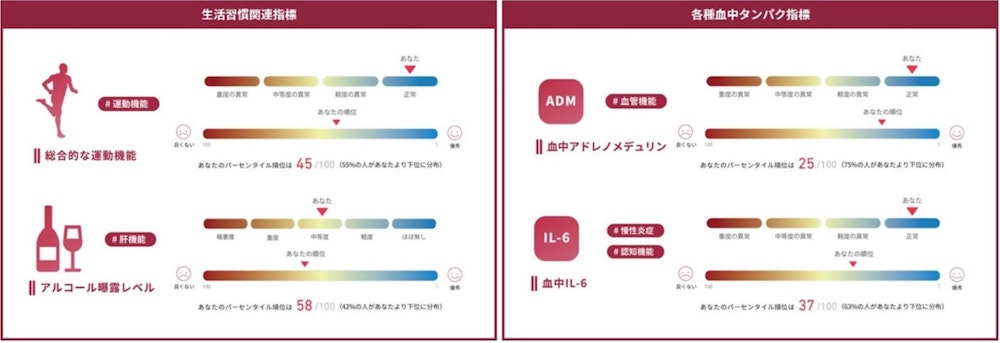
※These results are provided as objective reference information to help you understand your current physical condition.
※It is not intended for the diagnosis, treatment, or prevention of specific diseases. If you have any questions about your test results or require professional interpretation, please contact Tokyo Relife Clinic to schedule a physician consultation.
Procedure Guide: Epigenetic Clock Testing

1. Medical Questionnaire & Physician Examination
We will confirm your current health status, lifestyle habits, medical history, allergies, medication use, and specific goals for the test. Following this, the physician will explain the specific characteristics and scope of the test during a face-to-face consultation.

2. Blood Collection
Approximately 9mL of blood will be collected for epigenetic clock analysis.

3. Payment Processing
After payment is completed, if no other treatments are scheduled, the day's procedure is finished. The clinic will notify you once test results become available.

4. Results Explanation (Approximately 45 Days Later)
Analysis for epigenetic clock testing typically takes about 45 days. Once results are ready, we will contact you to schedule a follow-up consultation. During this session, the physician will provide a detailed explanation of your results and offer personalized health management advice. Additional evaluations or further medical recommendations may be provided as needed.
Please note that analysis time may vary depending on specific circumstances.
PRICE
Epigenetic Clock Test (Biological Age Test)
Frequently Asked Questions (FAQ)
Q: How is epigenetic clock testing different from traditional DNA testing?
A: Traditional DNA testing: Analyzes your inherited genetic sequences (such as predispositions to certain conditions), which remain essentially unchanged throughout your lifetime.
Epigenetic clock testing: Instead of analyzing the genetic sequences themselves, it examines DNA methylation patterns in your blood—these are biological "markers" that show how active or inactive your genes currently are. By analyzing these patterns, we can precisely assess your biological age and aging progression rate.※1
Q: Is one test enough? Do results change frequently?
A: A single test provides a valuable snapshot of your current physical condition. However, biological age and aging progression rates are not fixed numbers—they gradually change over time based on your health status, lifestyle habits, stress levels, and other environmental factors.
Tracking changes over time is the key to meaningful insights. We typically recommend follow-up testing after approximately 3 months under similar conditions to observe genuine trends rather than temporary fluctuations.※4
Q: Will results change immediately after I improve my lifestyle?
A: The timing and way changes appear vary significantly among individuals, so we cannot promise "immediate changes."
We advise against overreacting to minor short-term numerical fluctuations. Instead, we recommend re-testing after sustaining lifestyle improvements for 3 months to capture more meaningful and reflective changes.※4
Q: How often should I take this test?
A: Epigenetic clock testing is an important reference tool for understanding your current physical condition. We recommend starting with one initial test to establish your baseline.
If you wish to track changes resulting from lifestyle adjustments, a follow-up test after approximately 3 months is generally appropriate. Since short-term numerical changes may not be significant, we recommend consulting with your physician to determine the optimal retesting schedule based on your individual circumstances.※3,4
Q: How long does it take to get results?
A: Analysis results are typically provided 45 days or more after blood collection. (Actual timeframes may vary depending on laboratory conditions.)
Q: I'm worried about what happens if my biological age result is very high...
A: Please be assured that this value is only one reference indicator and is not a diagnosis of disease or a definitive prediction of your future.
Our physicians never make judgments based on a single result alone. We provide comprehensive interpretation by considering the gap between your chronological and biological age, results from other examinations, and your lifestyle background. If you have concerns about your results, your physician will recommend additional assessments or improvement strategies tailored to your needs.
Q: How much blood is required for this test?
A: Epigenetic clock testing requires 9 mL of blood (approximately one standard collection tube).
Q: Are there people who cannot take this test or should be cautious?
A: Depending on your current health condition or ongoing treatments, we may recommend postponing the test temporarily.
Please inform us in advance about your complete medical history, current medications, and any known allergies. Final suitability for testing will be determined by your physician during consultation.
References:
*1:Fraga MF, et al. Proc Natl Acad Sci U S A. 2005;102(30).
*2:Horvath S, Raj K. Nat Rev Genet. 2018;19(6).
*3:Fitzgerald KN, et al. Aging (Albany NY). 2021;13(16).
*4:Rönn T, et al. PLoS Genet. 2013;9(6).